
It is often said that games fail because they lack money or marketing, but a seasoned developer believes this argument misses the point. Adrian Chmielarz, founder of The Astronauts and director of Gears of War: Judgment, argues that the ongoing crisis of AAA games has far more to do with quality than with financial resources.
Few people are surprised to hear that AAA games are facing serious difficulties, driven by ballooning budgets, unrealistic expectations, high retail prices, and development cycles that can stretch on for years. This reality is widely acknowledged within the industry itself. Adrian Chmielarz, founder of the Polish studio The Astronauts and a veteran designer who worked on Gears of War and directed Gears of War: Judgment, believes that players are increasingly drawn to games created with a mindset closer to that of smaller, more independent teams.
Speaking to PCGamesN, Chmielarz explained that modern audiences are gravitating toward titles developed with genuine creative independence, even when those games are not made on small budgets. He pointed to CD Projekt RED as an example of a studio capable of producing AAA titles while retaining creative control, despite having shareholders. This structure prevents publishers from dictating every aspect of development. According to Chmielarz, such freedom “allows games to stay in players’ memories instead of becoming disposable products,” a fate that often befalls AAA titles conceived in corporate boardrooms.
Adrian Chmielarz Believes the Industry Is Moving Toward Creative Independence
The Polish designer sees this shift toward independence as a natural evolution rather than a sudden trend. He recalled how, decades ago, publishers controlled distribution and developers had little choice but to work with them if they wanted to succeed. Today, platforms like Steam enable creators to release their games directly to players, removing many of the barriers that once stifled innovation. As Chmielarz noted, thanks to Steam, developers often no longer need publishers at all.
This democratization, however, brings its own challenges. With market saturation and an overwhelming number of releases — nearly 19,900 games launched on Steam this year alone — even noteworthy titles can easily go unnoticed. Chmielarz stressed that many games fail to endure in players’ minds or in media coverage simply “because they’re bad,” while those that offer something distinctive, or at least well executed, can remain memorable for years.
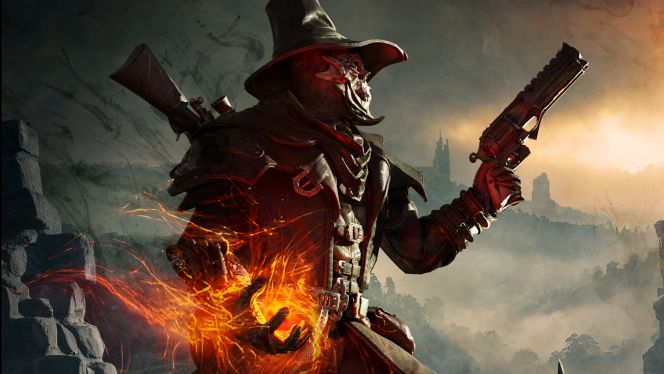
In this context, the director of Witchfire makes no real distinction between indie games and AAA productions. Both can fade from memory just days after release if they are mediocre, with only a handful of exceptions. He cited Silksong as an example of a title whose impact has been remarkable, not only because it is one of the most anticipated sequels of the decade, but also because of its quality. Along similar lines, albeit with a much larger budget, Far Cry 3 remains a standout AAA game, remembered by many players long after its 2012 release thanks to its strong narrative.
Forrás: 3djuegos













Leave a Reply