
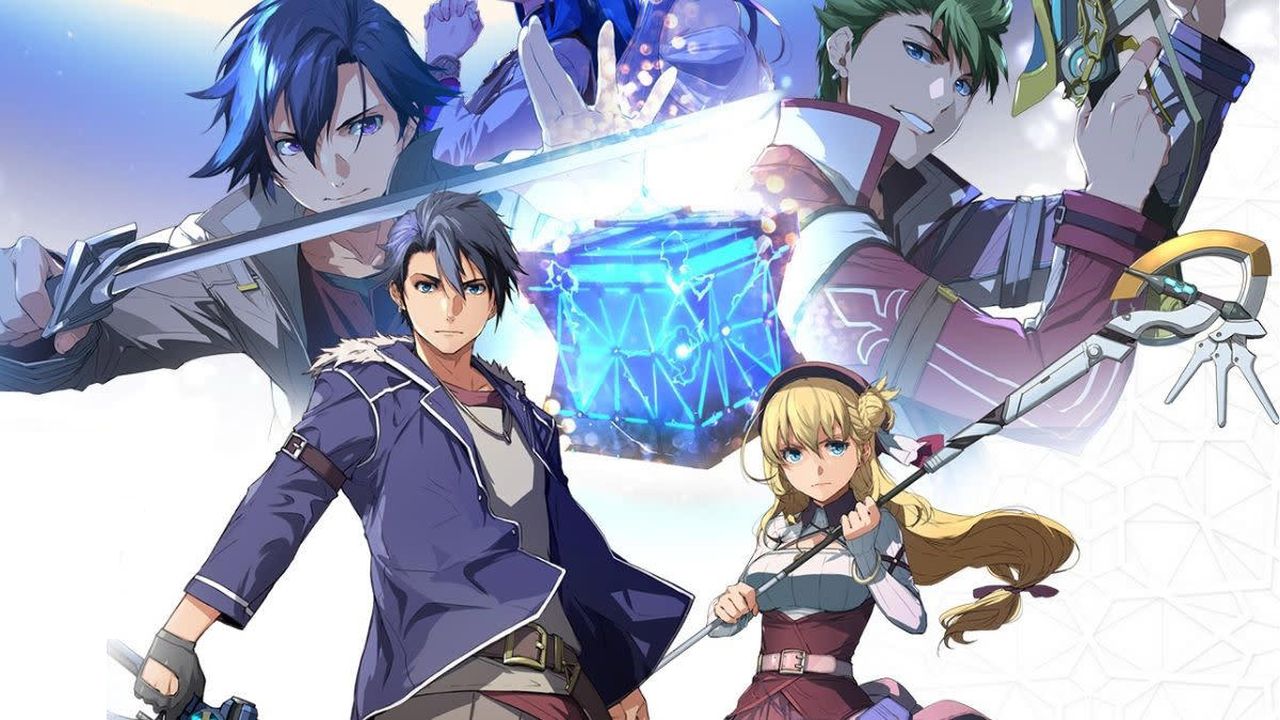
REVIEW – With the Trails saga now sitting at thirteen games, Nihon Falcom has made it clear it is not a studio living on Ys alone. The bigger arc reaching its endpoint gives this entry an odd aftertaste: it feels like both a new chapter and a handoff, and you can sense the developers recalibrating as they go. It is a bold, loaded JRPG with plenty to love – but it is a rough place to start if you are new to the series.
It can be forgiving in spots, yet it never really feels like a beginner-friendly on-ramp. The game is more interested in assuming you will keep up than in slowing down to make sure you understand what you just walked into.

A Slow Welcome
You do not often see a sequel that barely bothers to court newcomers, but The Legend of Heroes: Trails Beyond the Horizon is exactly that kind of game. It is built first and foremost for longtime fans, which creates a strange split: it is genuinely good – arguably one of the strongest Trails outings – while also being a terrible first impression for anyone who has not touched the earlier entries. If we were being brutally fair, you could almost argue for two separate scores depending on where you are starting from.
This is the third chapter of the Calvard storyline, picking up right after the two-part Trails Through Daybreak stretch and nudging the series another step toward Zemuria’s prophesied end. With that looming over everything, the Calvard Republic throws its weight behind a space program, and that thread pulls Van Arkride’s crew into contact with familiar faces – including Father Kevin Graham from Trails in the Sky the 3rd and Rean Schwarzer from Cold Steel. Falcom clearly took a calculated risk here by leaning hard into what has worked best in the past, and for the most part it pays off – just not immediately.
The opening act is painfully slow, and it is easy to bounce off if you judge the game by its first hours. It constantly references background events and side characters, and if you are trying to learn the franchise from scratch, that flood of context can feel less like worldbuilding and more like a door being shut in your face. Veterans get rewarded, newcomers get punished. Structurally, the story rotates between three leads – Van, Kevin, and Rean – and you can tackle their routes in different orders. The paths intersect and build on each other’s key moments, and once you push past that sluggish first chapter, the pacing settles into something far more comfortable.
When it clicks, it really clicks. Each protagonist brings a different thematic lane: Kevin’s arc leans into morality and duty, Rean’s is fueled by nostalgia, and Van’s focuses on human relationships. Together, they feed into a larger narrative that works because it is actually well written. The dialogue holds up, and the English localization is consistently solid – credit where it is due to NIS America. The cast was never small, and it grows again here, and even if the shady Ouroboros organization name still gives off faint Resident Evil 5 vibes, that might be a me problem.

More, Better, Bigger
There are genuinely memorable additions along the way. Ulrika, a Gen Z streamer, is the most obvious example: she will either be grating or intentionally over-the-top enough to be funny, and that is about as diplomatic as you can be about her. More importantly, Falcom does not treat its locations and side characters like disposable set dressing. You can feel the extra care almost everywhere, and the capital city, Edith, comes across as a lively, believable hub rather than a checklist of shops.
The attention to detail gets weirdly specific, too – your party keeps a running “sweets diary” as you move from town to town, which is exactly the kind of texture this series lives on. Combat also gets meaningful tweaks. The game continues to blend action-driven encounters with classic turn-based command play: you scrap in real time first, then shift into the more traditional layer via shards. Brave Order elements return from Cold Steel, Boost Gauges hand out buffs, Zone of Control slows things down while pushing break gauges faster, and Awakening lets you spike damage. The Orbment loadout system is still here, and Brave Link Tactics Zone encourages coordinated attacks across the team.
The downside is that all of this can make the game feel easier than it probably should. Once you understand how the pieces fit, the challenge can flatten out without you even noticing, even as Falcom stays loyal to the parts of the formula that already worked. On the presentation side, though, there is a clear step forward in visuals and animation, and the runtime is exactly what you expect: fifty hours is easy, and doubling that is not hard if you are the type to squeeze everything out of a Trails game.
Where It Lands
The Legend of Heroes: Trails Beyond the Horizon comfortably earns an 8/10. It is very good, but it also carries a few rough edges – and that opening stretch is a real problem because it gives the worst possible first impression. Still, if you are invested in the series, there is a lot here worth digging into.
If you are not invested, do not start here. Too much of what makes this entry sing is built on context, callbacks, and long-running relationships. As a result, it ends up being good rather than truly great: Falcom experiments, takes swings, and often nails them, but it also makes you work to get to the best parts. When it finally opens up, it is fantastic – you just need the patience (and the history) to get there.
-V-
Pros:
+ Noticeable improvements across most areas compared to earlier entries
+ A smart blend of real-time pressure and turn-based tactics
+ Three intertwined routes that are well written and thematically distinct
Cons:
– A terrible starting point: newcomers will miss a lot and feel lost
– Can become too easy once you learn the systems
– The opening hours move at a crawl
Developer: Nihon Falcom, PH3 GmbH
Publisher: NIS America
Release date: January 15, 2026
Genre: JRPG
The Legend of Heroes: Trails Beyond the Horizon
Gameplay - 7.8
Graphics - 8.2
Story - 8.8
Music/Audio - 7.7
Ambience - 7.5
8
EXCELLENT
A fun, comfortable JRPG that rarely becomes overwhelming, even when it is clearly aiming big.





Leave a Reply