
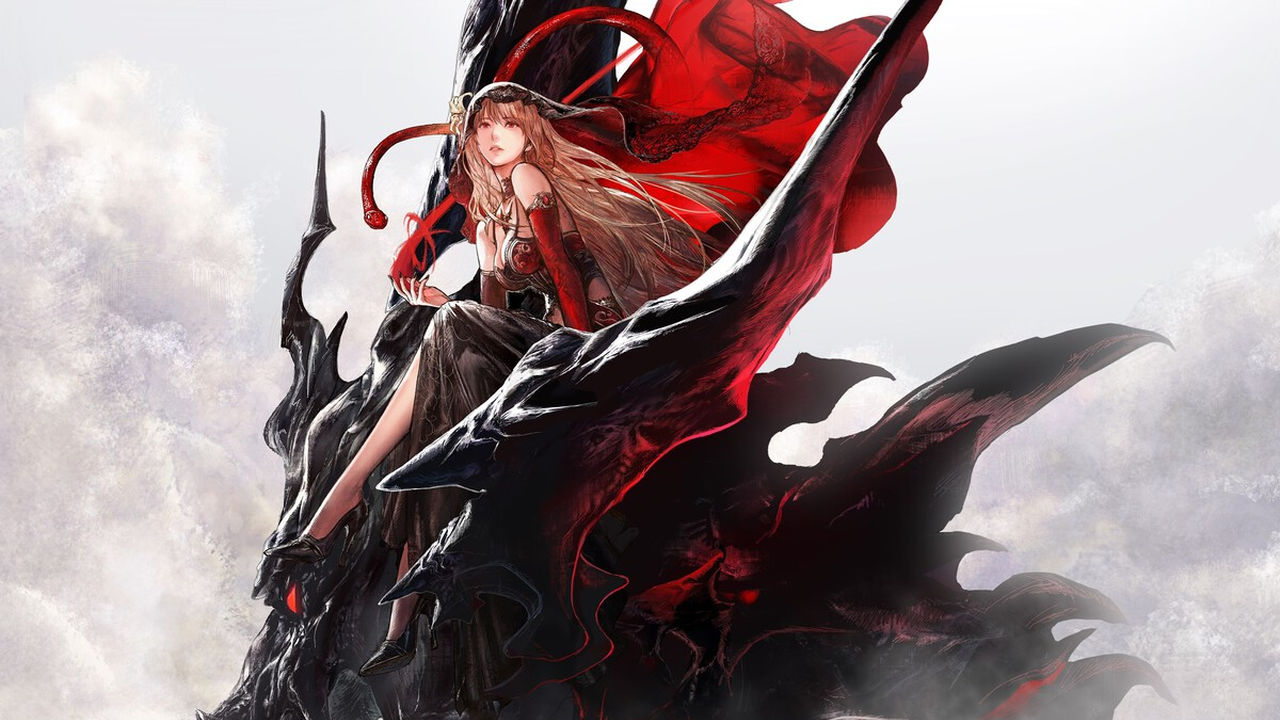
Final Fantasy Resonance may initially look like a modern take on a classic ’90s Final Fantasy, but Square Enix’s new HD-2D JRPG offers much more than nostalgic pixel graphics. Based on the version played at Gamescom 2026, the game is shaping up to be a full-fledged console RPG despite its Final Fantasy Brave Exvius origins, and a free demo is already available.
When Square Enix announced Final Fantasy Resonance in June, one important detail slightly dampened some fans’ enthusiasm. While the game brings Final Fantasy back to its pixel-art roots as part of the Japanese publisher’s growing HD-2D catalog, it is based on the mobile gacha title Final Fantasy Brave Exvius. That mobile game ended service in the West in 2024 and shut down in Japan one year later. However, the version shown and played at Gamescom 2026 made it clear that Final Fantasy Resonance is far more ambitious than a straightforward port or a lightly upgraded version of a mobile game.
The story returns to the world of Lapis, where players follow characters including Rain, a knight of the kingdom of Grandshelt, his adopted brother Lasswell, and Lady Fina. The adventure revolves around familiar Final Fantasy ingredients, including elemental Crystals, airships, moogles, and summons known here as espers. None of those concepts are entirely new, but both the script and the structure of the campaign have been rebuilt from the ground up. The intention is clearly to make Final Fantasy Resonance work as a fresh, self-contained console JRPG rather than as a repackaged version of a discontinued mobile title.
The Gacha Is Gone, but the RPG Remains
If so much of the game has been rebuilt, what caused the initial uncertainty among fans? One of the main reasons was the Visions system. In Final Fantasy Resonance, characters representing different eras of the franchise, including the Warrior of Light, Cloud, Tidus, Y’shtola, and Shantotto, can appear alongside the main party and provide assistance in combat. At first glance, this naturally recalls the game’s mobile gacha origins, but what was shown at Gamescom suggests that there is no hidden gacha mechanic waiting in the background.
Instead, Visions are unlocked naturally as players advance through the story. New ones can be discovered by exploring the world, visiting certain shrines, and completing different puzzles and challenges. They are not designed to replace the protagonists or take over the main party, but rather to expand the tactical options available to them. In some respects, the system resembles Personas from Persona, Archetypes from Metaphor: ReFantazio, or even Stands from JoJo’s Bizarre Adventure: additional combat presences that fight alongside the party and supplement the characters’ existing arsenal with new possibilities.
Every unlocked Vision has its own progression system. They gain experience points through combat just like conventional characters and provide access to passive and active abilities inspired by specific roles. Some abilities can even be mastered, allowing the character to retain permanent access to them after the associated Vision has been unequipped. Visions can also improve attributes, add new combat techniques, and unleash powerful Limit Burst attacks accompanied by elaborate cinematic 3D sequences.
The system is therefore surprisingly deep and closely tied to the identity of Final Fantasy Resonance, but it remains optional, secondary content rather than a replacement for the core game. Players do not need to spend additional hours grinding, and certainly do not need to spend extra money, simply to obtain Terra’s Vision if they want to expand one character’s magical capabilities. There are clear benefits to finding it, but there is no paid gacha structure lurking behind the feature.
With that concern out of the way, Square Enix’s new game made a strong impression at Gamescom. Artistically, the carefully constructed camera angles work particularly well, as do the celebratory sequences that follow battles and the dramatic animations used for Limit Bursts, although the resolution of the latter can occasionally look somewhat jarring. The traditional turn-based combat is also convincing and does not dilute the formula by inserting awkward action mechanics between commands. Battles instead require players to strategically manage enemy health and stun gauges while combining the abilities of regular party members with those provided by Visions.
That does not mean the Gamescom demo answered every question. In terms of dungeon crawling, the playable section followed a fairly linear route and contained only one extremely simple puzzle. It remains unclear whether this was purely a logistical choice designed to accommodate visitors playing a limited demo on the show floor or whether it accurately represents the level design players can expect in the complete game. There was also not enough time to explore the story in any real depth, which remains another major unknown considering the project’s origins in an earlier mobile title.
Even with those unanswered questions, Final Fantasy Resonance is making a very promising impression. There is considerably more to it than its mobile origins or nostalgic pixel-art presentation might initially suggest, while both combat and character progression appear to offer substantial depth. It avoids automatically inheriting the clumsier and more dated aspects of older JRPGs, yet remains remarkably faithful to many of the qualities that made classic Final Fantasy games so memorable in the first place.
Final Fantasy Resonance is scheduled to launch on October 22, 2026 for Nintendo Switch, Nintendo Switch 2, PlayStation 5, Xbox Series X|S, and PC. Its free demo became available on September 3 and can already be played; it includes the entire first chapter, and save data created in the demo can be carried over to the full version.
Source: 3DJuegos







![Monster Hunter Wilds: Ascendance’s Daily Boosted Action Overviews Have Begun [VIDEO]](https://thegeek.games/wp-content/uploads/2026/09/bca47e7d475d4cc4-302x180.jpg)
![Lost Museum: Echoes of the Chromageists: Adventures in the Lost Museum [VIDEO]](https://thegeek.games/wp-content/uploads/2026/09/1c2bd0af3f56a59c-1-302x180.jpg)



Leave a Reply