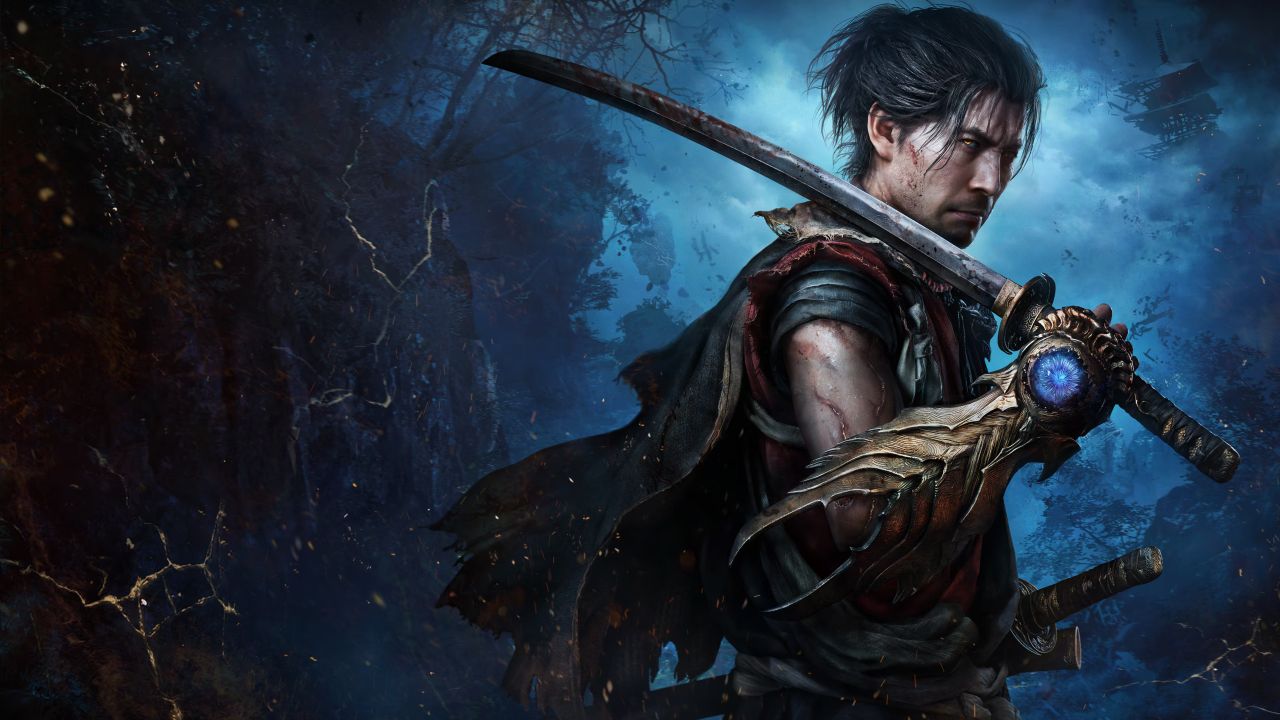
REVIEW – Getting a sword strike right is harder than filling another hundred-hour adventure with collectibles: you can immediately feel when an attack lacks weight, rhythm, or convincing feedback. Onimusha: Way of the Sword excels precisely where it matters, and by the time Miyamoto Musashi properly hits his demon-slaying stride, Capcom is no longer trading on the series’ reputation. Outstanding bosses, superb animation, and a surprisingly endearing cast make this a comeback worth celebrating, even if its cautious opening hours take a little patience. A few side quests and occasionally flat environments could have used another pass, but the blade at the center of the experience has been sharpened beautifully.
What interested me about reviving Onimusha was not how many familiar ingredients Capcom could retrieve from the old games, but whether the series still had something distinctive to offer. Sword-wielding heroes carving through Japanese demons are hardly in short supply, and nostalgia only gets you through the first few encounters before the controls have to justify themselves. Fortunately, Way of the Sword offers more than recognizable monsters and higher-resolution faces: its combat remains engaging long after the novelty of the first spectacular execution wears off. That is ultimately what won me over most, because the technical swordplay produces a better game rather than merely a longer list of rules to memorize.
Capcom also refuses to treat story and character as mandatory downtime between arenas. Its demon-infested Kyoto balances oppressive horror, samurai-movie theatricality, and enough well-judged humor to keep the setting from suffocating under its own seriousness. The cutscenes have a clear sense of direction, and the protagonist possesses an actual personality, even when you wish he would be slightly less stubborn about expressing it. It is a welcome situation when you watch conversations in an action game not out of obligation, but because you genuinely want to hear what Musashi will blurt out next.

Death Rejected Him; His Manners Came Back Untouched
The story takes us to a thoroughly cursed version of Edo-period Kyoto, where the demonic Genma are leaking from the underworld into human territory. Musashi discovers during the prologue that swagger alone will not defeat them: he falls in battle, only for a mysterious benefactor to send him back equipped with the Oni Gauntlet. The artifact grants supernatural strength but requires demon souls to sustain its restorative power, meaning resurrection comes with a job description. What bothers Musashi is not simply the inconvenience, but the fact that he has devoted his life to mastering the sword through his own ability and now depends on an unwanted supernatural advantage to survive and fight.
That is a promising conflict on its own, but the character becomes genuinely likable through the way he handles it. Modeled on Toshiro Mifune’s likeness, Musashi is impulsive, rough around the edges, and fiercely proud, yet honest enough that his grumbling never feels like a permanent performance of toughness. He is particularly well matched with Shizuka, the refined female spirit inhabiting the gauntlet, who regards her new companion’s manners as something that might require an exorcism of their own. Their friction produces natural comedy without either character sounding like a contemporary social-media account wearing historical clothing.
The villains are just as important to the storytelling. The game feels no obligation to excuse every atrocity with an unfortunate childhood memory, and its principal antagonist clearly enjoys being almost impossible to defend on moral grounds. That unabashed theatricality suits the series wonderfully, particularly in carefully composed cutscenes that give the cast presence instead of merely delivering exposition. As the campaign advances, it also serves up increasingly spectacular moments that deserve to remain surprises; thankfully, Capcom did not spend every good idea on the trailers.

A Heavy Blade Without Heavy-Handed Controls
Listing the combat mechanics does not immediately explain what makes them special. Light and heavy attacks, dodges, blocks, timed defensive techniques, and resource-driven special moves are familiar ingredients in countless modern action games. The difference lies in how those actions connect and how convincingly enemies respond to them. A successful strike has more than a damage value: animation, sound, and momentum work together to convince you that Musashi is holding a weapon rather than an unusually elaborate cursor.
The transitions from defense to offense are especially satisfying. Defending is not simply a passive wait for an opponent to finish performing; it gives you an opportunity to shape the next few seconds yourself. Issen rewards a counterattack timed just before an incoming hit, while Break Issen opens a devastating finishing opportunity after an enemy’s stamina is depleted; against bosses, choosing which body part to strike can determine whether you prioritize damage or additional souls. Defense, breaking an opponent, and attacking consequently feel like connected parts of one coherent system rather than three unrelated chapters in a manual.
The pace remains more deliberate than a nonstop fireworks display of combos might suggest. You need to watch, position yourself, wait, and then commit decisively when an opening appears, giving the flashier sequences actual decisions beneath their choreography. None of that automatically makes the game a soulslike, just as carrying a katana should not require enrollment in a course on recreational suffering. Way of the Sword finds its own rhythm, turning measured exchanges into explosive sword fights that make it perfectly clear why paying attention mattered in the first place.

Bosses Worth Coming Back For
The bosses reveal just how solid Capcom’s foundation really is. In the strongest encounters, spectacle and mechanics serve the same purpose: an opponent’s personality emerges through the way they fight, not just through a speech delivered beforehand. These duels test your attention and accumulated knowledge while presenting themselves with enough flair to become genuine landmarks in the campaign. For me, they rank among the most memorable action-game encounters of recent years, and they contribute heavily to the final score.
Retrying usually means more than repeating the same mistake and hoping something changes. Once you recognize what is coming and finally respond to the attack that kept catching you earlier, the improvement feels like something happening in your own hands. The superb animation is therefore more than decoration, since reading an enemy’s movement is part of understanding the next threat. Victory delivers something more satisfying than another completed health bar: the sense that you have genuinely learned how to handle the fight.
You do have to get there, however, and the opening hours distribute the game’s possibilities a little too cautiously. The initial enemy selection does not demonstrate the full game’s strengths, while Musashi’s restricted early moveset can make combat feel slower and stiffer than it eventually becomes. As more techniques unlock and his toolkit comes together, the system expands dramatically. Capcom could have shown a little more of that potential sooner, because judging the game by its warm-up makes it easy to underestimate what follows.

Difficulty Is Not an Entrance Exam
I particularly appreciate that Capcom does not treat your chosen difficulty as a question of personal virtue. You can switch to Story mode during the adventure, and its more generous defensive timing windows give less experienced players room to find their footing. Action mode can still deliver some unpleasant surprises, especially against bosses, where a handful of retries becomes a perfectly reasonable part of learning. Both approaches coexist comfortably because enjoying the game does not depend exclusively on how much punishment you are prepared to absorb.
The optional button prompts are useful too, and they can also be enabled on Action difficulty. They neither perform the defensive move for you nor reveal its precise timing, but they help you prepare for the kind of response an incoming attack demands. For a newcomer, that is a more thoughtful form of assistance than simply doubling Musashi’s health, because it makes the underlying system easier to understand. The satisfaction remains intact without requiring every new move to be learned exclusively through personal injury.
Locking Carnage difficulty behind an initial completion is considerably harder to defend. It unlocks alongside New Game+ after a first run of roughly thirty hours, offering a much harsher challenge in which a few hits can prove fatal, plus exclusive cosmetic rewards. That makes an appealing next step for anyone who has grown comfortable with Musashi, but experienced action players have every reason to ask why they could not choose it from the start. Nobody’s enjoyment is diminished by making the hardest setting available without a thirty-hour probationary period.

Kyoto Does Not Need Another Hundred Hours of Your Life
Alongside the largely linear stages, Kyoto provides some room to wander, with the city’s main temple serving as a base of operations. Between major story developments, you can explore demon-haunted streets, collect upgrade materials, and take on a handful of side quests. Thankfully, this does not transform the adventure into an open-world checklist where the main plot has to book an appointment between map-clearing sessions. The city instead connects the campaign’s individual sections and gives them a stronger sense of place.
The accessible map expands as Musashi deals with powerful Genma, allowing progression to register geographically as well as through new abilities. Kyoto’s predicament consequently feels less like background exposition, and exploration provides a useful change of pace between demanding fights. A few optional tasks offer occupation rather than a memorable situation, exposing how much more compelling the game becomes when it returns to its central story. Fortunately, there are not enough of them to take control of the campaign.

The Blade Shines More Consistently Than the Scenery
It is worth distinguishing smooth performance from graphical detail. PS5 Pro testing points to consistently fluid play as a major strength: there are 30fps and 60fps caps, plus an uncapped option extending up to 120fps on a compatible display, while ray tracing can be toggled separately. That 120fps figure is a ceiling, not a promise that every scene will run at that speed. In a sword-fighting game built around timing, however, dependable 60fps performance already matters far more than another visual flourish purchased at the expense of consistency.
Reports on the standard PS5’s performance mode are positive as well, although its lower resolution introduces some softness. That is easier to accept here than sacrificing fluidity during a fast exchange, particularly when several enemies and effects are competing for screen space. The animation itself also contributes enormously to the presentation, because Musashi convinces as a moving, fighting character rather than merely a detailed model. The technical praise therefore primarily concerns how effectively the game supports its combat when it matters most.
The environments are less consistent. Some surfaces lack the finer detail that the characters and cutscenes lead you to expect, while the lighting occasionally makes the city look noticeably flat. It is easy to forget during a fight, when sparks fly and the choreography takes over, but quieter exploration exposes places where the image needed more work. Graphics therefore do not automatically receive the same exceptional grade as the swordplay, even though the animation deserves praise of its own.
The music serves the atmosphere more consistently. Built largely around traditional Japanese instruments, the score is less concerned with melodies you will hum on the way to work than with building tension and escalating at the right moment during a fight. Together with clashing blades and demonic sounds, it gives the combat weight while lending the surroundings an unsettling supernatural character. The series’ horror flavor survives even when Musashi starts looking considerably more dangerous than whatever might be waiting around the next corner.
Nostalgia Is Not the One Swinging This Sword
I enjoyed Way of the Sword so much because it measures ambition through the quality of its systems rather than their number. The swordplay is demanding, yet every important move has a clear purpose, and the bosses provide spectacular opportunities to put that understanding into practice. Musashi and Shizuka bring enough personality to their shared scenes that the journey between encounters never feels like empty waiting. It is difficult to ask for much more from a revived series than a reason to exist beyond the fact that people once loved it.
The cautious opening, a few filler diversions, the locked difficulty, and occasionally underwhelming scenery keep me from calling it flawless. But the 9.1 is not a courtesy extended to an old name; it reflects how consistently the game delivers where it matters most. Capcom has done more than bring Onimusha back: it has demonstrated why the series deserves its own place in the genre again. After twenty years, the uncomfortable part of this reunion belongs to the demons rather than the players.
-Gergely Herpai „BadSector”-
Developer: Capcom
Publisher: Capcom
Release: September 4, 2026
Genre: Swordplay-focused action-adventure
Pros:
+ Exceptionally precise, weighty, and rewarding swordplay with superb animation
+ Memorable bosses, distinctive characters, and excellent cinematic direction
+ Outstanding combat rhythm, flexible assistance, and strong console performance
Cons:
– The opening hours are too cautious about revealing the combat’s full potential
– Some side quests feel like filler, and environmental detail is inconsistent
– Carnage difficulty requires completing the entire campaign first
Onimusha: Way of the Sword
Gameplay - 9.7
Graphics - 8.4
Story - 9
Music/Sound - 8.8
Atmosphere - 9.6
9.1
AWESOME
Onimusha: Way of the Sword is an outstanding comeback defined by exceptional swordplay and superb bosses rather than the reputation of an old name. Musashi is an endearingly rough-edged protagonist, while the story’s cinematic energy and horror atmosphere maintain interest between battles. The slow opening, a few side activities, and inconsistent environmental detail leave room for improvement, and locking the hardest setting behind a completed playthrough remains frustrating. Even so, Capcom has made an action game in which the prospect of the next duel is reason enough to keep playing.



![The Studio Behind Lies of P Renamed Itself and Is Already Preparing for the Sequel! [VIDEO]](https://thegeek.games/wp-content/uploads/2026/05/thegeek-lies-of-p-2-1-300x365.jpg)