
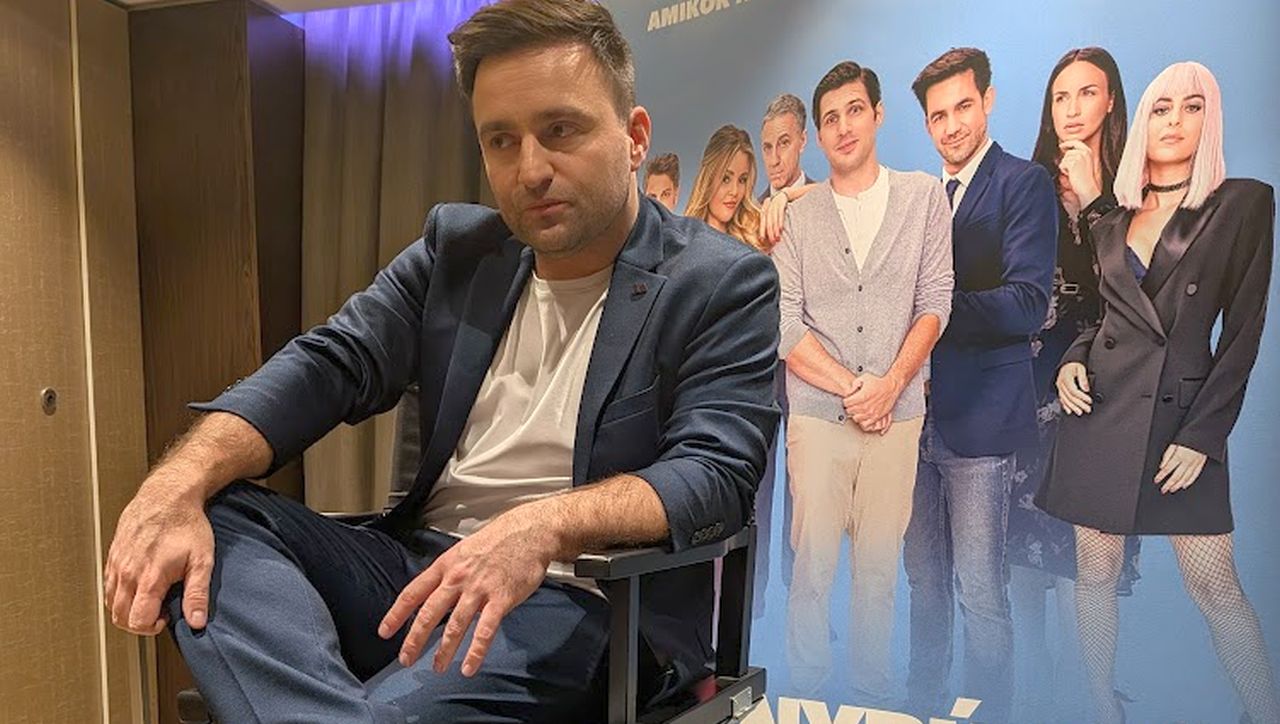
MOVIE INTERVIEW – Szente Vajk’s first feature film, Legénybúcsú, may look at first glance like a classic rom-com about a bachelor party gone off the rails, but in reality it is a story about how much a friendship can take when everything that can go wrong does go wrong, and how far we are willing to go for one another before something finally breaks.
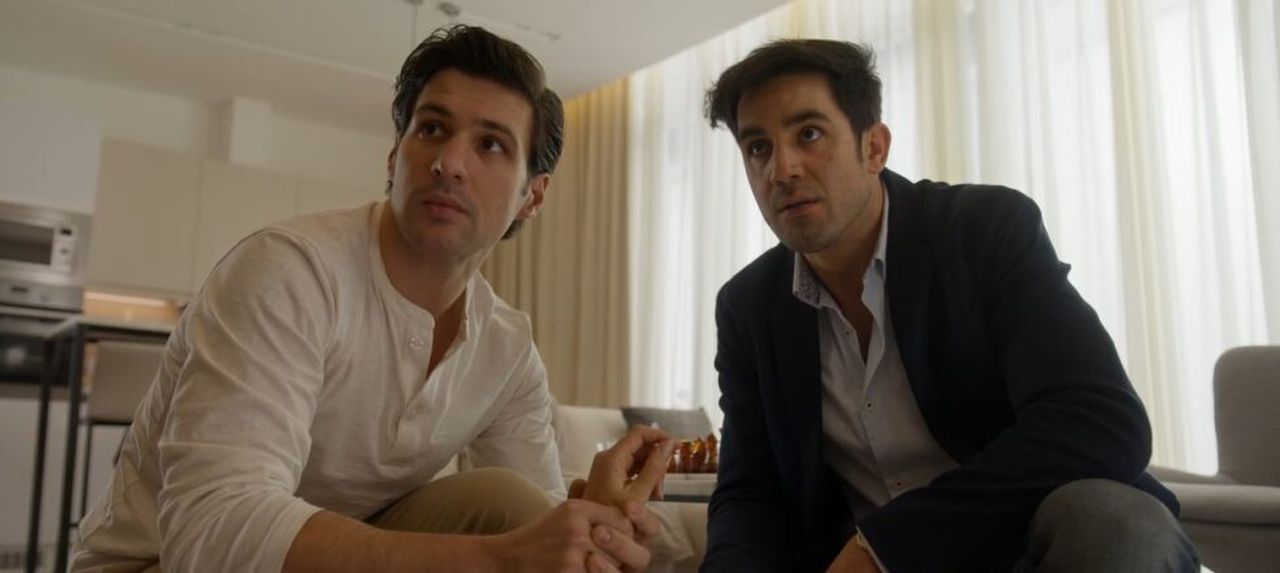
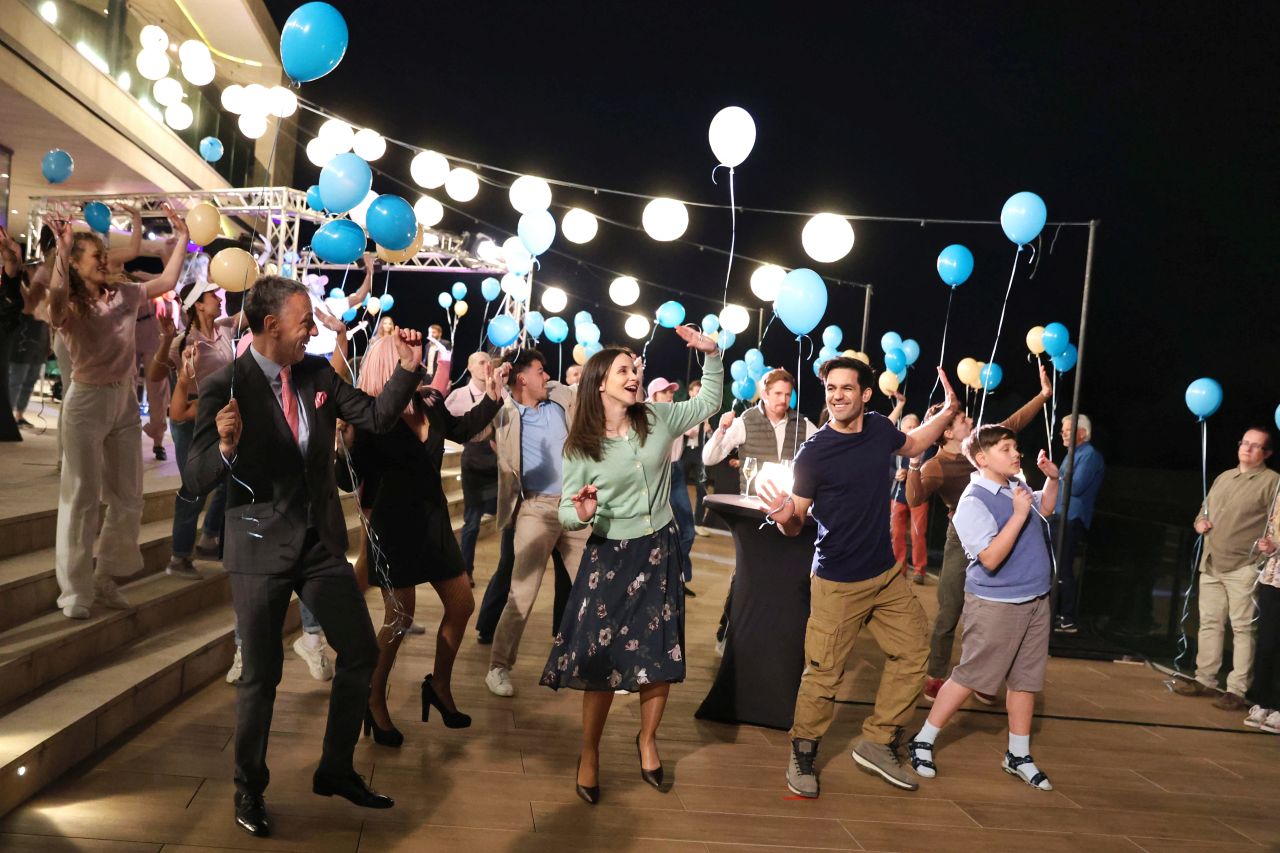
Legénybúcsú is the film adaptation of Szente Vajk’s theater hit of the same title: two friends who have been inseparable for decades (Alex and Simon) try to put their lives back on track over the course of a bachelor party night filled with a poker tournament and every conceivable complication, while, among others, a young boy observes from the outside the adults’ spiral of lies. We spoke with the director about the current flood of rom-coms, the limits of friendship, and why he believes that entertainment genres are not “lesser” forms of art.
theGeek (Gergely Herpai):
My first question starts a bit further back. When I was watching the film, my initial impression of Rebeka Kárpáti’s character was that this could easily belong to the world of an “adult film.” Then I looked it up, and it reminded me of the 1968 film Candy, as well as the character Candy Suxxx from Grand Theft Auto – both deal with sexuality and male fantasies, parodying adult-film tropes. Legénybúcsú is also a comedy, and both play with these clichés. What was it about this story that really grabbed you, what was the true source of inspiration?
Vajk Szente:
Honestly, I don’t know that particular film, so it didn’t inspire me. For me, the fundamental inspiration was to tell a story about a friendship that seems unbreakable, and about how far you can go in helping the other person. Where are the points where it becomes too much, and when does the moment arrive when a friendship simply cannot take any more. If I had to give a one-sentence logline, I think that’s what this film is about.
tG (Gergely Herpai):
The poker tournament, the high-stakes play, the lies and the gambling with relationships could feel quite personal. Is there any personal experience behind this, or is it pure fiction?
Vajk Szente:
Zero percent personal. And I don’t think that’s a problem. Theater and film can work perfectly well purely from imagination. These characters and situations are not imprints of real people, but a playful yet emotionally serious hypothesis: what happens if you throw two friends into a night like this, where everyone has something to lose. It’s entirely the product of imagination, not a one-to-one retelling of real life.
tG (Gergely Herpai):
There are a lot of characters in the film: a detective, a doctor, family members, friends. Is there a character – either in the stage version or in the film – who is particularly close to you, someone you truly adore as a director?
Vajk Szente:
If I have to single one out, it would be the little boy. Not only because he’s played by a very talented child actor, but because his point of view slightly shifts everything. He is the one who, as a child, watches with a kind of resigned calm as adults – with fundamentally innocent intentions – slowly slide into a spiral of lies. He doesn’t actively participate, but it’s clear he has an opinion. I really love these “silent witness” characters: they provide the moral mirror to what the adults are struggling with.
tG (Gergely Herpai):
If we look at the genres of Hungarian films over the past, say, five to ten years, rom-coms and comedies seem to dominate. Why do you think other genres – horror, thriller, historical films, crime – are pushed into the background compared to comedies? This isn’t necessarily criticism, more an observation.
Vajk Szente:
I’ve written a lot of comedies and musical, entertaining productions for the theater, and I’m fully convinced that in terms of artistic quality they are not inferior to works where “you’re not supposed to laugh.” Yet in the Hungarian theater and film scene there’s still a reflex: if something is funny, if people are “just being entertained,” it must be artistically worth less. I simply don’t think that’s true. If we look back at the 20th century, Hungarian films of the 1930s were practically all comedies and, in today’s terms, rom-coms: Meseautó is one, Hippolyt, a lakáj is another. Even in wartime, escapism worked: Csárdáskirálynő was performed hundreds of times, Latabár films played to full houses, because people needed to forget, for two hours, what was happening around them. Often the audience tells the performing arts, “I want to be entertained now,” and that is completely legitimate. That doesn’t mean you can’t, or shouldn’t, embed messages in these stories.
tG (Gergely Herpai):
To what extent do you feel that Legénybúcsú reflects Hungarian reality? When we think of the great classics, there’s A tanú, for example, which is both a comedy and a very sharp portrait of its era. Does a contemporary film comedy also need to hold up a “social mirror,” or is it enough to talk about a specific human situation?
Vajk Szente:
I don’t believe a film comedy has a single “general duty.” One film does one thing, another does something else. In the case of Legénybúcsú, I wanted to tell a story about a friendship: about the decisions two people make for each other, and what the cost of those decisions is. If someone makes another film that wants to talk about current Hungarian reality in a satirical tone, that’s just as valid, it’s simply taking on something different. A tanú speaks about its era in a completely different way than our film speaks about friendship. If every film comedy wanted to say the same thing in the same way, that would be the real problem.
tG (Gergely Herpai):
As a director, what other genres would you like to try in the coming years? You’ve done rom-coms and comedies – what’s next?
Vajk Szente:
Film directing is difficult in the sense that cinema now faces serious competition from streaming. You have to get people off the couch and lure them out of their living rooms, while an incredible amount of content is available at home. That said, to answer your question directly: my next desired step is clearly a musical film. That’s what excites me the most right now. Whether it will be a comedy or not is another question, but I’m definitely thinking in terms of a musical cinematic form where the music isn’t just “accompaniment,” but a driving force of the dramaturgy.
theGeek (Anikó Angyal):
Do you think other genres – say, more serious, darker historical or dramatic films – can reach audiences just as effectively as a rom-com? From what you’re saying, it seems people are currently more open to entertainment and lighter genres.
Vajk Szente:
I think they absolutely can. Let me give a theater example: at the Erkel Theatre we’re staging the musical Trón, which is a very heavy, medieval story, essentially a large-scale historical drama with an impressive visual world. Interest in it is just as strong as for a lighter operetta production. Audiences aren’t only interested in “pink” stories, but in big stories as well, if they’re told well. I’m convinced the same would work in cinema: if someone made a truly strong, high-quality costume drama, historical film, or action movie, people would show up for it just the same.
theGeek (Anikó Angyal):
So as a director, you’d also try yourself in these more “serious” films? Historical, costume dramas, action or adventure films – do these genres interest you, or will you stick to musical and romantic stories?
Vajk Szente:
A costume drama, historical or adventure film would be just as exciting a terrain as a romantic comedy, simply with a different toolkit. Right now, the musical film is the “next step” in my mind, but if a strong historical or action screenplay came along that I truly felt was mine, I’d happily dive into it. For me, the key is always having a story with stakes, with a human core, something I can say is worth telling.
theGeek (Anikó Angyal):
Recently, the film adaptation of one of Kristóf Deák’s stage works was also released. Have you seen it yet? And more generally, what do you think about how rewarding or unrewarding it is to adapt a story from stage to screen?
Vajk Szente:
I haven’t seen that film yet, so I can’t responsibly offer an opinion on it – though I’d very much like to, because I know how much energy and personal investment goes into fighting for years to get a film made. Adapting stage works for the screen is generally very difficult terrain: what works on stage doesn’t necessarily work the same way on screen, the rhythm is different, the space is different, and the way you handle acting has to change as well. But that’s exactly what makes it exciting. In part, that’s what Legénybúcsú’s journey is about too: how to translate a theatrical story into film in a way that preserves its soul, while the form becomes fully cinematic.
-theGeek-








Leave a Reply