
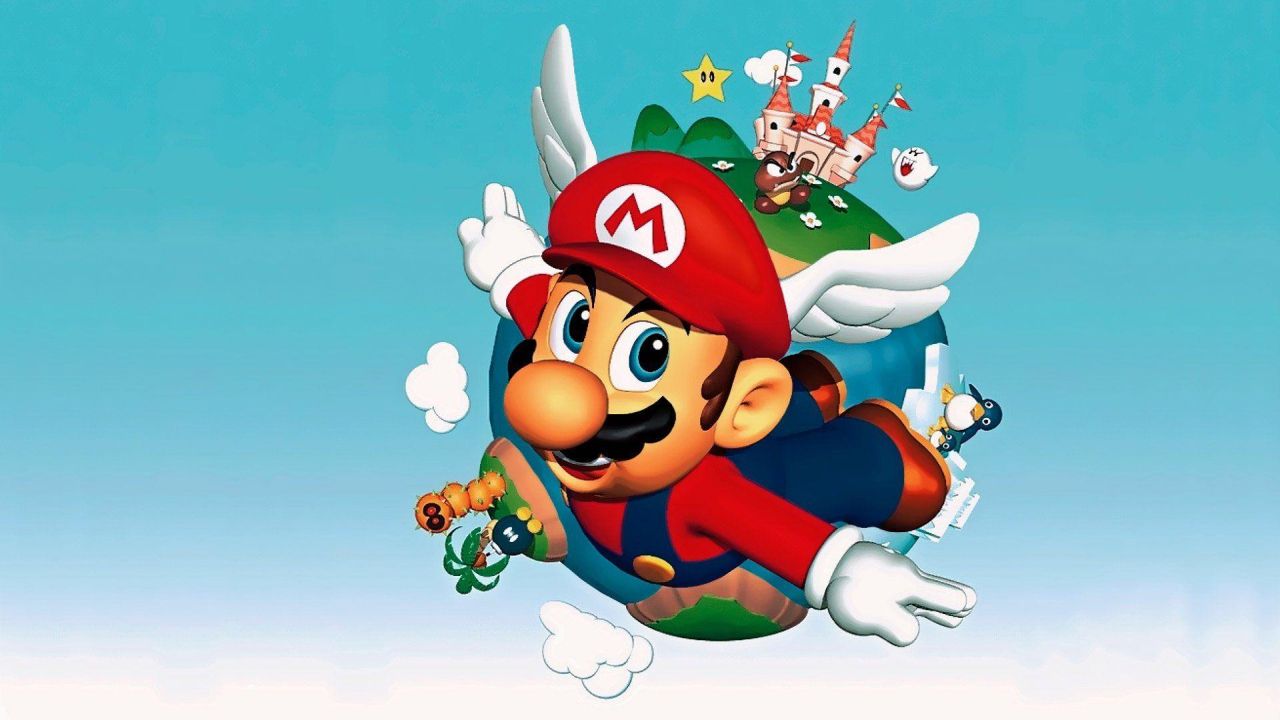
Most fans are calling for Super Mario Odyssey 2 or even a new Galaxy, yet one of Mario’s most underrated adventures is far more in need of a follow-up. Freed from the limitations that held it back at launch, a sequel could become the plumber’s finest outing to date.
Many games are worthy of sequels. Throughout its history, the 3D Super Mario series has produced continuations that expanded on the mechanics and ideas of their predecessors, such as Super Mario Galaxy 2 or Super Mario 3D World, often viewed as a sequel to Super Mario 3D Land. Yet three landmark entries — Super Mario 64, Super Mario Sunshine, and Super Mario Odyssey — have never received a true follow-up. While anticipation is high for the next Mario game on Nintendo Switch 2, Sunshine feels like the title most in need of redemption right now.
Legacies That Are Hard to Top
Super Mario 64 marked the franchise’s leap from 2D to 3D when it launched in 1996. It showcased the Nintendo 64’s capabilities and allowed developers to move beyond linear design toward fully explorable worlds. Nintendo began work on a sequel almost immediately, but the commercial failure of the Nintendo 64DD led to its cancellation. Although Super Mario Sunshine is often seen as a spiritual successor, Super Mario 64 never received a direct continuation of its core ideas.
A modern sequel would undoubtedly be exciting, but it would struggle to replicate the original’s cultural impact. Super Mario 64 fulfilled its mission as a revolutionary title, introducing innovations like a third-person camera and open level design. Super Mario Odyssey similarly pushed the series forward, blending nostalgia with bold new ideas such as Cappy’s transformations, massive explorable worlds, and outstanding visual polish. Although rumors swirled about a sequel around the launch of Nintendo Switch 2, Odyssey can afford to wait — a return to Sunshine would offer richer creative potential.
An Untapped Opportunity
Before directing Super Mario Sunshine, Yoshiaki Koizumi worked on the Super Mario 128 demo showcased at Space World 2000. The project was groundbreaking but ultimately shelved due to the GameCube’s technical limits. When Koizumi pitched Sunshine to Miyamoto, he already envisioned Mario wielding a water-based tool that would become FLUDD. This idea inspired the tropical setting of Isle Delfino, built around semi-open, interconnected environments.
The game was developed in just a year and a half, a pace driven by Nintendo’s desire to boost early GameCube sales. That speed left its mark, resulting in technical compromises and fewer worlds than Super Mario 64. Difficulty also became a point of contention, with even Miyamoto later admitting that the game was not easily understood by all players.
Yet Sunshine’s water mechanics were far ahead of their time, deeply integrated into exploration and combat. A sequel could refine accessibility while dramatically expanding these systems. The original’s level design struck a rare balance between a coherent setting and varied activities, making Isle Delfino memorable despite having only seven main areas. With more development time, a sequel could double that scope and recapture a sense of vacation-like wonder unmatched elsewhere in the series.
Koizumi’s background and interest in filmmaking also shaped Sunshine’s narrative, with cinematic cutscenes that added depth beyond what Super Mario 64 could achieve. Fans continue to praise its story, and a follow-up could push this even further, embracing a more cinematic approach akin to what we later saw in Super Mario Galaxy. All of this makes Super Mario Sunshine 2 feel like the perfect next step — and who wouldn’t want to see Mario once again facing trial under the watchful eyes of the Piantas?
Source: 3djuegos







![The System Requirements for Fable Are In! [VIDEO]](https://thegeek.games/wp-content/uploads/2026/08/vnews-05-fable-1280x720-1-302x180.png)





Leave a Reply