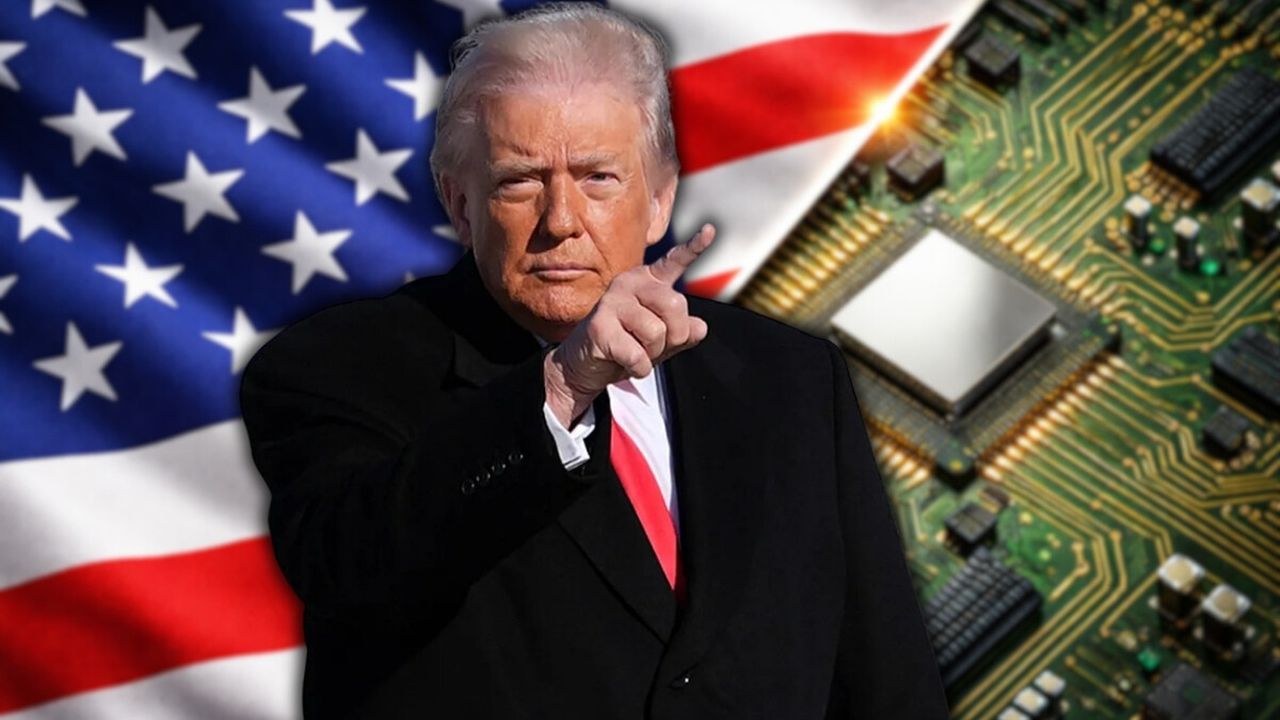
TECH NEWS – The United States is raising the stakes with a 25% tariff on AI chips – and consumers will ultimately foot the bill. Donald Trump is imposing a 25% duty on certain advanced chips, and the industry is already bracing for more red tape, deeper trade tensions, and rising price pressure.
The United States has announced a 25% tariff on certain advanced computing chips, a move framed as a direct response to national security concerns and reliance on foreign manufacturing. The measure targets specific models used for artificial intelligence workloads, which is why Nvidia’s H200 and AMD’s MI325X are among the chips expected to be affected.
To determine which products fall under the tariff, U.S. officials relied on technical performance benchmarks that narrowed the scope to particular units. After a nine-month investigation under Section 232 – a mechanism that allows supply chains to be treated as a strategic matter – the U.S. compiled a broad list of exceptions. The goal appears to be preventing panic by excluding chips meant for U.S.-based data centers, consumer products, civilian use cases, and certain parts of the public sector.
Donald Trump’s Plans
The Commerce Department is still keeping the door open to additional exemptions on a case-by-case basis. Secretary Howard Lutnick emerges as a key figure in the fine print, but the announcement has already had an impact: it triggered slight stock market dips for Nvidia, AMD, and Qualcomm. For investors, that reaction signals the seriousness of the policy shift, while attention remains focused on any possible legal or regulatory pathways that could soften its effects.
Donald Trump has also called for a 25% tariff on chips destined for China that cross U.S. borders, a measure intended to shut down logistical “shortcuts” in exports. The move fits into a broader strategy meant to expand domestic manufacturing while simultaneously using tariffs as leverage.
The message to the industry is therefore twofold: on one hand, companies are being pushed to invest in local capacity; on the other, they must prepare for a surge of documentation and customs scrutiny, because chips are no longer debated only in labs – they are now firmly part of trade enforcement. For consumers, the consequences will most likely not be immediate, but price increases could appear in professional hardware, as well as in services such as cloud storage.
Source: 3djuegos








![The System Requirements for Fable Are In! [VIDEO]](https://thegeek.games/wp-content/uploads/2026/08/vnews-05-fable-1280x720-1-302x180.png)