
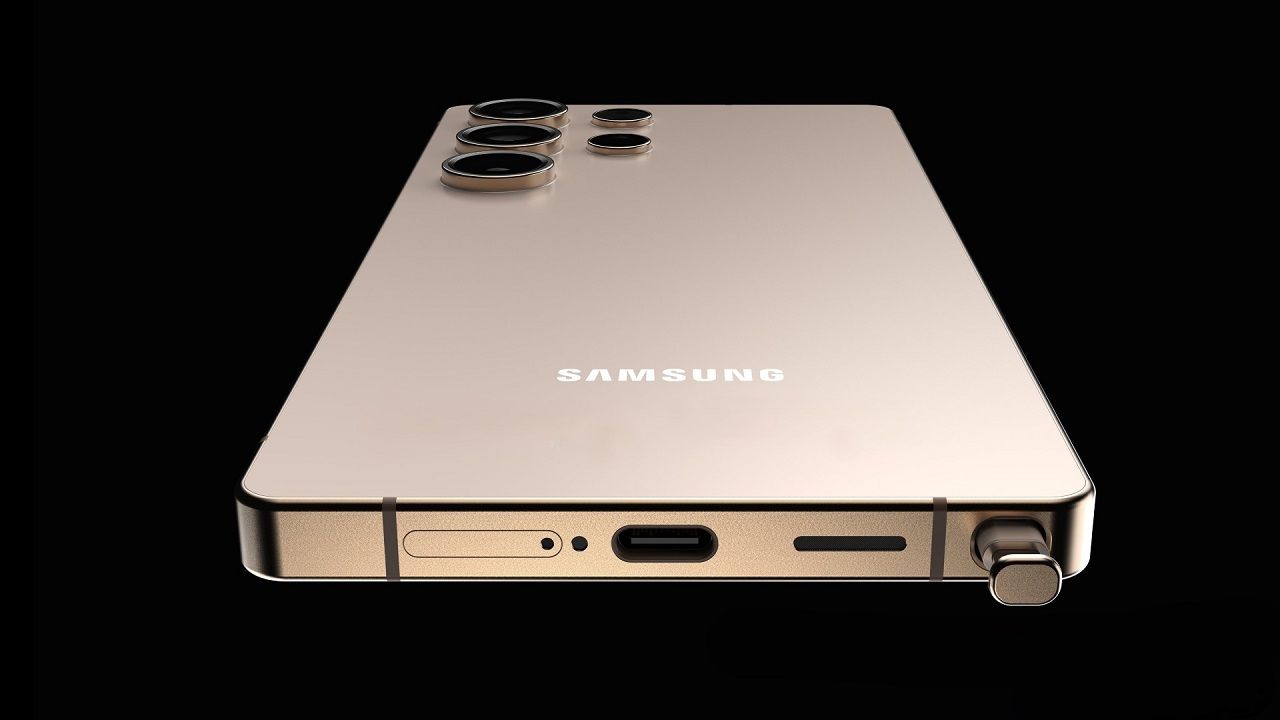
TECH NEWS – Fresh testing suggests Samsung may have fixed the long-running thermal and throttling pain point with Exynos 2600. Under sustained load, both Galaxy S26 and Galaxy S26+ appear to hold relatively controlled surface temperatures instead of spiraling into the familiar heat-and-slowdown pattern.
Long Ngong from Vật Vờ Studio put the Galaxy S26 and Galaxy S26+ through a mix of benchmarks, including AnTuTu, 3DMark, and CPU Throttling. To stress the Exynos 2600 thermals, he ran three games back-to-back at the highest graphics settings – League of Legends: Wild Rift, Genshin Impact, and Honkai – while keeping ambient temperature around 26°C.
During League of Legends: Wild Rift, the base Galaxy S26 averaged roughly 32°C. On the Galaxy S26+, after more than 15 minutes of Genshin Impact, the front-side peak sat around 38°C, while the back hovered between 37 and 37.5°C. In Honkai on the Galaxy S26+, FPS sometimes dropped noticeably, but the front topped out near 39°C and the back barely pushed past 38°C, which is a welcome shift for anyone used to older Exynos behavior.
This is the absolute power of HPB in the Exynos 2600 – notice how those infamous “heat bubbles” around the CPU area are gone. The thermal bottleneck of high-performance SoCs has been solved. A new era is coming lol pic.twitter.com/lYK8J5iXuA
– Lu (@luancastro_lc) February 27, 2026
The thermal gains are being tied to three hardware-level changes. First, Exynos 2600 is described as Samsung’s first chip to use a 2 nm Gate-All-Around (GAA) process, a 3D transistor architecture where the gate fully wraps the channel. The stated upside is better electrostatic control, lower voltage thresholds, and improved efficiency, which feeds directly into lower heat under load.
Second, the chip reportedly uses Fan-Out Wafer-Level Packaging (FOWLP), a wafer-level approach that replaces traditional substrate-based packaging. The idea is a smaller overall footprint with more direct silicon connectivity, enabling thinner and more efficient designs. In practical terms, the approach can push I/O terminals outside the semiconductor die and integrate them onto a silicon wafer instead of relying on a conventional PCB-style structure.
Third, Exynos 2600 is said to employ Heat Path Block (HPB), a copper-based heat sink that makes direct contact with the application processor while the DRAM is moved to the side. The claim is up to a 30% improvement in thermal resistance, which would help explain why sustained loads do not instantly translate into runaway heat.
If the 2 nm node, the new packaging, and the revised heat path stack the way they are supposed to, Samsung may finally be breaking the cycle where Exynos looks strong on paper but falls apart under sustained pressure. The current results at least point to a Galaxy S26 generation where the old bottleneck is not the first thing users hit.
Forrás: WCCFTech


![Stranded Deep 2: After Two Years, We Finally Get to See More of It! [VIDEO]](https://thegeek.games/wp-content/uploads/2026/09/Stranded-Deep-2-1280x720-1-302x180.jpg)
![Sony Is Following the Same Path Xbox Took in 2013! [VIDEO]](https://thegeek.games/wp-content/uploads/2026/09/Live-TV-on-PS5-1280x720-exact-302x180.png)








![Stranded Deep 2: After Two Years, We Finally Get to See More of It! [VIDEO]](https://thegeek.games/wp-content/uploads/2026/09/Stranded-Deep-2-1280x720-1-300x365.jpg)
![Sony Is Following the Same Path Xbox Took in 2013! [VIDEO]](https://thegeek.games/wp-content/uploads/2026/09/Live-TV-on-PS5-1280x720-exact-300x365.png)

Leave a Reply