
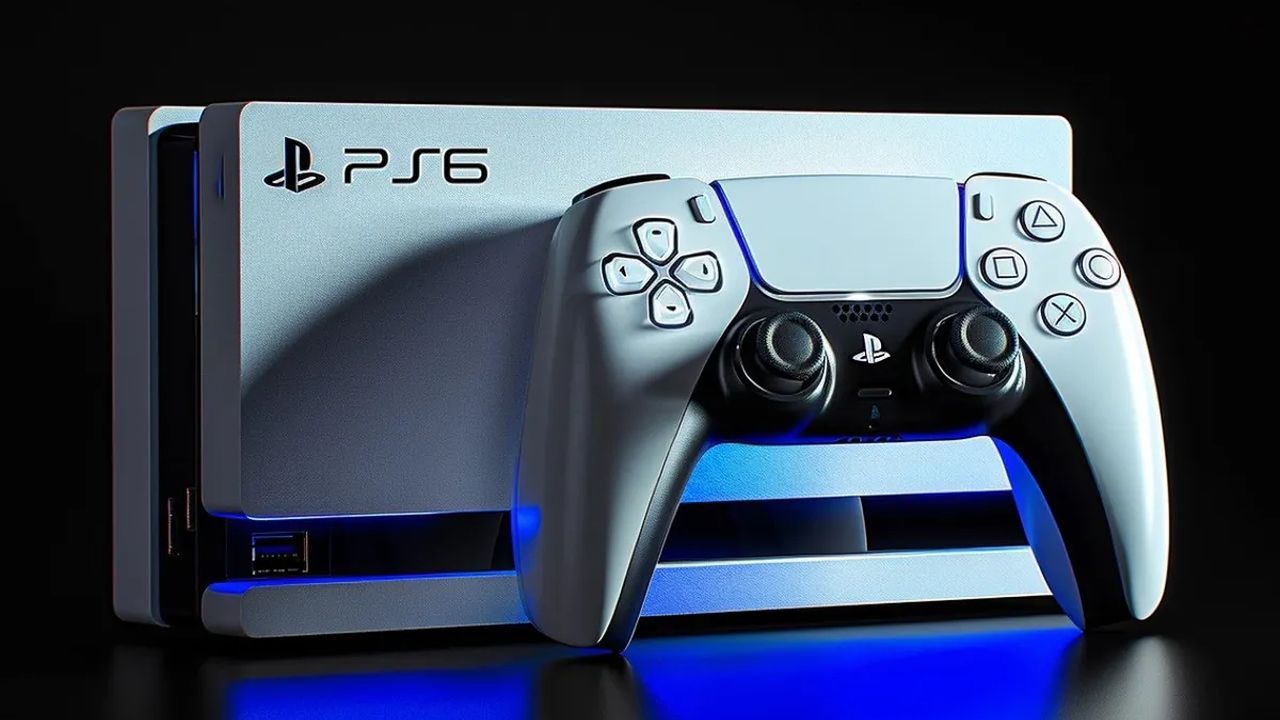
More people are now saying Sony’s next-gen console won’t be meaningfully less capable than Microsoft’s new device.
PlayStation 6 and Xbox Project Helix are still a long way off, but leaks have already painted a reasonably clear picture of what both systems might be capable of. According to Digital Foundry, Microsoft’s next-gen machine is expected to be the stronger of the two, but not by a dramatic margin. In the latest episode of their weekly podcast, where they ran an early breakdown of the leaked specifications for both platforms, the Digital Foundry editors noted that the gap is unlikely to translate into a major real-world advantage.
Over on the NeoGAF forums, the well-known AMD leaker Kepler_L2 also weighed in, arguing that – contrary to the common assumption – the difference between PlayStation 6 and Xbox Project Helix will be larger than the gap between PlayStation 5 and Xbox Series X. For Magnus (the Project Helix APU), he cited roughly 25% higher TFLOPs/tex, around 33% higher front-end bandwidth, Geom rate, and Pixel rate, plus 140% more LLC and 20% higher memory bandwidth. Kepler_L2 still agrees this won’t create an extreme split – for example, a scenario where Magnus runs something at 60 FPS while PlayStation 6 can only manage 30 FPS, or where Magnus enables path tracing in a game that the PS6 can only run with ray tracing. Instead, the leaker expects Xbox Project Helix to run titles at a higher internal resolution or with slightly higher-quality settings, which in practice may not look like a major difference given how heavily games will lean on upscaling with future versions of PSSR and AMD FSR Diamond.
If Xbox Project Helix doesn’t end up with a huge performance edge, next-gen success will depend on pricing more than ever. And on that front, Microsoft may have the tougher job. Digital Foundry’s Oliver Mackenzie said the new Xbox Magnus chip is reportedly over 400 mm² – even though he believes it’s a dual-chip design – which is a notably large piece of silicon for a console. PlayStation 6, meanwhile, appears closer in size to the PlayStation 5 Pro because it’s said to be a slim, monolithic chip, which would naturally be cheaper to manufacture. With high bill-of-materials costs, there’s a strong chance Xbox Project Helix ends up more expensive than PlayStation 6, which would limit its appeal – especially if its performance advantage isn’t all that substantial (even if it still represents a meaningful leap over Xbox Series X).
For now, there are no confirmed details for either PlayStation 6 or Xbox Project Helix, so this remains speculation – but there’s a decent chance we won’t have to wait too long before more concrete information surfaces.
Source: WCCFTech, NeoGAF, NeoGAF










Leave a Reply