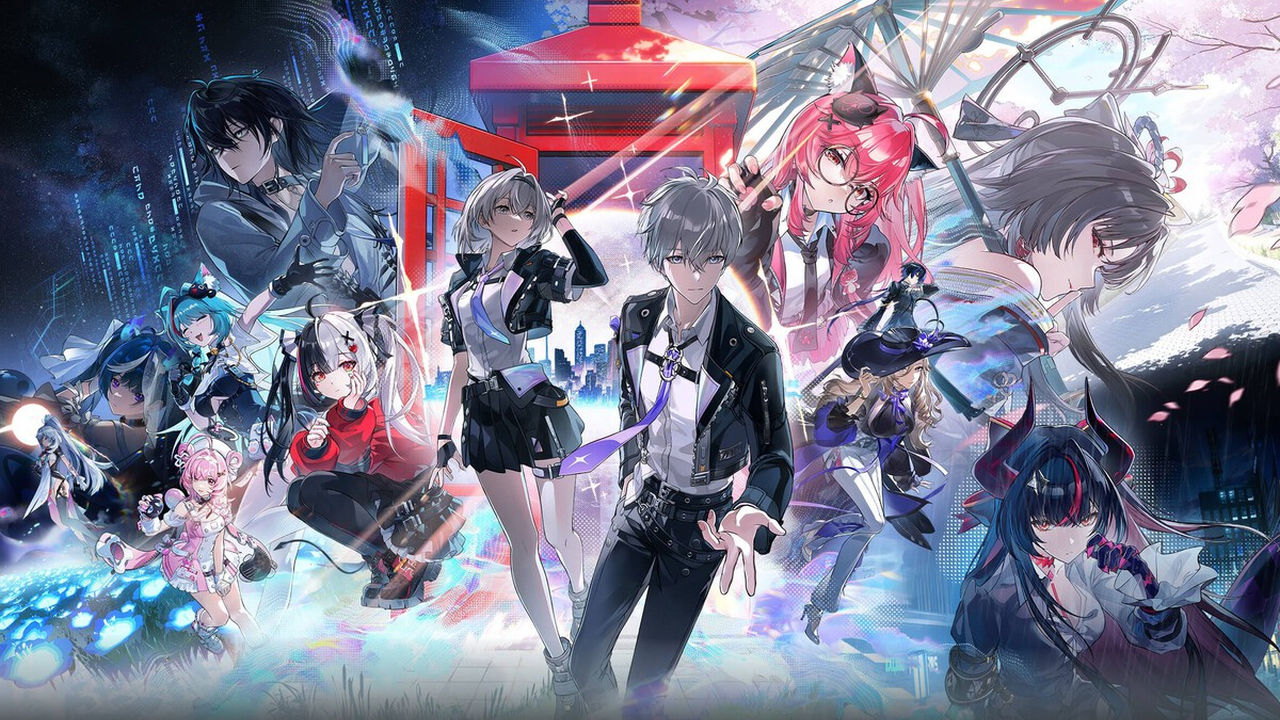
NTE: Neverness to Everness may look at first like another flashy anime action RPG, but Hotta Studio and Perfect World Games are aiming far beyond that familiar box. In the neon city of Hethereau, supernatural combat, driving freedom, urban life, gacha systems, housing, mini-games and sandbox chaos come together in a free-to-play experience that clearly does not want to follow the genre’s usual route.
Some games promise open worlds, and then there are games that immediately try to convince you that you do not just want to complete them, but actually live inside them for a while. NTE: Neverness to Everness is aiming for exactly that effect. Hotta Studio, the team behind Tower of Fantasy, has not simply built another anime-styled gacha RPG. It has created a supernatural urban open-world game where combat, driving, everyday city life and bizarre paranormal events are meant to exist side by side.
The game takes place in Hethereau, a neon-lit modern metropolis where the player becomes the city’s first “unlicensed” Anomaly Hunter. The story revolves around Eibon, a run-down antique shop whose crew takes strange anomaly-related jobs from anyone willing to pay, while supernatural distortions keep twisting the city in dangerous ways. This is not a traditional fantasy kingdom. It is an urban space where a taxi ride, a street race, an apartment, a shop visit or a demonic encounter can all belong to the same daily routine.
The biggest promise is that Hethereau is not just a backdrop. The developers are building the city in Unreal Engine 5 and are emphasizing seamless play between activities. Players can fight anomalies, get into a car, enter shops, wander through neighborhoods or simply spend time in the city without constantly being pulled back onto a single path. The point is not only to push the main story forward, but to let players decide whether they want to chase quests, drive, collect, explore, relax or simply exist inside a city full of supernatural trouble.
Hethereau Is Not A Map, But A City That Actually Does Things
NTE: Neverness to Everness is not building its open world only from battle zones and quest markers. Urban life simulation is also a major part of the design: players can hail taxis, fish, play mahjong, take part in rhythm mini-games, use public transport, talk to NPCs and spend time on activities that have nothing to do with saving the world. That matters because the game does not only want players to progress efficiently. It wants to give them reasons to stop.
The combat system is built on more familiar anime action RPG foundations. Players control different Espers, each with their own powers, special attacks and synergistic abilities. Squad composition, chained skills and dynamic fights are clearly important, but NTE does not appear to be stopping at a simple character-switching combat model. The developers have added perfect counters, movement-based mechanics and more active use of the environment, aiming to make battles not only flashy, but also more reactive.
The environment itself is not just decoration either. Scenarios are destructible, and the city space can become part of the strategy. That is a meaningful distinction in a market where many anime RPGs show impressive cityscapes, but offer far more limited interaction in practice. NTE is trying to stand out by making its urban space explorable, usable, breakable, drivable and livable.
Driving deserves its own section. Players can drive sports cars, motorcycles and karts, switch between third-person and cockpit views, and customize vehicles in both appearance and performance. Driving is not presented as mere fast travel: weather can affect grip, vehicle damage matters, and multiplayer street races add a competitive layer to the city. You can also steal cars, and the police respond when you cause trouble. Wanted levels, chases and the possibility of being detained bring a clear sandbox-crime flavor into this anime metropolis.
The Gacha Is Trying To Be A Head Start, Not Just A Trap
NTE: Neverness to Everness is a free-to-play game, so it naturally uses gacha systems, but the developers are visibly trying to soften some of the genre’s most disliked elements. Pulls are visually represented on a board, players always receive rewards, limited pools do not include traditional off-banner characters, featured characters are guaranteed after a certain number of attempts, and weapons are not fully dependent on the gacha. On paper, that is a more transparent model than many similar games offer.
Around launch, the game is also trying to bring players in with a strong package of rewards. Perfect World and Hotta Studio’s communication highlights free pulls, bonus currency, character rewards and customization items in version 1.0. External code lists currently include several active redeem codes that grant Annulith, upgrade materials, dyes and Beetle Coins. Annulith matters most, because it is one of the key currencies used for character acquisition and faster progression.
Codes currently listed as active include NTENOWTOENJOY, NTENANALLYGO, NTE0429, NTEGIFT and newer community codes such as 504980102FKGOVNS. Reward breakdowns vary slightly between sources, but the direction is clear: the developers want the first hours to begin with momentum rather than empty grinding. To redeem codes, players need to progress beyond the opening section and unlock the relevant in-game menu and mail features before entering them through the redeem code option.
The biggest question for NTE, however, is not how many launch rewards it gives out, but whether it can hold all of its systems together over time. Anime action, supernatural investigation, GTA-like city freedom, more realistic driving, housing, mini-games, destructible environments and gacha monetization make for a mix that is both exciting and dangerous. If these systems reinforce one another, Hethereau could become one of the most interesting free-to-play cities on the market. If they do not, the whole thing could become an overinflated promise.
Hotta Studio and Perfect World Games are at least pointing in a direction that is hard to ignore. NTE: Neverness to Everness does not rely on one isolated gimmick. It tries to put systems that usually live in separate games into the same space: anime squad combat, urban sandbox freedom, driving, daily life and supernatural chaos. That could become its greatest strength, but it could also become its biggest risk.
Sources: 3DJuegos, Perfect World Games, Google Play, PC Gamer, GamesRadar+