
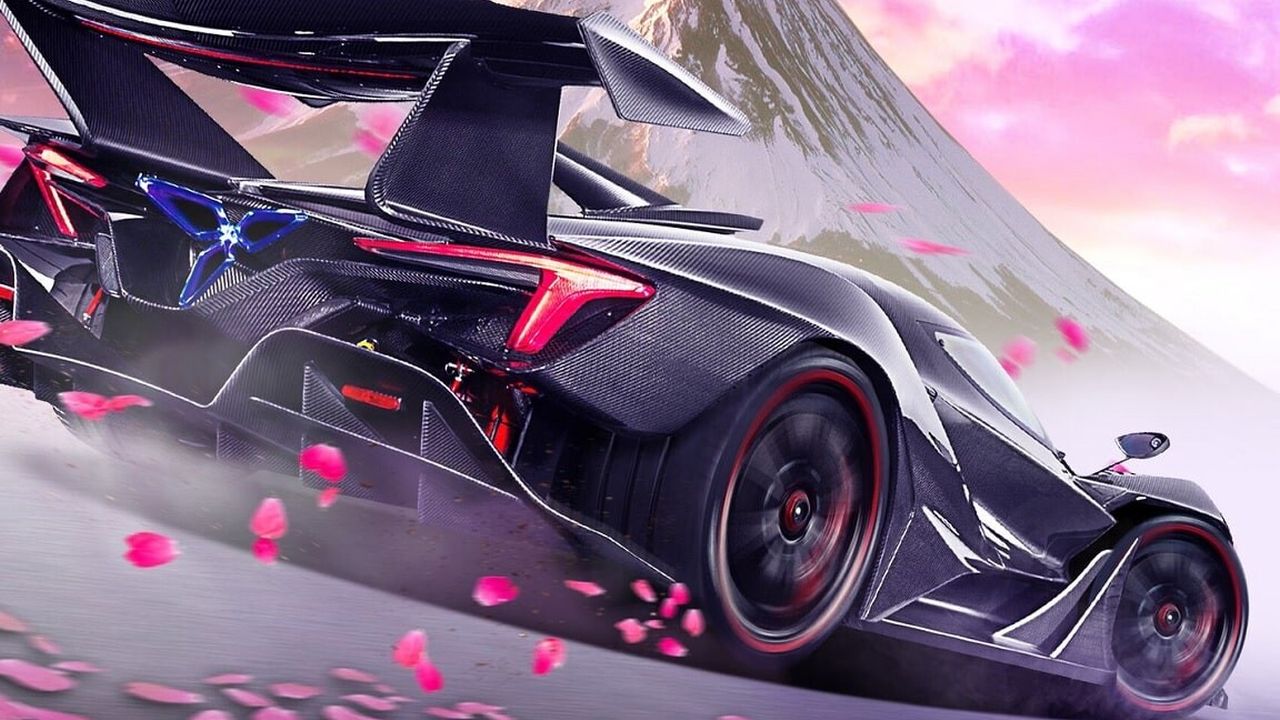
Just because you cannot mow down pedestrians does not mean an open world has to feel dead: according to Playground Games, the Tokyo section of Forza Horizon 6 can still feel busy and believable without pretending it is trying to be GTA.
Forza Horizon 6 already had fans interested the moment Playground Games confirmed that this time the festival was heading to Japan. Not just one carefully arranged urban backdrop either, but a broader open world stretching from snowy mountains and rural terrain to the modern streets of Tokyo. But as the developers have now explained, building that city was not simply a matter of adding more lights, more signage, and more visual density. The real headache came from a more basic question: how do you make a modern metropolis feel alive when your cars are allowed to go practically anywhere?
That is where the pedestrian problem comes in. Speaking to IGN, production manager Mike Bennet said one of the big challenges of creating Tokyo was figuring out how to include people in a city environment while still keeping them protected from the cars. As he put it, this is not GTA, and it is not trying to be. That matters, because in a modern city you expect to see crowds, but in a Forza Horizon game the player can blast through open spaces with almost complete freedom. Put those two ideas together carelessly, and the illusion falls apart almost immediately.
Tokyo’s Pedestrian Problem Needed a Different Solution
Playground’s answer was not to fake the issue away, but to work around it through the fiction of the Horizon Festival itself. Because the festival infrastructure is spread throughout the city, the team can create branded zones where pedestrians are present and visible, while still keeping them separated from the vehicles. In other words, the city can look crowded and energetic from behind the wheel without the game having to bend into something it was never designed to be. It is a practical compromise, but also a clever one, because it preserves both the fantasy of a lively Tokyo and the pure arcade flow that defines the series.
Tokyo also demanded a much larger production effort than usual. Art director Don Arceta revealed that Forza Horizon 6 is the first entry in the franchise to require an internal split at Playground Games, with one team focused entirely on building Tokyo while another handled the rest of the map. That alone says a lot about the scale of what they are attempting. According to the studio, this is the biggest city they have ever created, and also the richest and most detailed.
That does not just mean more asphalt, more towers, and more obvious Japanese iconography. Arceta explained that Tokyo required dedicated work across roads, buildings, vegetation, and terrain alike, effectively making it a biome large and complex enough to justify its own team. If that ambition translates well to the final game, then Forza Horizon 6 may end up delivering one of the most convincing urban spaces the series has ever attempted, not because it copies the rules of other open-world games, but because it knows exactly where its own rules need to hold.
The game launches on May 19, 2026, and this early look at Tokyo suggests Playground Games is not interested in forcing realism where it would only break the design. Instead, it seems to be chasing something more useful: an open world that feels alive on its own terms, without pretending that every successful sandbox has to solve the same problems in the same way.
Source: 3DJuegos










Leave a Reply