
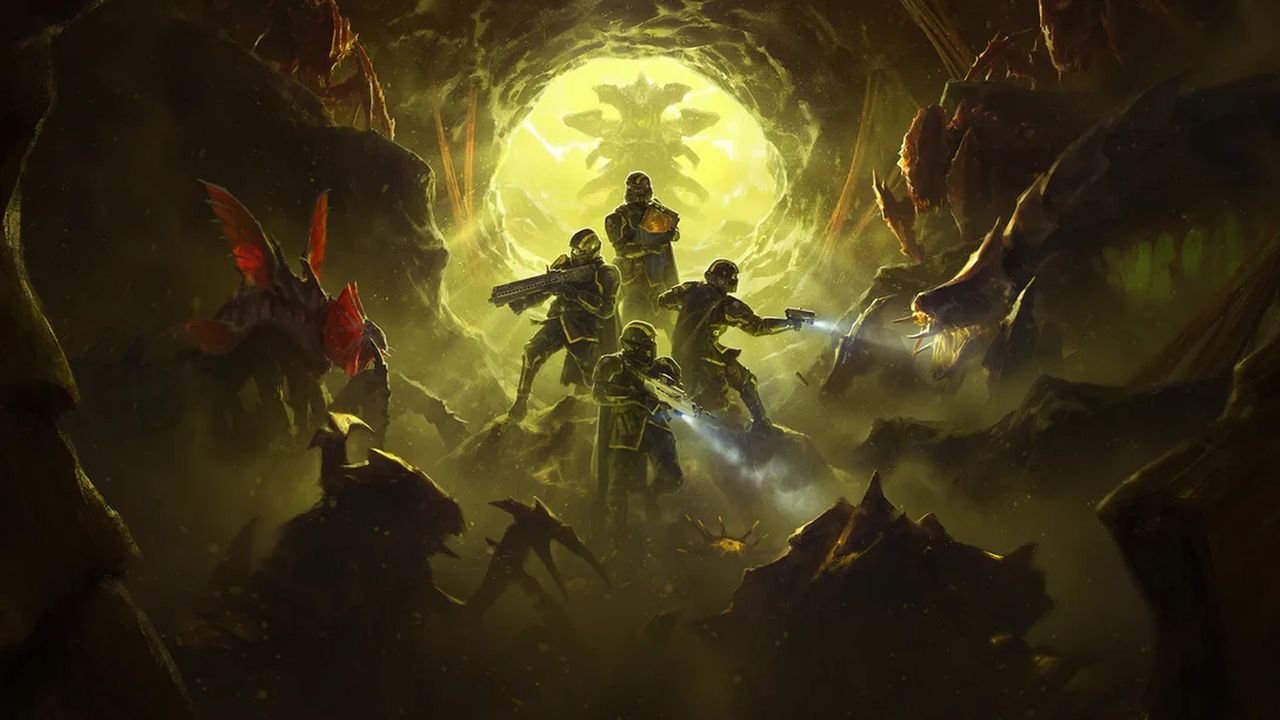
Helldivers 2 has once again found itself at the center of community debate, this time over War Bonds, balance changes and the constant pressure of the live-service model. Arrowhead CEO Shams Jorjani has now openly explained that running this kind of game is not an exact science, and that even extensive testing cannot guarantee that players will receive updates the way developers expect.
Maintaining a live-service game is never simple, especially when millions of players react immediately to every small change. That is exactly what Helldivers 2, the cooperative shooter from Arrowhead Game Studios and PlayStation, is going through. The game has faced community backlash several times already, with players criticizing the development team’s slow reactions, the direction of certain decisions or the unpredictability of balance changes. Now the studio’s head has admitted that keeping the game on course with every update is far more complicated than it may look from the outside.
The latest controversy revolves around War Bonds. Although Helldivers 2 is a paid game, its base content does not require additional payments, but a significant part of its weapons, equipment and upgrades is accessed through the War Bond system tied to extra purchases. That system is not new, but over the past months its role and importance have grown, which has understandably created tension among many players. Part of the community feels that progression and useful tools are becoming too strongly tied to these additional content drops, while the developers argue that maintaining and fine-tuning the system is far more complex than it appears.
The situation was made worse by the latest Reddit AMA, which left a bad taste in the mouths of many players. Several accused Arrowhead of being disconnected from criticism and of not fully understanding what bothers the community. Shams Jorjani responded on Discord, where he said that developing a live-service game is “not an exact science”. According to him, even when the team carries out internal and external tests and receives satisfactory early feedback, the final reception can be completely different once an update reaches the full player base.
The Community Keeps Changing, And The Game Is A Moving Target
According to Jorjani, one of the biggest difficulties is that the community itself is not static. A player who has spent ten hours with Helldivers 2 sees weapons, progression, difficulty and content volume very differently from someone with a hundred or a thousand hours. What feels fresh and exciting to one group may feel too thin, too slow or badly weighted to veterans. That difference is especially visible in a game whose audience expects new content, stability, balanced combat and meaningful long-term progression all at the same time.
The Arrowhead CEO also suggested that the Xbox release changed the community’s overall taste. When large numbers of new players arrive, the balance and tone of feedback also shift. Newcomers see different problems than players who have followed every update for months or years. That makes it difficult to decide whether a specific complaint reflects a broad issue, a loud minority or a genuinely systemic problem.
Jorjani’s point was that Arrowhead sometimes hits closer to what the game needs, and sometimes misses. There have been cases where internal tests suggested a merely acceptable update, only for the community to receive it far better than expected. The reverse has also happened. That unpredictability does not excuse every mistake, but it shows why steering a game where weapons, enemies, War Bonds, missions and community expectations are all moving at once is so difficult.
The Live-Service Nightmare Begins When Everyone Wants Something Different
In the case of Helldivers 2, constant balancing has become part of the game’s identity. The developers regularly tweak weapons, enemies, exosuits, missions and technical details, but almost every change creates another debate. If a weapon is too strong, part of the community says it breaks the balance. If it is weakened, others argue that the developers are ruining the fun. If enemies become tougher, one group sees a challenge while another sees frustration. If things are made easier, the accusation quickly becomes that the game is losing its tension.
The latest patch also fits into that cycle: the exosuit and several enemy types have been adjusted, while the community continues waiting for larger and deeper changes, especially to progression. Johan Pilestedt, Arrowhead’s creative lead, previously indicated that the team is planning meaningful changes and working on improvements across several areas. The problem is that part of the community no longer wants to hear new promises. It wants to see tangible results.
Jorjani’s statement that live service is “tricky as hell” therefore sounds both honest and risky. Honest, because it really is difficult to maintain a game where every decision instantly receives mass feedback. Risky, because players ultimately care less about development difficulties than about whether their game improves. Arrowhead now has to prove not only that it understands the criticism, but also that it can turn that criticism into coherent, thoughtful and durable changes.
Helldivers 2 still stands on strong foundations, but live-service success is not a single moment. It is a constant test. Community patience is not infinite, and the War Bonds debate shows how quickly enthusiasm can become suspicion when players feel the system is increasingly working against them. Arrowhead is now exactly where every major live-service game eventually arrives: making good updates is not enough. The studio must also convince the community that it knows where it is taking the game.
Sources: 3DJuegos, GamesRadar+


![Stranded Deep 2: After Two Years, We Finally Get to See More of It! [VIDEO]](https://thegeek.games/wp-content/uploads/2026/09/Stranded-Deep-2-1280x720-1-302x180.jpg)
![Sony Is Following the Same Path Xbox Took in 2013! [VIDEO]](https://thegeek.games/wp-content/uploads/2026/09/Live-TV-on-PS5-1280x720-exact-302x180.png)







![Stranded Deep 2: After Two Years, We Finally Get to See More of It! [VIDEO]](https://thegeek.games/wp-content/uploads/2026/09/Stranded-Deep-2-1280x720-1-300x365.jpg)
![Sony Is Following the Same Path Xbox Took in 2013! [VIDEO]](https://thegeek.games/wp-content/uploads/2026/09/Live-TV-on-PS5-1280x720-exact-300x365.png)

Leave a Reply