
TECH NEWS – The race has begun so commercial deployment can happen within the next two to three years.
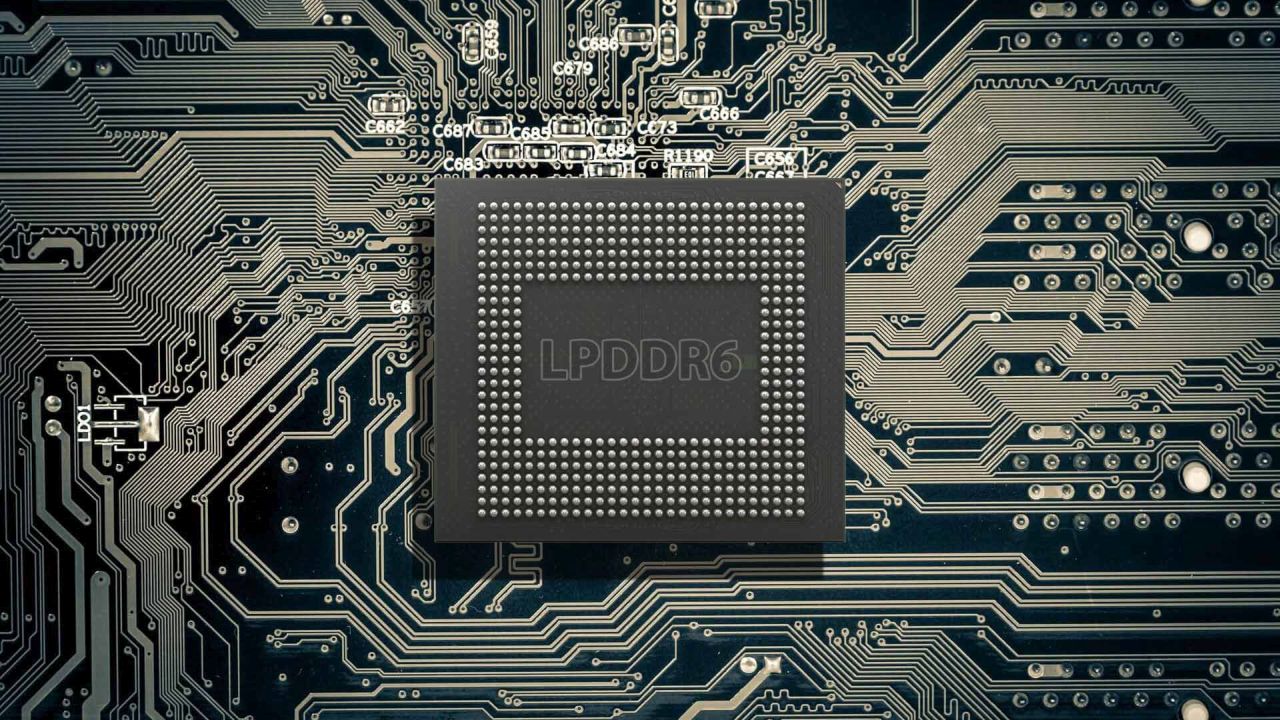
As artificial intelligence demands faster and higher-capacity memory, DRAM manufacturers are beginning to draw up development plans for next-generation standards. Last year, JEDEC announced the LPDDR6 standard, which offers better performance and efficiency than LPDDR5. LPDDR memory has already become a favorite of the AI industry because it offers higher speed and greater capacity while operating efficiently. Due to its energy efficiency characteristics, LPDDR is particularly well suited to AI data centers, and we have already seen SOCAMM2 equipped with LPDDR5/X become a standard for AI servers.
The three largest memory manufacturers, Samsung, SK Hynix, and Micron, are now accelerating DDR6 memory development. The new memory technology is expected to further improve the capabilities of the DDR5 standard, offering broad upgrades. Substrate manufacturers are being asked to move forward with DDR6 development. According to a substrate industry official, memory and substrate manufacturers typically begin joint development more than two years before a product’s launch. Initial DDR6 development has recently begun.
Although DDR6 will not reach commercial availability for several more years, socket manufacturers are already starting joint development on new projects two years in advance. Since the initial development work has begun, memory manufacturers are now competing to be the first to launch their own DDR6 products. None of them has released or demonstrated DDR6 modules yet, but given the increased interest in new memory standards, all three hope their next-generation designs will become the leading solution for future artificial intelligence data centers.
As we saw with DDR5, AI companies are not limiting themselves to a single DRAM supplier, because the shortage is so severe that even multiple DRAM suppliers are not enough to meet demand. Samsung and Micron have already stated that memory supply will remain constrained for several years, and that the situation in 2027 will be even worse than in 2026. DDR5 currently accounts for more than 80% of the server memory market and is expected to reach 90% later this year. As for the technology itself, DDR6 is expected to provide speeds of around 8.4 Gbps, potentially reaching up to 17.6 Gbps as the technology matures. The memory will also offer higher capacity and provide low-power operation, expected to be below 1.0 V in the case of LPDDR6 standards.
JEDEC recently unveiled its next-generation LPDDR6 SOCAMM2 memory, which offers 512 GB capacity in a compact and energy-efficient design. DDR6 is expected to become available for AI data centers between 2028 and 2029, while consumers may get access to the new memory generation one or two years after data center demand has been satisfied.
















Leave a Reply