
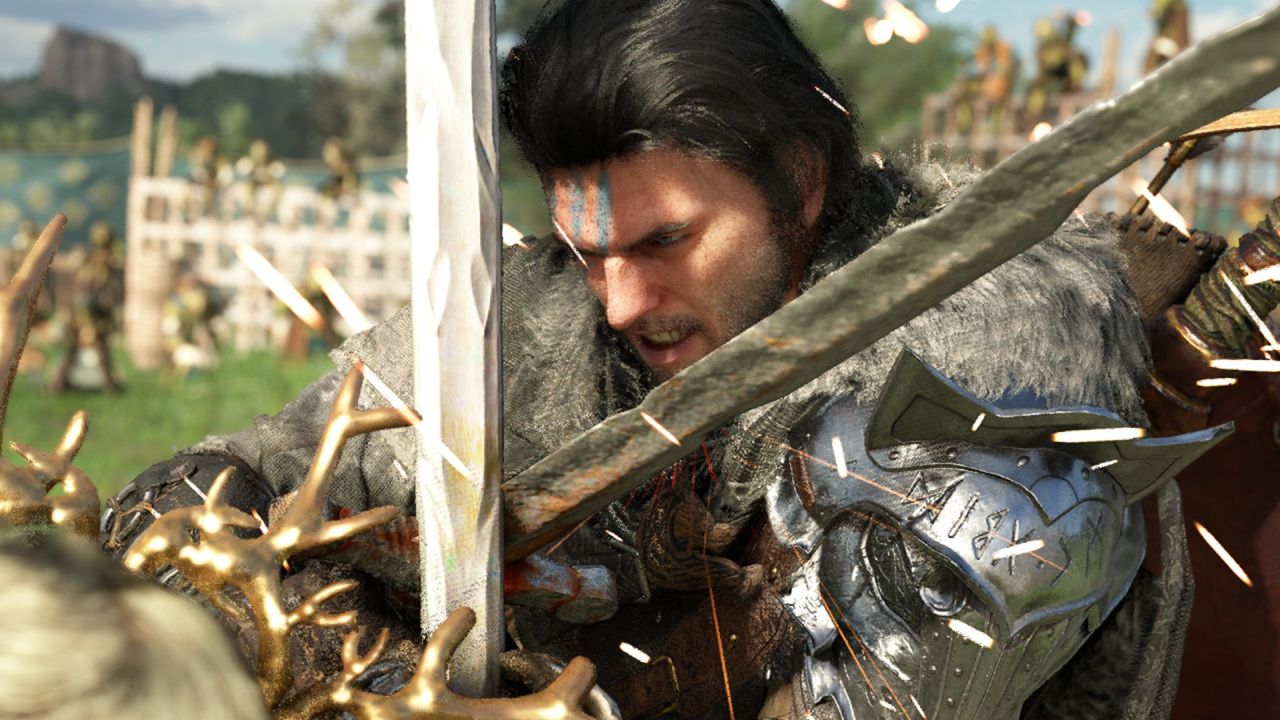
Crimson Desert has delivered exactly the kind of breakthrough Pearl Abyss had been chasing for years: a real Western AAA-scale success. The open world action RPG sold 5 million copies in 26 days, with more than 80% of sales coming from North America and Europe. The result is not merely flattering on a slide deck: the company reported around $220 million in Q1 2026 revenue and delivered the most profitable quarter in its history.
For Pearl Abyss, Crimson Desert was not just a strong launch. It was a business-level shift. The game launched on March 19, 2026, and immediately made a statement by reaching the top of Steam’s Top Sellers chart across major markets despite being a brand-new IP. That alone would have counted as a solid debut, but the momentum did not fade after day one. Critical reception was not overwhelmingly positive across the board, yet the sales curve barely seemed to care.
The pace was sharp from the start: Crimson Desert sold 2 million copies on day one, reached 3 million within 4 days, climbed to 4 million within 12 days, and hit 5 million within 26 days. The PC and console split was almost perfectly balanced at around 50:50, which is especially notable for a Korean-developed game from a studio historically associated with PC. Black Desert, the company’s debut success, spent its early years as a PC-first title, so the console performance of Crimson Desert suggests that Pearl Abyss did not merely find its usual audience again. It reached a much broader one.
The Real Breakthrough Happened In The West
The geographic split may be even more important than the total sales figure. According to Pearl Abyss, North America and Europe accounted for more than 80% of sales, a 25 percentage point jump from the previous quarter. That is the point where Crimson Desert stops looking like a strong Korean game and starts looking like a global AAA hit. Korean studios have long faced the question of how to break past regional and platform expectations, and Pearl Abyss has now answered with a big-budget open world action RPG that Western audiences bought in volume.
| Pearl Abyss Financials | Q1 2026 | YoY Change |
| Operating Revenue | KRW 328.5B | +419.8% |
| Operating Profit | KRW 212.1B | +2584.8% |
| Net Profit | KRW 170.0B | +2107.8% |
The financial impact is visible across every major line. Crimson Desert alone generated KRW 266.5 billion, or around $178.8 million, in its first two weeks, and that figure only includes sales through the end of March. Black Desert, meanwhile, continued its dependable live service performance with KRW 61.6 billion, or roughly $41.3 million, essentially flat quarter-on-quarter. The picture is therefore not that the new game temporarily covered for weakness elsewhere. It is that an already reliable revenue engine has been joined by a much larger new one.
Pearl Abyss has also issued full-year guidance for 2026. The company projects operating revenue between KRW 879 and 975 billion, or roughly $590-654 million. Of that total, Crimson Desert is expected to contribute KRW 644-734 billion, equal to around $432-492 million. If the game reaches the upper end of that guidance, a brand-new intellectual property could finish 2026 with close to half a billion dollars in annual revenue. For a new IP, that is not merely a good launch. It is the kind of result that changes how the studio is viewed.
DLC, DokeV, Plan 8, And The Post-CCP Chapter
The studio reiterated that it is exploring DLC for Crimson Desert, although there are no concrete plans yet. That is cautious wording, but given the sales numbers, it is hard to imagine Pearl Abyss not looking for ways to extend the game’s world over time. Meanwhile, DokeV, the colorful creature-collecting action game first revealed years ago, is now in pre-production and has been designated as the studio’s top priority. The company is targeting a new title release cadence of every 2-3 years, which sounds far more credible after the performance of Crimson Desert.
Plan 8, on the other hand, remains in the conceptualization stage nearly seven years after its original announcement. That says plenty about how unevenly the studio’s wider slate is moving, and the success of Crimson Desert will likely sharpen internal priorities even further. The report also confirms the sale of CCP Games, which is now independent again and has been rebranded as Fenris Creations. Pearl Abyss has therefore closed one older chapter, opened a much more profitable new one, and finally produced the kind of Western breakthrough many Korean developers have spent years trying to reach.
Source: Wccftech















Leave a Reply