
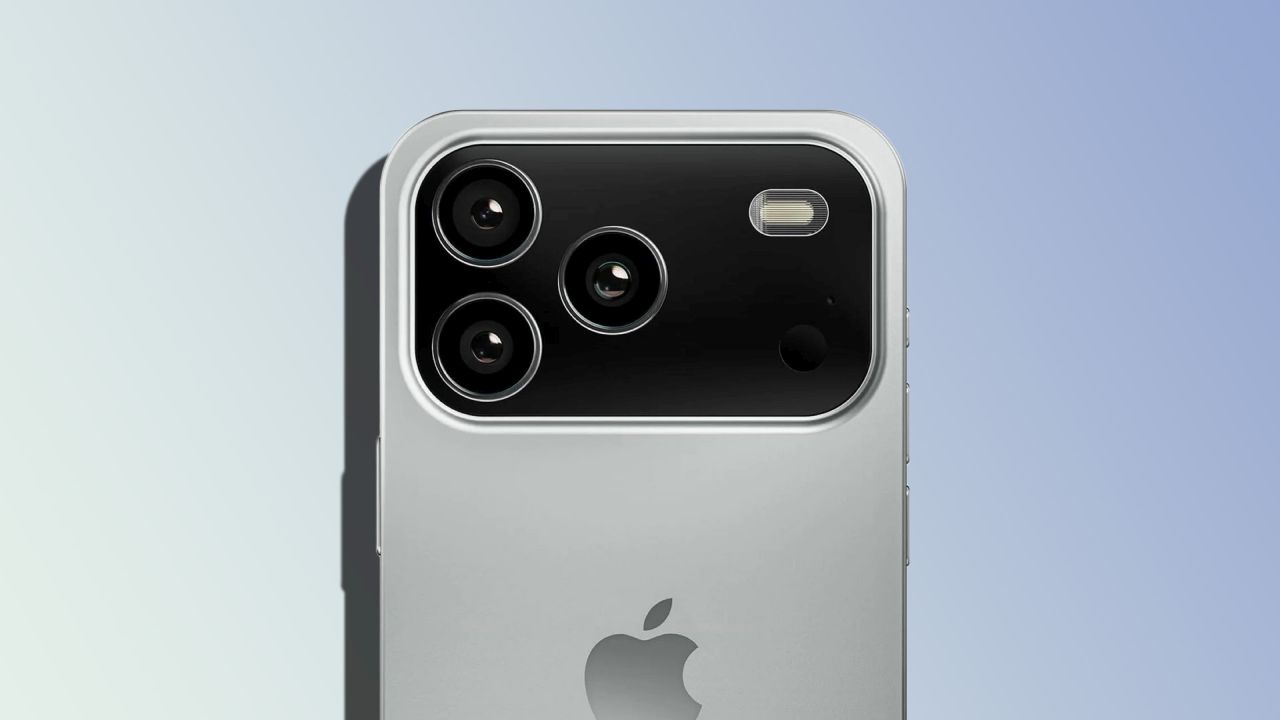
Apple will reportedly avoid dual OLED on the iPhone 18 Pro and iPhone 18 Pro Max, because the extra brightness would come with a very real thermal cost. The decision sounds logical: a much brighter panel would be extremely useful outdoors in summer, but if it also drains the battery faster and makes the chassis uncomfortably hot, that is no longer a premium feature. It is a pocket-sized hot plate.
Apple is facing an uncomfortable display trade-off. People use their iPhones heavily during the summer, and outdoor visibility is not a luxury when the sun is brutal. Dual OLED could be an obvious solution, because stacking two RGB OLED layers on top of each other can produce a much brighter panel. The problem is that this does not come for free. It generates heat, especially when both layers are pushed to their brightest levels, which is exactly what happens outdoors on hot summer days, when the higher ambient temperature is already making cooling more difficult.
Well-known Weibo tipster Digital Chat Station now claims that the iPhone 18 Pro duo will “definitely” miss out on a dual OLED screen. According to the machine-translated post, the tipster wrote: “Anyway, the 18 Pro definitely won’t have it. Looking back at last year’s predictions, I suddenly realized that the iPhone 17 Pro series didn’t make much progress in maintaining outdoor brightness. If Apple’s temperature control strategy doesn’t change, they still need to implement dual-layer OLED to achieve a significant improvement in the user experience.” The post also wondered whether Apple could provide a software-level switch to force maximum brightness, because some users would rather accept extra heat and faster battery drain than struggle with a dark, unreadable screen under harsh sunlight.
| Rumor Assessment | Status |
| Plausibility | 60%, plausible |
| Source | 3/5 |
| Corroboration | 3/5 |
| Technical | 3/5 |
| Timeline | 3/5 |
The Price Of A Brighter Display Would Be Heat
The core idea behind dual OLED sounds simple: place two RGB OLED layers on top of each other and the panel can reach higher brightness. In reality, that brightness comes with heat, power draw, and cooling pressure. An iPhone has very limited thermal headroom compared with larger devices, so if the display creates more heat, battery life, performance, and comfort can all be affected. This is exactly the kind of trade-off where Apple tends to be cautious. A brighter panel may look good on a specification sheet, but if the phone quickly throttles brightness or becomes unpleasantly warm in summer, the benefit starts looking less convincing.
That is why Digital Chat Station’s claim that the iPhone 18 Pro and iPhone 18 Pro Max will skip it is hardly shocking. Still, the situation may not be entirely binary. Apple could theoretically implement a quasi-dual OLED approach of sorts by stacking an additional blue sub-pixel layer. That would not be the same as a full two-RGB-layer panel, but it could still bring some efficiency or brightness-related benefit. In other words, even if full dual OLED is off the table, there may still be room for a more limited intermediate display solution.
What appears more concrete for now is that the iPhone 18 Pro models are expected to use an LTPO+ OLED screen. This technology improves efficiency by dynamically adjusting the display’s refresh rate: it can rise to 120 Hz for gaming or smooth scrolling, then drop all the way down to 1 Hz when showing a static image. It is not as flashy as a dual OLED panel in marketing terms, but for battery life and thermal management, it may be the more practical upgrade.
A Smaller Dynamic Island, A20 Pro, Bigger Battery, Or A Safer Refresh?
Over the past few weeks, several rumors have suggested that the iPhone 18 Pro and iPhone 18 Pro Max could feature a smaller Dynamic Island. This would reportedly be achieved by moving some components of the Face ID module beneath the display layer. A MacWorld source supports this view, and Ice Universe has also made similar claims. If true, that would be a meaningful visual improvement, because reducing the size of the Dynamic Island has been a recurring user wish for years.
Digital Chat Station, however, continues to maintain that the iPhone 18 Pro duo will feature only minimal changes compared with the iPhone 17 Pro and iPhone 17 Pro Max. According to that view, the main upgrades would be limited to the A20 Pro chip, a variable-aperture camera setup, and a larger battery. That also fits the broader logic of Apple prioritizing efficiency, thermal control, and battery life rather than forcing through a display technology that might look impressive but backfire in daily use.
The conflicting reports may come from the A/B testing that Apple is reportedly still carrying out before deciding whether to move some Face ID components beneath the display. That would explain why some reports point toward a smaller Dynamic Island, while others describe a more conservative update. The absence of dual OLED, however, would not be particularly surprising. Apple is not known for rushing into display technology that could create thermal problems if it threatens battery life and device stability. The iPhone 18 Pro may therefore become smarter, cooler, and more efficient rather than dramatically brighter at any cost.
Source: Wccftech















Leave a Reply