
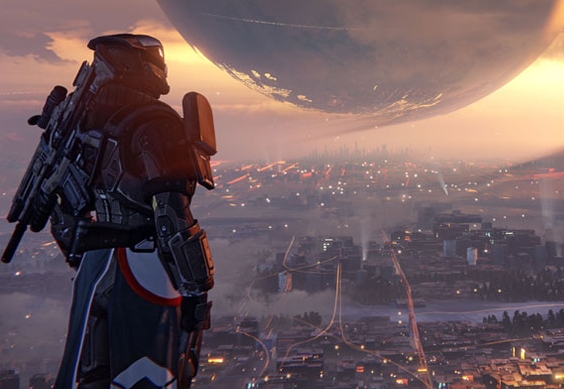
Former Destiny 2 production director Mark Noseworthy did not explicitly say he was talking about a Destiny 1 remaster, but the implication is hard to miss. With Bungie in a delicate position, many fans are clinging to the past, yet Noseworthy warns that a project like this can become too expensive, too risky and too costly in terms of lost opportunities.
When Bungie announced the end of Destiny 2, many fans immediately turned their eyes back to the first game. The original Destiny, released in 2014, still carries enormous nostalgic weight for the community, so it is not surprising that some players see a remaster as a possible answer during a difficult period. One X/Twitter user asked former Destiny 2 production director and former Bungie vice president Mark Noseworthy whether there might be a chance of “a certain remaster during these trying times.” Destiny 1 was never named directly, and Noseworthy avoided naming any specific project, but the business logic in his response makes it fairly clear why he thinks such a move would be far from simple.
The Former Destiny 2 Lead Says a Remaster Is Not Free Money
Noseworthy began his answer carefully: “I’m not going to comment on ‘a certain remaster,’ but I will share some general thoughts that I think apply when executives and teams consider the merits of remasters from a business perspective.” His reflection was built around three core questions: how much a remake or remaster actually costs, what the opportunity cost is when a studio commits people and money to that project instead of something else, and whether the market is large enough to justify the investment and deliver a proper return. Those questions matter even more in Bungie’s current condition, because nostalgia alone does not pay for years of development work.
According to Noseworthy, remasters are often more expensive than they appear from the outside, especially when old technology, content and systems require major modernization. In the case of a hypothetical Destiny 1 remaster, this would not be a simple texture upgrade. The game would have to be reconciled with modern technical expectations, platforms, online infrastructure and player habits, while Bungie is already operating under serious pressure. Noseworthy specifically pointed to opportunity cost: “The opportunity costs are high if you have staffing or financial limitations.” That line lands hard now, as Bungie is expected to carry out a significant number of layoffs after Destiny 2 receives its final update.
Another key part of his argument is that outsourcing is not a miracle solution. Noseworthy notes that studios can only afford a limited number of projects at once, and bringing in an external team does not magically remove the burden, especially on complex games. A Destiny-scale online shooter would not be a matter of simply letting another studio make the old game look prettier. Technical decisions, server-side systems, balance, content structure and modern expectations would still have to be managed. Every resource spent there is a resource not spent elsewhere, whether on a new game, Marathon or Bungie’s next strategic move.
Noseworthy did not completely close the door on the theoretical idea of a Destiny 1 remaster, but his conclusion is cautious. “Intelligent people may disagree. Case by case. Obviously, there are good examples like the Resident Evil series. But the opportunity cost could be a significant drawback depending on the situation.” In other words, not every remake or remaster is a bad business decision. The Resident Evil series proves that the model can work when the timing, execution and market demand are right. For Bungie, however, the question is whether returning to the past would actually help, or whether it would further limit a studio that is already short on room to maneuver.
For fans, the idea of a Destiny 1 remaster is easy to understand. The first game represents nostalgia, lost atmosphere and an era when Bungie’s future still seemed much more open. Noseworthy’s response, though, is a reminder that a remaster is not an automatic escape route. It is a business decision that ties up people, money and years. And in Bungie’s current situation, those may be exactly the resources it can least afford to spend on looking backward.
Source: 3DJuegos















Leave a Reply