
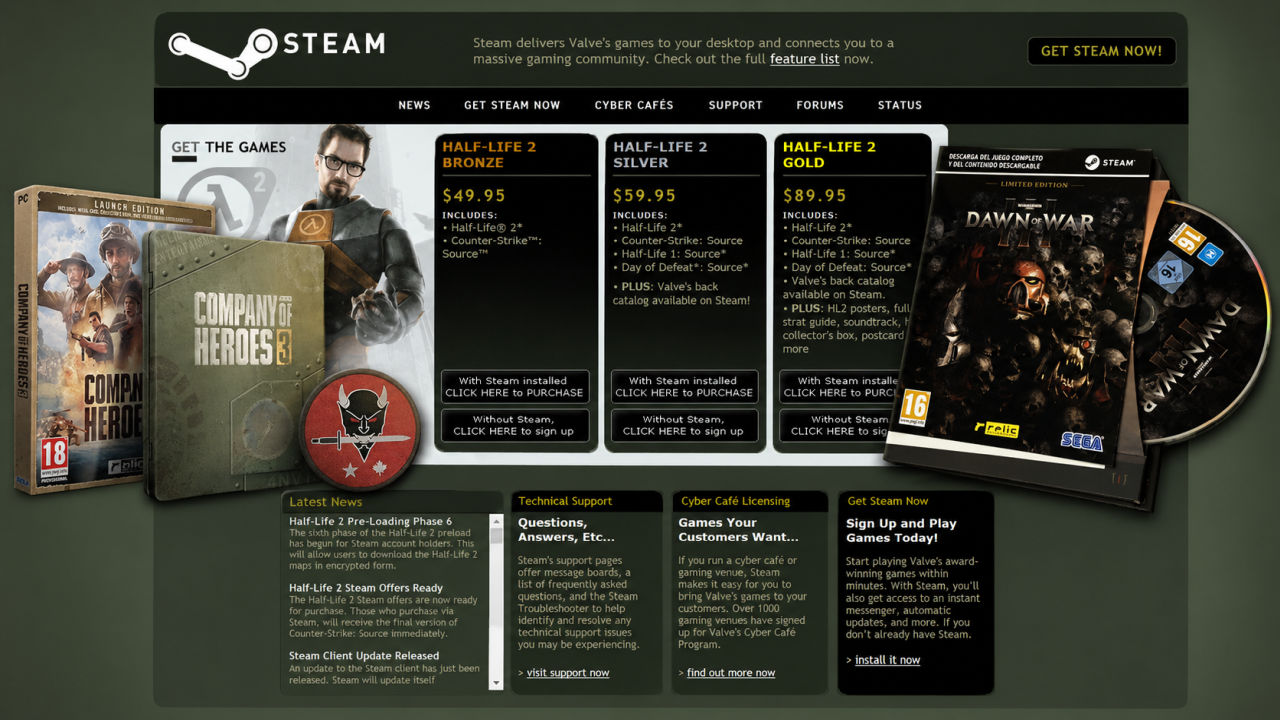
Finding a PC game disc is almost like finding a shooting star. And if we do not complain more about it, it is because of how we got here.
This week, Sony announced that PlayStation consoles will be abandoning discs starting in January 2028. This is understandably a major disappointment for many enthusiasts who have taken to social media and forums to share their discontent, although many people may recall another equally contentious transition from physical to digital formats: the period when Steam gradually became the primary PC platform. Today, it goes without saying that Steam is inseparable from PC gaming, but its relevance came after many years of earning its place through aggressive discounts, countless agreements with major publishing labels, and the implementation of features that later became industry standards while giving it an advantage over Epic.
When Nobody Wanted Steam
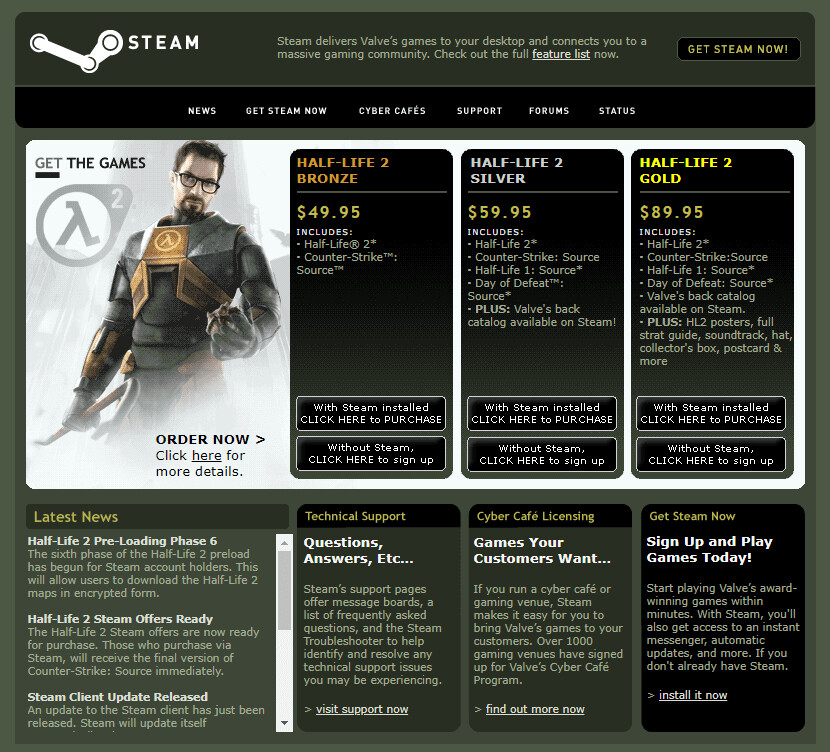
In its early days, Steam did not enjoy anything close to the widespread acceptance it has today. The internet is full of testimonials and stories from gamers who, back in 2003 and 2004, saw Valve’s software as unnecessary, perhaps even intrusive, a practically useless program forced on them as a requirement for buying certain PC games. It was not only a much weaker platform than it is now, as the digitisation process itself brought several inconveniences. Home internet at the time relied almost exclusively on incredibly slow dial-up modem connections of around 56 kbps, which already made digital installations and updates a nightmare.
On the r/pcgaming subreddit, a user who identifies as burge4150 recalled: “I remember buying Half-Life 2 on a release disc, which required installing Steam and was updated through Steam. I had a miserable dial-up internet connection and it took hours to load.” In the same thread, PERSONA916 wrote: “The friction was similar to the hatred people feel today for third-party platforms. We didn’t need it for most of our games; it was literally only there for Counter-Strike and its mods. In people’s eyes, it was pure bloatware. It also consumed a lot of resources and took minutes to boot, even on the most advanced hardware of the time.” There is even an infamous GIF from the era that perfectly illustrates how slow the software could be. By today’s standards, Steam’s launch would have looked like a disaster, and it would probably have struggled to establish itself on its own, with its spread helped primarily by the fact that installing it was mandatory to play Half-Life 2, followed a few years later by aggressive releases such as The Orange Box.
It was as if Nintendo had released a new 3D Mario, a new mainline Zelda, and an entirely new IP at once in a three-for-one package. With tactics like that, it is hardly surprising that Valve’s store eventually became an industry benchmark, but at the beginning, players did not celebrate the digital future and had every reason to approach it with suspicion.
The Transition Was Not Mandatory, but Natural
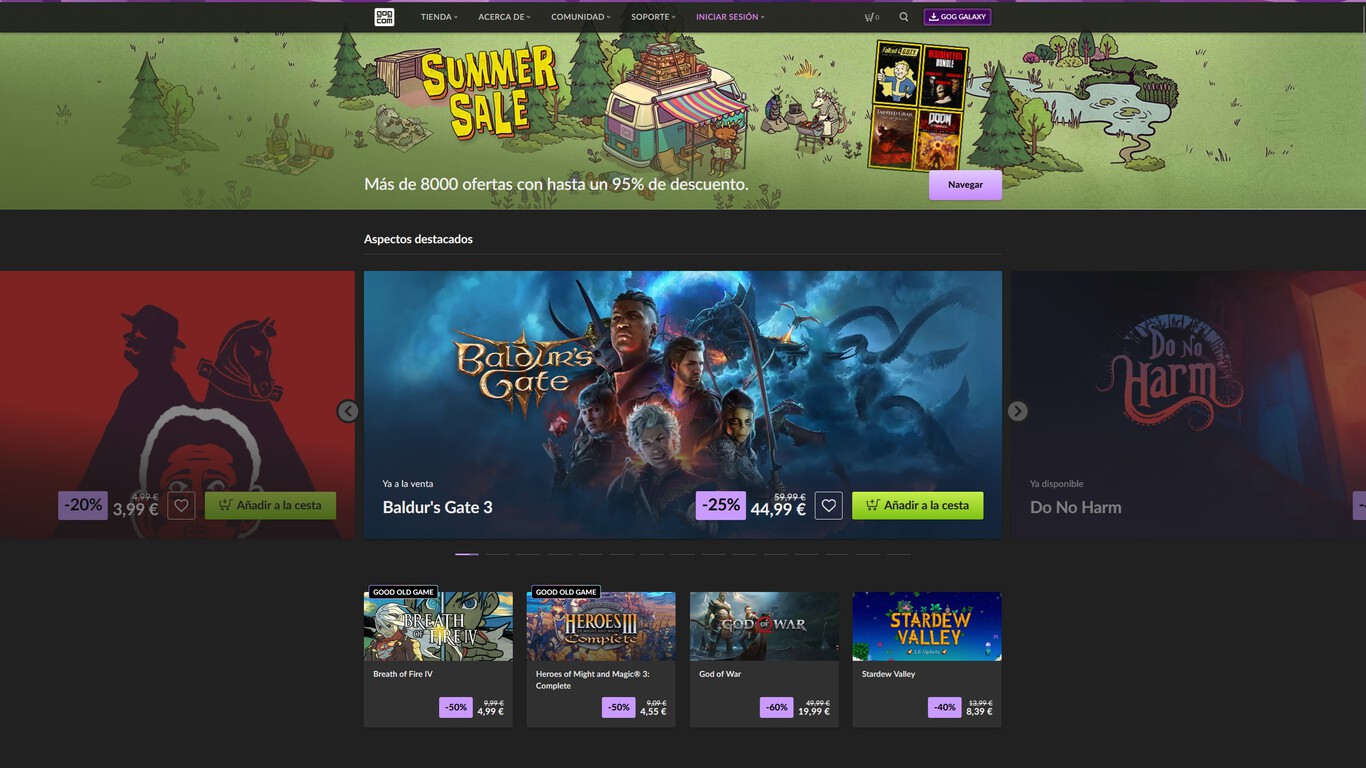
While Steam certainly played a significant role in changing public opinion about digital games, other external factors unrelated to Valve also contributed to the complete digitisation of PC gaming. The most important of these was convenience: digital distribution became cheaper for both players and publishers, while the ability to patch games automatically from within the application was appealing to everyone. The rollout of high-speed internet happened alongside some of the biggest releases in gaming, making the idea of being able to play a title immediately once it became officially available extremely attractive. Distributors, meanwhile, no longer had to manufacture ten or twenty discs per game and store them in secure warehouses with a power supply.
Physical discs also often lacked the capacity to contain complete games. Many titles had to be installed from multiple discs through a slow and cumbersome process that still required confirmation using a Steam activation code. I personally remember that some of the last PC games I bought in physical format, including Destiny 2 and Mass Effect: Andromeda, arrived with a code inside the box instead of a disc. Eventually, even mid-tower PCs stopped including optical drives because purchasing had become almost entirely digital. The evolution of PC gaming is ultimately a story of convenience: nobody prevented games from being released on discs, but third-party publishers decided on their own to stop selling them and switch to codes because doing so was more practical and cheaper, before later doing the same with the cases themselves.

It was a relatively slow change, and news stories at the time even warned readers when a particular release would arrive in a box containing only a download code. Nobody liked it, because gamers across platforms largely share the same preferences, but it was not an overnight shock. Even today, it remains possible to find games in physical format when a distributor considers such a release worthwhile, and some still choose to offer them. Blizzard, for example, still distributes World of Warcraft in luxurious collector’s editions that can proudly sit on a shelf, even if the box ultimately contains only a code to redeem through Battle.net’s DRM system. Similar cases still appear from time to time: discs are practically gone, boxes are rare, but they have not disappeared completely, while some people online are even starting projects to create and preserve cases equipped with functional storage drives.
The key difference compared with the PlayStation situation is that this freedom and possibility no longer exist. Sony has decided there will be no more discs, and it is a firm, rigid, irreversible rule, a paradigm shift that affects players whether they like it or not. Unless there is a transitional period in which a box can at least contain a code, the result could also mean the end of price competition. PC players ultimately came out of this transition in a better position, but in PlayStation’s case, that outcome looks highly unlikely.
Source: 3DJuegos






![Moon Studios Has Postponed the Release of No Rest for the Wicked! [VIDEO]](https://thegeek.games/wp-content/uploads/2024/04/thegeek-no-rest-for-the-wicked-2024-302x180.jpg)
![Dragon’s Dogma II: Dark Arisen: Major Free Update Ahead of the DLC [VIDEO]](https://thegeek.games/wp-content/uploads/2026/09/dragons-dogma-dark-arisen-1280x720-2-302x180.jpg)


Leave a Reply