
OPINION – Over the past year, a total of HUF 3.5 billion has been directed toward Neocore’s next major game project through two separate state-originated financing channels, yet we still do not officially know exactly which game this financing relates to. In response to our questions, Focus Ventures clarified the key financial elements of its HUF 2 billion investment, while publicly available project records now point to a possible title: every sign suggests that Broken Sea may be the studio’s big swing. Neocore has yet to confirm this, and the public sources we reviewed still do not disclose the detailed terms of the direct HUF 1.5 billion government grant. The question is therefore no longer whether something is being developed behind closed doors, but what game, professional commitments and verifiable financing structure actually stand behind the HUF 4.5 billion AAA promise.
In principle, it should be good news that government attention is finally extending beyond the automotive industry, battery plants and assembly facilities to video game development. Supporting Hungary’s games industry is not inherently scandalous; it could represent a long-overdue strategic decision. Nor is Neocore a shell company: according to the studio’s own company profile, it has operated as an independent developer since 2005, while HIPA, Hungary’s national investment promotion agency, highlights a workforce of more than 100 professionals, 13 proprietary games and revenue generated entirely from exports. That is precisely why the question is not why Neocore is receiving money, but what it is receiving that money for, under what conditions, and on what basis the government is calling a project AAA before the developer has even officially unveiled it.
The financing picture currently known to the public consists of two separate components. In July 2025, Focus Ventures announced a HUF 2 billion investment in the NeocoreGames group, explicitly linking it to the studio’s “largest-budget game to date.” In February 2026, meanwhile, government communications and HIPA stated that NeocoreGames Development Kft. – a Hungarian limited liability company – was launching a HUF 4.5 billion, approximately EUR 11.3 million R&D project in Budapest, supported by a direct HUF 1.5 billion government grant. According to the official wording, the project could produce the “first AAA video game developed entirely in Hungary.”
In a response sent to our editorial office, Focus Ventures said that the HUF 2 billion was invested in NeocoreGames Holding Zrt., a privately held Hungarian company limited by shares. The financing consists of a capital increase and a shareholder loan, while Focus acquired a minority stake in the company. The investor stressed that this is not a grant: it carries a market-rate return expectation, and both the invested capital and the associated return are expected to be recovered by the end of the investment period. Under the agreement, Neocore regularly reports its financial and business position to the investor.
The response also clarified another key issue. The HUF 2 billion Focus investment and the HUF 1.5 billion government grant announced in February 2026 are independent financing arrangements, but both are directed toward the company’s current game development. The same money has not been counted twice, nor are these two installments under a single contract. Two separate sources of state-originated financing are directed toward the same current development.

What Was Actually Announced?
The first major milestone in this story was not February 2026, but January 2025. In its own official update, Neocore promised to announce its new game later that year. The studio described it as its most ambitious project to date, referring to a new IP, a larger scope, a major technological step forward and a bolder artistic direction. According to the company, the team had carried the world in its imagination for many years, while the genre would represent a logical next step after its previous portfolio.
The second milestone was the Focus Ventures announcement dated July 10, 2025. This was no longer a simple studio teaser, but a concrete financial announcement. Focus said Neocore was developing a large-scale, complex game built around an original world, one that would be “a worthy peer of the outstanding titles in its genre.” The announcement also emphasized that the group had produced 13 games across five franchises and sold more than 13 million copies worldwide. The project was therefore presented not merely as a cultural undertaking, but as a serious industry and investment proposition.
Focus’s latest response revealed that the specific investment target was NeocoreGames Holding Zrt., and that the financing was not a straightforward share purchase, but a structure combining a capital increase with a shareholder loan. Focus became a minority shareholder and attached a market-rate return expectation to the investment. This is an important distinction from the HUF 1.5 billion government grant: Focus’s money is an investment intended to generate a return, while the other channel provides direct budgetary support to the project.
The third milestone was the government messaging issued on February 6, 2026. The Government of Hungary, HIPA and Creative Hungary all delivered essentially the same message: NeocoreGames Development Kft. was launching a HUF 4.5 billion R&D program in Budapest, receiving HUF 1.5 billion in support, creating 12 new high-value-added jobs and potentially producing new software, a new game engine and content-production tools that could enable the development of the “first AAA video game developed entirely in Hungary.”
Creative Hungary also stated that the investment was moving forward on the basis of its professional recommendation, following R&D validation by Hungary’s National Research, Development and Innovation Office, a decision by the Ministry of Foreign Affairs and Trade and support from HIPA. The institutional decision-making chain is therefore visible in broad terms. The public sources we reviewed still do not disclose the detailed legal basis of the HUF 1.5 billion grant, its contractual terms, payment schedule, performance milestones, oversight mechanisms or any potential clawback provisions.
The Focus side of the story became considerably clearer after its response, but not fully transparent. The precise split between the capital increase and the shareholder loan, the length of the investment period, the exact return target, the exit method and the detailed business milestones remain unknown. Some of these elements may understandably constitute confidential business information in an investment agreement. A direct government grant, however, warrants a significantly higher standard of disclosure, because in that case it is not a private investor assuming commercial risk in pursuit of a return, but the state allocating money to a corporate project.

What Could Neocore Actually Be Developing?
The official announcement still does not reveal the game’s name, but the public trail no longer leads to a completely blank page. Project records connected to the Creative Europe program indicate that NeocoreGames Development Kft. is working on two separate games: Van Helsing: Inkheart is a smaller action-adventure title set in an existing universe, while Broken Sea is a story-driven tactical RPG built around an original fantasy world. Of the two projects, the publicly available information makes Broken Sea the much better fit for the descriptions “entirely new IP,” “largest project to date” and major technological leap.
According to the project descriptions, Broken Sea is a party-based tactical RPG being developed by a team of approximately 65 people using Neocore’s own technology. Its story may be shaped by missions, branching dialogue and player decisions, while the developers have already created a playable build and the internal tools needed to produce levels, units, dialogue and cinematics. This aligns strikingly well with HIPA’s references to a new game engine, storytelling systems and content-creation interfaces, although neither side has explicitly confirmed that the two projects are one and the same.
A Neocore job listing describes a complex RPG for PC, Xbox and PlayStation that the company itself calls an AAA-level project. The responsibilities include designing a complex user interface, learning curve, tutorial system and the usability of modding tools. At the same time, an unreleased Broken Sea listing still exists in the SteamDB database, where its records were updated as recently as March 2026. None of these clues is decisive on its own, but together they point remarkably consistently in the same direction.
Based on public project records, Neocore’s job listing and background databases, one possible candidate for the large supported development, and currently the strongest-looking one, is a modern, multiplatform revival of Broken Sea. Neocore has not confirmed this, so the two projects cannot be treated as proven to be identical. That is precisely the problem: public project records, job listings and background databases reveal more specific information than the official communications announcing billions of forints in financing.

Focus Responded, but the Official Reveal and Government Grant Remain Opaque
Looking at Neocore’s official communications, the picture remained conspicuously incomplete as of July 2026. The company’s homepage highlights its existing catalog, including the King Arthur games, Warhammer 40,000: Inquisitor – Martyr, the Van Helsing titles and current promotions. Its public news feed features discounts, DLC and console updates, but there is still no officially named new game, trailer, platform list or release window.
This is particularly striking because the studio itself promised an announcement in early 2025 for later that same year. The formal reveal never arrived, while Focus’s response said only that the financing concerned a video game intended for the global market and that Neocore would announce the details.
It is therefore no longer accurate to say that nothing is known about the development. Public documents indicate the existence of a larger-scale tactical RPG built around an original world, one that has a strong chance of being the supported project. Officially, however, its title, exact gameplay structure, visual direction, release date and publisher remain unknown, as does the proportion of the HUF 4.5 billion project value allocated to direct game development, technological R&D, tool development, salaries, outsourcing and licensing.
And this is where the uncomfortable part begins. For a government-supported R&D project, that is still not enough. Not because every gameplay system or story twist should be published on day one, but because “spoilers” cannot become an all-purpose excuse that makes the explanation of how HUF 1.5 billion in direct government support is being used simply disappear. The game’s content may constitute confidential business information. The grant’s legal basis, public-interest purpose and oversight system should not depend on a future trailer.
What Does AAA Actually Mean?
It is worth pausing over those three letters, because in Hungary the term “AAA” is often used as though it were an official certification or seal of quality. It is not. A glossary published by the UK Competition and Markets Authority, Britain’s antitrust regulator, places AAA games among the market’s most popular, expensive and technologically or graphically intensive projects, typically produced by large studios with substantial time and financial requirements. AAA is therefore not an official classification, but an industry label implying a large budget, serious technological ambition, high production quality and broad market reach.
In games journalism, “production values” refers to the visible and audible standard of execution. It does not simply mean attractive graphics. It includes animation, facial performance, motion capture, voice acting, localization, interface polish, camera work, music, sound mixing, performance stability, world detail, the amount of content and platform optimization. It is the difficult-to-quantify overall effect that makes a game feel not merely good, but large-scale, expensive and carefully finished in every department.
The problem begins when that flexible but very real industry benchmark is compared with the Hungarian project’s numbers. According to HIPA’s own statement, the development is worth EUR 11.3 million. By Hungarian cultural-industry standards, that is a substantial amount. The international AAA market, however, operates on an entirely different scale. The UK CMA’s final report on the Microsoft-Activision case states that major AAA games greenlit for release in 2024-2025 already carried average development costs of USD 200 million or more. The report cites development ranges of USD 80 million to USD 350 million, often accompanied by an additional USD 50 million to USD 310 million in marketing costs, while development spending on some major franchises reached as high as USD 660 million.
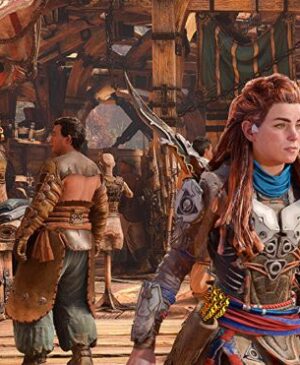
The concrete examples do little to narrow that gap. Development of Assassin’s Creed Shadows exceeded EUR 100 million, according to Ubisoft management. Publicly disclosed court documents placed the development costs of certain Call of Duty games between USD 450 million and USD 700 million. Sony’s internal figures showed that Horizon Forbidden West cost approximately USD 212 million and The Last of Us Part II around USD 220 million, while leaked corporate data placed the total budget of Marvel’s Spider-Man 2 at roughly USD 315 million.
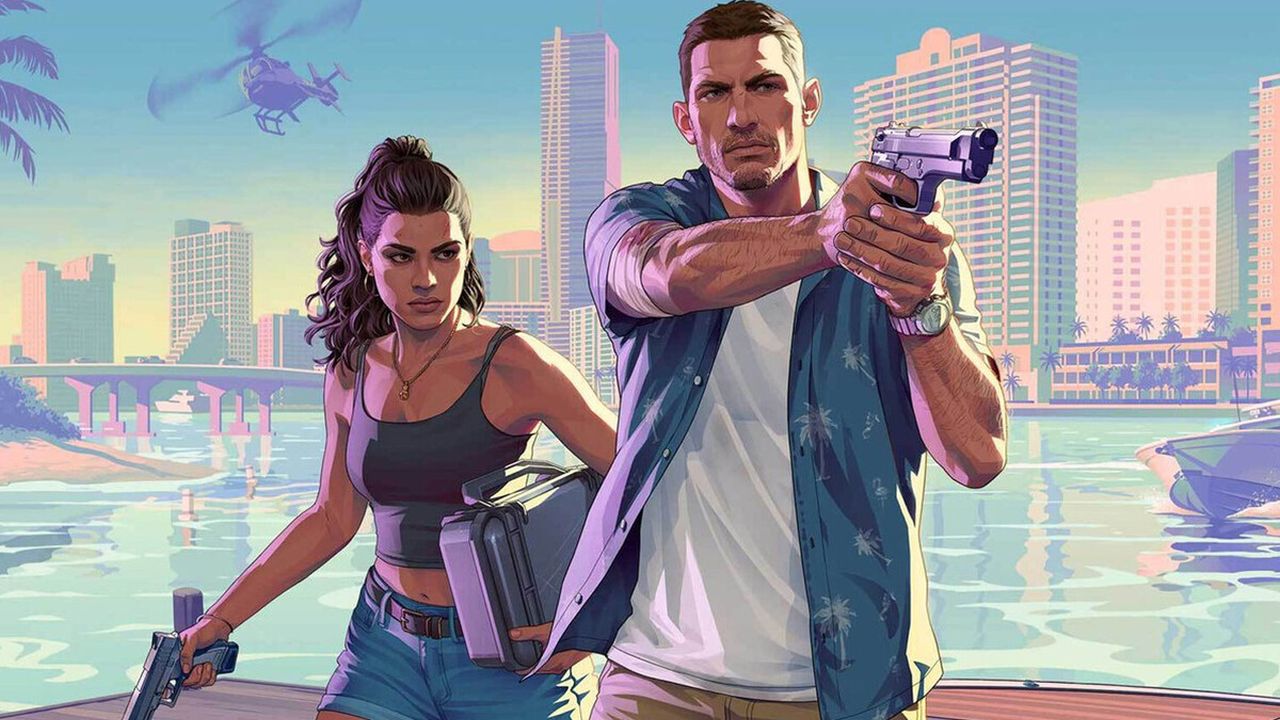
Grand Theft Auto VI represents an even more extreme point of comparison, but here it is especially important to separate verified facts from estimates. Rockstar Games and Take-Two have not released an official, itemized budget. Industry media have circulated estimates ranging from USD 1 billion to USD 2 billion, but the widely repeated USD 2 billion figure is not official and its origin cannot be considered sufficiently reliable. The exact figure therefore remains unknown. Even setting this example aside entirely, it is clear that the global blockbuster market and the EUR 11.3 million Hungarian project exist in different financial universes.
In other words, the Hungarian project does not fall short of the established AAA scale by a few percentage points, but by orders of magnitude. There is nothing shameful about that. The world is full of excellent, successful and visually accomplished AA games. The problem is not that Neocore is probably not building a conventional Western blockbuster for EUR 11.3 million. The problem is that the government called it one without providing the public with the professional explanation necessary to understand exactly what it means by that label.

How Does This Budget Compare With Today’s Top-Tier Productions?
Not every major publisher discloses its budgets, but the current high end of the market still makes the quality and volume expectations attached to the AAA label abundantly clear. Monster Hunter Wilds, Death Stranding 2: On the Beach and DOOM: The Dark Ages are useful reference points not because they are alike, but because each represents the technological, artistic and production standard audiences now expect from the biggest games. Visuals, animation, sound, content volume, presentation and technical polish are not separate extras at this level; they are all parts of the same high-end production package.
Hungarian government communications nevertheless applied the same label to an EUR 11.3 million project. That leaves two possible explanations: either the term is being used in a much looser, localized sense, or the government is making a promise about quality and market position that the publicly available numbers do not currently support. Both possibilities require an explanation.
There are, of course, spectacular counterexamples. Based on statements from its developers, Clair Obscur: Expedition 33 was produced for less than USD 10 million by an internal core team of roughly 30 people with substantial external support, yet it became a global success. That does not prove that budget categories are meaningless. Rather, it shows that disciplined scope, strong art direction, intelligent use of established technology and targeted outsourcing can allow an AA- or indie-scale project to achieve AAA-like visuals and exceptional quality.
An exceptional result does not automatically turn the underlying production model into AAA. It shows that quality and budget category are not the same thing. That is precisely why Neocore and the government should clearly state what they mean in this case. Journalists and taxpayers should not have to reverse-engineer a ministry’s definition of AAA from PR language.

Neocore Has a Respectable Track Record, Just Not an AAA One
This should be stated clearly: Neocore is not a beneficiary that appeared out of nowhere. According to the company’s own profile, it is an independent video game developer founded in 2005, with in-house expertise in programming, visual development, animation, music and technology. HIPA cites more than 100 professionals, 13 proprietary games and revenue generated entirely from exports. This is the profile of a functioning, experienced and internationally viable Hungarian studio.
The problem is not a lack of history, but the nature of that history. Neocore’s track record is not a blockbuster AAA story, but the story of distinctive, well-made and at times genuinely strong AA games. The Incredible Adventures of Van Helsing: Final Cut achieved a Metacritic average of 79, King Arthur: Knight’s Tale scored 77 and was also well received by Steam users, while Warhammer 40,000: Inquisitor – Martyr built a substantial long-term player base despite weaker critical averages. A fair conclusion follows: Neocore knows how to make good, and occasionally very good, games with strong identities, but its track record has so far placed it firmly in the AA space rather than at the forefront of the global blockbuster market.
The studio has not published title-by-title development budgets or revenue figures for its previous games, and no reliable external source provides that level of detail. The Focus Ventures announcement cites more than 13 million copies sold across Neocore’s entire portfolio, while the Kickstarter campaign for King Arthur: Knight’s Tale raised GBP 155,885 from 3,713 backers. That was obviously not the game’s full development budget, but only one crowdfunding component. There are therefore positive aggregate business indicators, but no public title-by-title cost and revenue breakdown from which the scale of the current leap could be responsibly calculated.
Once again, AA is not an insult, a failure or a second-tier category. It is one of the industry’s most important and often most creative spaces. The problem begins when Hungarian government communications place the next project from a proven AA studio into the “fully Hungarian AAA” showcase in advance, without first presenting the evidence. As though the label itself were the achievement, rather than the finished game.

What Did We Ask, and What Answers Did We Receive?
In mid-April, we sent Neocore a detailed set of questions regarding the project announced in February. We were not trying to force the developers to reveal story details or gameplay systems ahead of time. We wanted to clarify what the HUF 2 billion Focus investment was financing, what the HUF 1.5 billion government grant was financing, how the two funding channels related to one another, why the project was being called AAA and which specific development goals were tied to the public support.
According to correspondence held by our editorial office, Neocore replied that the team was working at full speed on the game and its upcoming announcement, that several questions concerned details it did not wish to spoil prematurely, and that it would prefer to revisit the subject in the fall. We pointed out that most of our questions were not about game design, but about matters of public-interest finance and the use of the AAA label. We did not receive a point-by-point response to our financial and institutional questions.
We then contacted Neocore again with a narrower set of questions focused exclusively on the financial and institutional structure. Separate questions were sent to the press office of Hungary’s National Capital Holding regarding the HUF 2 billion Focus Ventures investment, and to HIPA regarding the legal basis, administrator, milestones and oversight conditions attached to the HUF 1.5 billion grant.
Focus Ventures responded. It identified the investment target, outlined the main elements of the structure, clarified its minority ownership position, its market-rate return expectation and its monitoring activity, and confirmed that the HUF 2 billion investment and the HUF 1.5 billion grant were independent but directed toward the same current development. This was a substantive and important clarification.
Neocore, however, still has not provided a detailed response regarding the professional basis for the AAA designation, the possible role of Broken Sea or the failure to deliver the game announcement promised for 2025. By the time this article was completed, neither HIPA nor the institutions responsible for the direct grant had provided point-by-point information revealing the exact legal basis, detailed contractual terms, milestones or oversight mechanism attached to the HUF 1.5 billion grant.
None of this means that anyone stole or unlawfully diverted the money. No such claim can responsibly be made today. It does mean, however, that the minimum explanatory obligation surrounding the government grant remains unmet. The logic of the Focus investment is now considerably more visible. The logic of the direct government support is not. The trailer can wait. The rules governing the use of the direct government grant cannot.

The BYD Job Also Raises Questions About the Credibility of Hungary’s Subsidy System
The HUF 1.5 billion grant awarded to Neocore was personally announced by Péter Szijjártó in February 2026. The political context of the case is therefore difficult to separate from the fact that the former foreign minister resigned his seat in Parliament in July 2026 and then became an executive responsible for external relations and new business development at the Chinese BYD group, as also reported by 444. Szijjártó therefore accepted a senior international position at the same company whose expansion in Hungary he had personally supported for years as a cabinet minister.
According to a Telex overview, BYD’s bus plant in Komárom received HUF 925 million in job-creation subsidies, while the state contributed approximately HUF 1 billion to its battery-assembly investment in Fót. The government allocated HUF 46 billion to infrastructure surrounding the company’s car plant in Szeged and another HUF 21 billion to the industrial park, while the direct subsidy for construction of the factory itself remains undisclosed. The government also pledged a further HUF 20 billion in support for BYD’s approximately HUF 100 billion European headquarters project in Budapest, and Szijjártó signed the strategic agreement on behalf of Hungary.
The former minister also opposed European Union tariffs on Chinese electric vehicles. That may in itself have reflected a consistent economic-policy position, but the timing of his later appointment at BYD inevitably raises questions about conflict-of-interest safeguards, transparency in decision-making and public trust.
There is currently no public evidence that BYD’s job offer was compensation for earlier government support, or that the parties had reached a prior agreement while Szijjártó was still a minister. Presenting that as established fact would be irresponsible. The sequence of events nevertheless creates a government-business transition that can reasonably be described in public-policy language as a revolving-door situation. Earlier controversies surrounding Szijjártó, including his wife’s business, the yacht trip and subsidies connected to members of his personal circle, were also briefly addressed in a major Telex interview.
The BYD appointment proves nothing about the Neocore case. It does, however, directly affect the credibility of the same ministerial subsidy culture from which Neocore’s HUF 1.5 billion grant originated. That makes it even more important for the grant’s legal basis, contractual conditions, milestones and oversight system to be verifiable through documentary evidence. Against this background, political trust cannot substitute for transparency.

The Minimum the Public Should Be Able to See
Hungary’s games industry needs money. It probably needs more funding, more programs, more risk-taking, more studios and more exportable original IP. But if the government genuinely treats video game development as a strategic industry, it must take accountability just as seriously. At a minimum, a project of this kind should publicly disclose:
- the program and legal basis under which the support is being provided;
- a concise, professionally verifiable description of the project;
- the principal milestones;
- the specific R&D components being financed by the state;
- what the “AAA” designation means in this particular case;
- and a realistic timetable for the public reveal and commercial release.
Focus Ventures’s response demonstrated that it is possible to provide substantive, commercially meaningful answers without spoiling a game’s story or mechanics. We now know which legal entity received the HUF 2 billion, the basic structure under which the financing was provided, the ownership position created by the transaction and the fact that the investor expects a market-rate return.
The same clarity is still missing from the HUF 1.5 billion government grant. The public information confirms that there is a real studio, a real project, a real investment, a real grant and even a likely game title. What it still does not show is whether Broken Sea is genuinely the debut of Hungary’s first AAA game, or an ambitious AA production onto which government communications prematurely attached the industry’s most expensive label.
The fair conclusion today is this: we do not know how big an impact Neocore’s new project will ultimately make. It may become an excellent game and a major international success. Focus Ventures’s response has made one important part of the financing clearer, while the public trail makes Broken Sea a strong candidate. But it is equally fair to say that, on the evidence currently available, the AAA label remains stronger than the proof placed behind it, while the detailed system governing the direct HUF 1.5 billion government grant remains out of public view.
Sources: NeocoreGames, Focus Ventures, Government of Hungary, HIPA, Creative Hungary, 24.hu, CMA, Telex, 444.











Leave a Reply