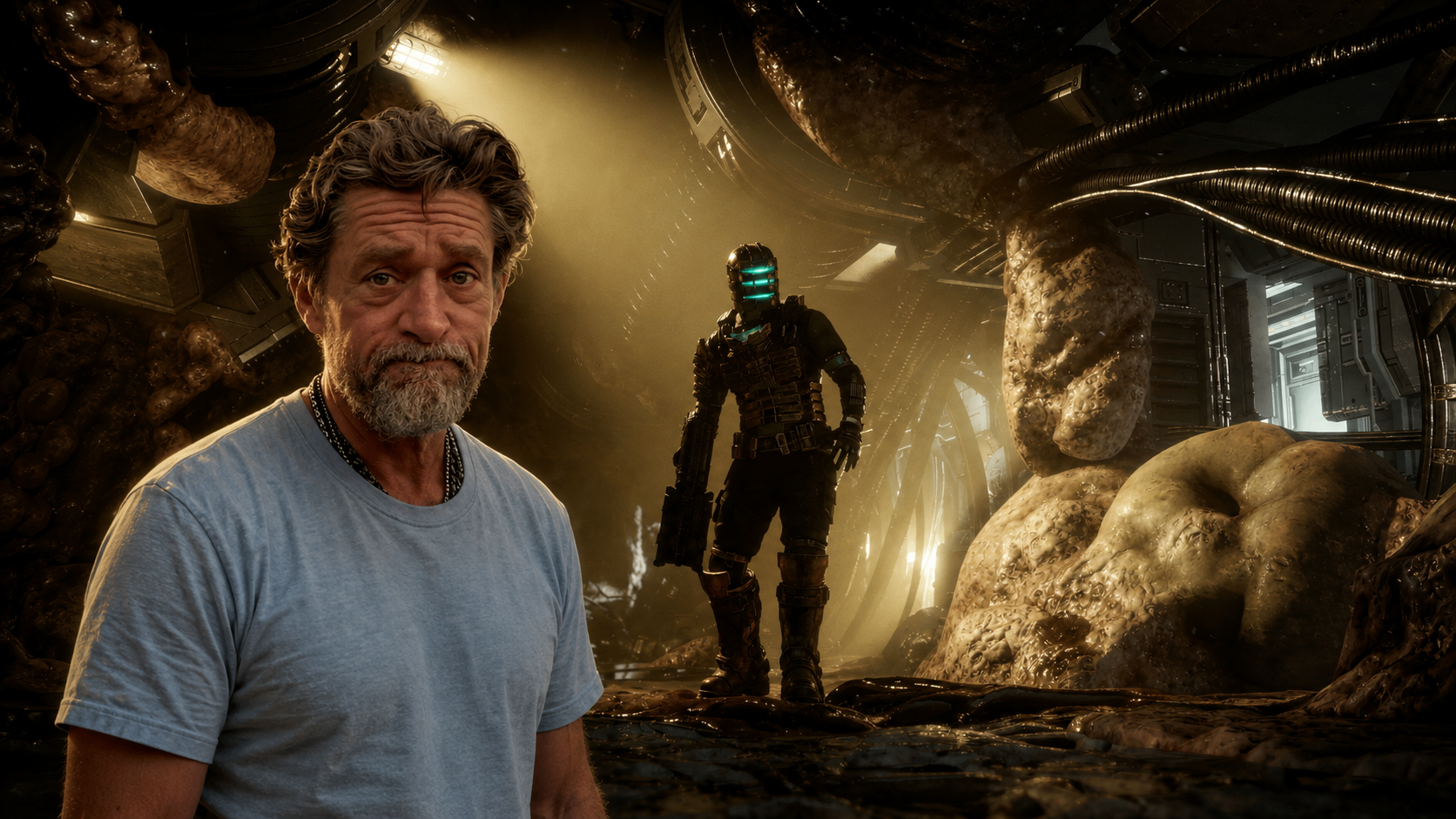
Glen Schofield has already announced his retirement from the video game industry, but his final development experience revealed a great deal about the current state of the business. It convinced him that companies are no longer seriously encouraging creativity and are instead allowing budgets and financial risk to dictate their decisions.
The video game industry is facing one of the most serious crises in its history, with several major problems placing pressure on the entire sector at the same time. Although these challenges take different forms, they ultimately affect developers and players alike. Prices continue to climb, successive waves of layoffs show no sign of stopping, and major corporations remain committed to live-service games in the hope of discovering the next enormously profitable success. At the same time, production costs have changed dramatically. Glen Schofield, the creator of Dead Space, experienced that problem firsthand when the final project he planned before announcing his retirement was denied any realistic chance of entering production because of the financial and business obstacles surrounding it.
Market Saturation
In an interview with Eldorado.gg, Schofield discussed the now-shelved game and examined what he considers one of the industry’s most serious problems. His career allowed him to observe the sector’s transformation into an enormous business that has also become increasingly difficult to navigate. “When I started, creative people didn’t have much influence. Over time, executives learned that they should follow creative people because, when creatives execute their ideas, they turn out to be brilliant”, Schofield recalled. Explaining his own ambitions, he added: “My goal throughout my career wasn’t to make a ton of money; it was to achieve creative autonomy. Leave me alone and I’ll make you something great.”
That balance changed dramatically when the COVID pandemic arrived, creating a major turning point for both the video game business and the wider world. “What happened was that the COVID pandemic hit, and investors poured enormous amounts of money into video games, as everyone stayed home buying them”, Schofield explained. Once lockdowns ended, demand declined and consumers stopped purchasing games at the same extraordinary rate. According to a brief study he conducted, the market had previously received approximately 30 to 35 AAA releases each year, with 60% arriving before Christmas and the remaining 40% launching afterward. Following the enormous post-COVID influx of capital, however, publishers promoted people into director roles prematurely, sometimes turning former lead designers into directors before they were prepared for the scale of the responsibility, and Schofield said he could predict in advance that many of those arrangements would fail.
Schofield believes that strategy ultimately produced “massive failures”, as publishers suddenly began releasing as many as 50 new games during the Christmas period. The market could not absorb such a large volume of products, resulting in disproportionate losses for projects carrying budgets of up to $200 million. The situation remains unresolved because the release calendar is now more crowded than ever and new titles continue to appear every day. “For the last 25 years, look at Halo or Gears of War; many new games came out because publishers listened to creative people. It all started with an idea, not a budget”, Schofield said, arguing that budgets now control the process instead. He also noted that 14,000 games were released on Steam last year, and identified this overwhelming volume as a major cause of both market saturation and the fragmentation of gaming communities, since players no longer know where to direct their attention.
The Fear That Prioritizing Creativity Will Cause Commercial Failure
The most obvious answer to the problem described by Schofield might appear to be a renewed emphasis on creativity. Executives have become so accustomed to budget-driven decision-making, however, and in many cases so disconnected from video games themselves, that they no longer know how to recognize or support a genuinely innovative proposal. “Big companies are terrified because they think creative people are going to screw them up”, Schofield said. “They’re terrified because they don’t know how to choose a creative person or evaluate a good idea.”
According to Schofield, publishers instead tend to impose fixed financial limits and production schedules on development teams. “Instead, they’ll tell you, ‘I have $10 million. I need you to make this game in two years, and it better be good’”, he explained. In his view, a company cannot restrict the budget, the production schedule, and the expected level of quality simultaneously, meaning developers must receive freedom in at least one of those areas. His latest project showed him that companies are now racing to discover the next mechanic capable of selling 13 million copies on a $10 million budget, even though graphics, scale, and above all the central idea continue to matter.
Schofield was not exaggerating about publishers hoping to produce an enormous hit with a $10 million investment, as he encountered precisely that situation with his own unfunded game. His original plan called for a development budget of $70 million, but potential partners insisted that the figure had to remain below $20 million. The proposed budget was subsequently reduced to $15 million and eventually to less than $10 million. “It was ridiculous, because I couldn’t make the game with that”, he said.
Schofield nevertheless refused to abandon the concept immediately and even enlisted his daughter to help design a more affordable version of the project. The revised proposal still failed to produce an agreement with a publisher or distributor. After repeated rejections and commercially impossible offers, Schofield finally shelved the game and decided to retire permanently from the video game industry. Instead of spending his time dealing with meetings, presentations, negotiations, and budget disputes, he can now devote himself fully to art, which has always been one of his greatest passions.
Source: 3DJuegos