Nintendo genuinely began developing a direct sequel to The Legend of Zelda: The Wind Waker, but the first game’s reception in North America eventually forced the team to rethink the entire project. According to Eiji Aonuma, the company feared that another cel-shaded Zelda would alienate a crucial part of the franchise’s audience, leading the developers to transform the sequel into the much darker The Legend of Zelda: Twilight Princess.
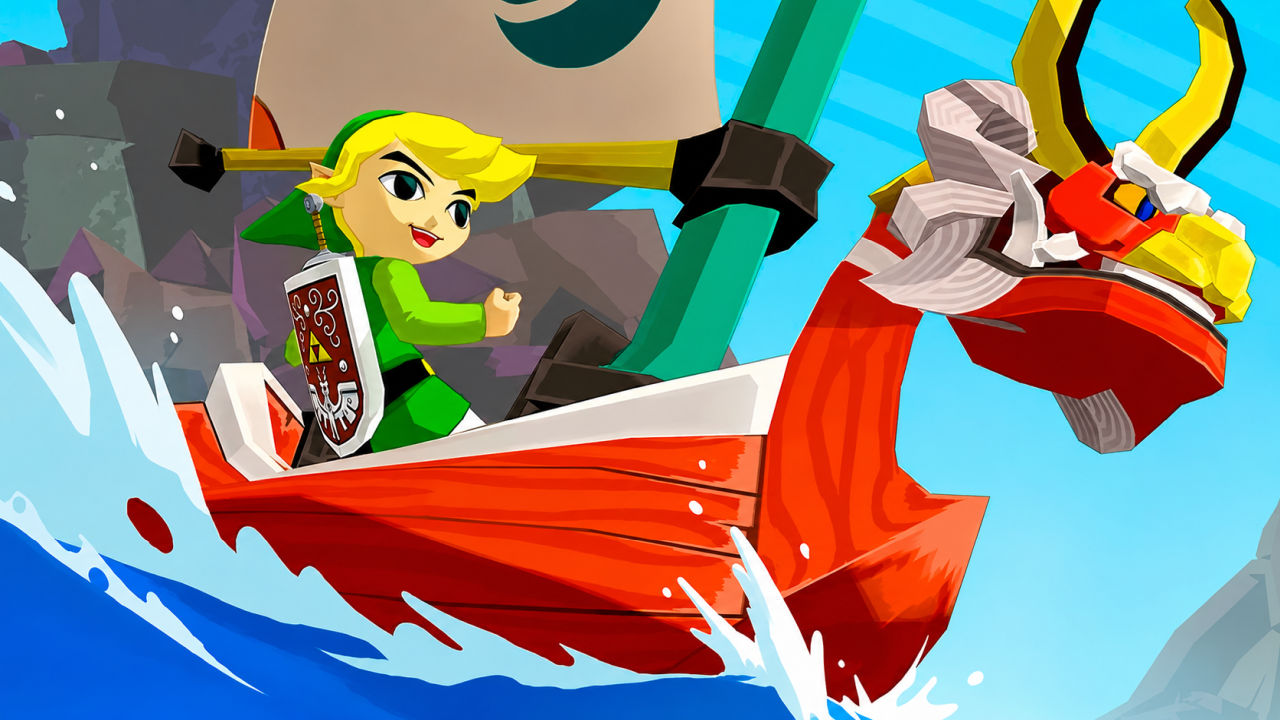
The Legend of Zelda: The Wind Waker is now regarded as one of the franchise’s most beloved entries, particularly because of its distinctive cel-shaded art direction, but the response was far less enthusiastic when it was first revealed and released. Many North American players dismissed Toon Link’s appearance as overly childish, and the sales figures did not meet Nintendo’s expectations. Even so, the company had already started work on a direct sequel that would initially have retained the same visual identity before the development team decided to rebuild virtually the entire concept.
Zelda producer Eiji Aonuma confirmed during a 2007 Game Developers Conference presentation that The Wind Waker 2 had entered development before gradually evolving into The Legend of Zelda: Twilight Princess. The primary reason for the drastic shift was Nintendo’s determination to regain the confidence of the North American market. After discussing The Wind Waker’s stalled sales with Nintendo of America, Aonuma concluded that the game’s art style had discouraged a major segment of the audience at that time.
“The cel-shading technique was giving the impression that this Zelda was for a younger audience, and for this reason, it was alienating the teenage audience that represented the typical Zelda player.” Aonuma therefore decided that the strongest response would be a darker and more realistic Zelda, a choice that ultimately gave birth to The Legend of Zelda: Twilight Princess. What little is known about the canceled sequel suggests that the ocean would no longer have served as its central setting, with the adventure instead moving primarily onto dry land, as art director Satoru Takizawa later explained.
Toon Link Could Not Easily Make the Transition
One of the development team’s biggest obstacles during the transformation into Twilight Princess was Toon Link himself. His small frame and short limbs made it difficult to create convincing horseback scenes, while the artists were also unable to produce a satisfying adult version of the same character within that stylized design. In late 2003, Aonuma approached Zelda creator Shigeru Miyamoto and proposed abandoning that direction in favor of a more realistic entry in the series.
Miyamoto was initially skeptical, but he challenged Aonuma’s team to prove that the concept could work through a specific gameplay experiment. “If you really want to make a realistic Zelda, you should start by doing what you couldn’t do in Zelda: Ocarina of Time. Make it so Link can attack enemies while riding a horse using the Wind Waker engine, and then make your decision based on how that feels.” Twilight Princess was therefore created partly as a response to North American preferences, and it eventually became one of the franchise’s most acclaimed games, even though its existence came at the expense of the original The Wind Waker 2 concept.
Aonuma and his developers ultimately succeeded in building a realistic world where Link could wield his sword while fighting from horseback. The trailer unveiled at E3 2004 electrified both fans and the press, even though production was still at a very early stage when the footage was shown. “It was a very exciting moment for us, but we were still in the early stages of transforming the game into something more realistic. We knew we had to create a Zelda game that lived up to the expectations of fans in North America, and that if we didn’t, it could mean the end of the franchise.”
Source: 3DJuegos