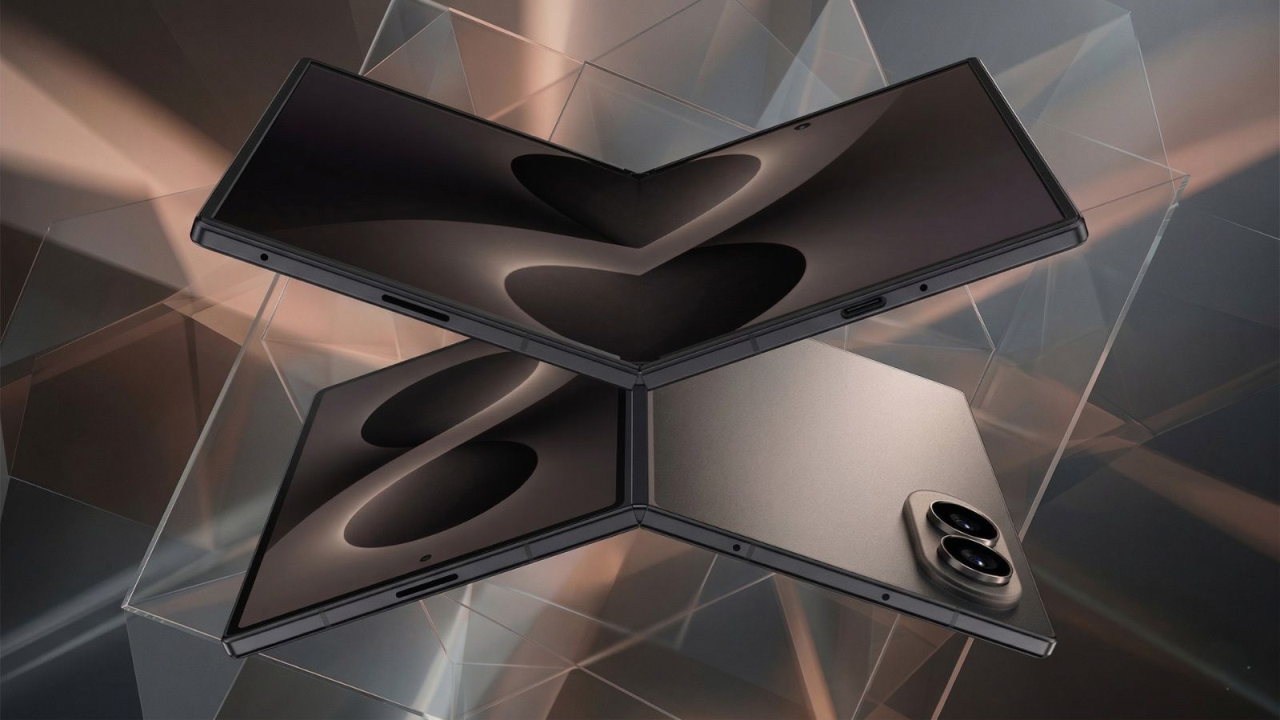
TECH NEWS – The South Korean tech giant had to make some concessions when designing the Galaxy Z Fold 8 Ultra’s cooling system.
With the Galaxy Z Fold 8 Ultra, Samsung achieved what seemed nearly impossible: a device that’s just 4.1 mm thick when fully unfolded. However, to create a device that’s 27% thinner than the iPhone Air, Samsung made a significant compromise that negatively impacts thermal management. U.S. consumers will also have to pay $2,100 for the most basic storage configuration. As the image below shows, someone has already taken apart the Galaxy Z Fold 8 Ultra, revealing the cooling solution Samsung implemented to control the Snapdragon 8 Elite Gen 5 and other components, even under heavy load. Similar to the Galaxy Z Fold 7, the Galaxy Z Fold 8 Ultra lacks a vapor chamber and instead uses a graphite sheet to prevent overheating. However, we doubt this approach will be effective.
Galaxy Fold 8 Ultra No Vapor Chamber
byu/Good-Breadfruit3577 inGalaxyFold
Even with a vapor chamber and an active cooling fan, we’ve heard that the Snapdragon 8 Elite Gen 5 hits thermal throttling under heavy load on smartphones like the Redmagic 11 Pro. The Galaxy Z Fold 8 Ultra’s SoC (system-on-a-chip) must contend with not only a lack of effective cooling, but also a cramped chassis that hinders proper heat dissipation. From a price perspective alone, Samsung should have included a vapor chamber to allow the Snapdragon 8 Elite Gen 5 to “breathe” properly.
Even performing basic tasks, such as taking photos or recording videos, can lead to performance throttling due to thermal stress in harsher climatic conditions with higher humidity. Using the Galaxy Z Fold 8 Ultra to run AAA-tier games via emulation also falls short of expectations, as the frame rate often drops due to significant performance throttling. However, this is just one instance where the Galaxy Z Fold 8 Ultra falls short.
We’re confident the device will perform excellently for other tasks, such as streaming videos. It’s unclear whether the exceptionally slim design or increased memory costs forced Samsung to make this compromise, but the high price alone would have been a major barrier to upgrading for thousands of consumers.
Source: WCCFTech