
OPINION – For years, the games industry has behaved as though the value of a game could partly be measured with a ruler: the larger the map, the longer the quest log, the larger the credits and the closer the playtime gets to three digits, the more serious the production must be. The problem is that one hundred hours of content do not automatically equal one hundred hours of entertainment, and more players are growing tired of watching a twenty-hour idea stretched across an eighty-hour open world. The return of AA development could therefore represent something far more important than the victory of “smaller games”: the realization that less money, fewer people and less filler can sometimes produce a considerably better game.
There was a time when nobody immediately reached for a calculator because a campaign lasted ten or fifteen hours. Max Payne, Prince of Persia: The Sands of Time, Resident Evil 4 and the older God of War games did not remain memorable because they occupied half of someone’s adult life, but because they understood what they wanted to do and, just as importantly, when to stop doing it. Today, the announcement of a full-priced game is almost inevitably followed by questions about the size of its map and the number of hours required to clear every icon from it. As though dinner automatically became better because it took three days to finish.
There is obviously nothing wrong with a hundred-hour game when it genuinely contains a hundred worthwhile hours. In something like Baldur’s Gate 3, Elden Ring or a deep role-playing game, length may simply emerge from systemic complexity and player freedom. The trouble begins when playtime itself becomes a marketing metric and developers need another thirty side quests, twenty categories of collectibles and three additional regions because somebody online might otherwise calculate that seventy dollars bought too few hours. At that point, content no longer enriches the game; it dilutes it.
Longer Does Not Automatically Mean Better
Former PlayStation executive Shawn Layden has spent years arguing that modern games have become too long and too expensive. In one interview he put it simply: “I think games are too long.” He has also argued that he would rather finish a focused twenty-hour experience than struggle through a hundred-hour production in which a significant percentage of the time is spent repeating familiar tasks. That may sound unusual coming from someone who spent years near the top of one of the largest console companies in the world, which is precisely why the argument deserves attention.
Layden is not saying that every game should be short. His larger point is that length is closely tied to development cost: every additional area, animation, cinematic, voice performance, quest and optional feature requires more people, more months and more money. When a project already costs hundreds of millions of dollars, publishers understandably want an enormous product in return, while customers expect enormous “value” to justify the price. The result is a neat feedback loop in which everybody asks for more while too few people ask whether more is actually necessary.
Length is not free for the player either. Once work, family and ordinary adult life enter the equation, free time can become a more valuable currency than the price of the game itself. A sixty-dollar twenty-hour game can be a better purchase than a sixty-dollar hundred-hour game if the first delivers twenty memorable hours while the second leaves me dutifully clearing map icons after hour forty. The familiar dollars-per-hour calculation looks tidy on a spreadsheet, but entertainment is not sold by weight.

When the Budget Starts Eating Creativity
One of the biggest problems with AAA development is not simply that games cost a great deal of money, but that spending that much makes unusual ideas increasingly difficult to approve. Layden returned to this subject in 2026 when he joked about the industry’s aversion to risk: “Nobody wants to take a risk on unicorn ballet in space.” It is funny because the underlying situation is not. When a project may cost hundreds of millions, the first question in a boardroom is rarely whether the idea sounds fascinating; it is how closely it resembles previous successes and how many sequels can be extracted from it.
The strange games of the PS1 and PS2 eras could partly exist because one failure did not necessarily tear the roof off an entire corporation. Today, a failed AAA project can lead to a studio closure, hundreds of layoffs and several years of strategic panic. Under those conditions it is understandable that publishers prefer established franchises, open worlds, battle passes and mechanics already proven on a spreadsheet. The unfortunate side effect is that some games increasingly feel as though they were cooked in the same corporate kitchen.
This is where AA development becomes interesting because it lowers the stakes. “AA” is not a formal accounting category with a warning light that switches on when the budget reaches twenty million dollars. It is better understood as a production philosophy between indie development and enormous AAA manufacturing: professional production values, modern technology and a complete commercial product without necessarily maintaining a permanent workforce of several hundred people or a Hollywood-sized budget. Failure still hurts, but it does not automatically require half the company to disappear afterward.
Layden has consequently spoken in 2026 about rebuilding this middle tier, including projects around the $20 million range. The logic is straightforward: lower budgets create lower financial risk, and lower risk gives developers more room for unusual gameplay, genres, settings and stories without needing a five-year franchise plan before the first game even ships. Not every release needs to establish a cinematic universe. Sometimes being a very good game should be enough.
Expedition 33 Showed Just How Wrong the Math Can Be
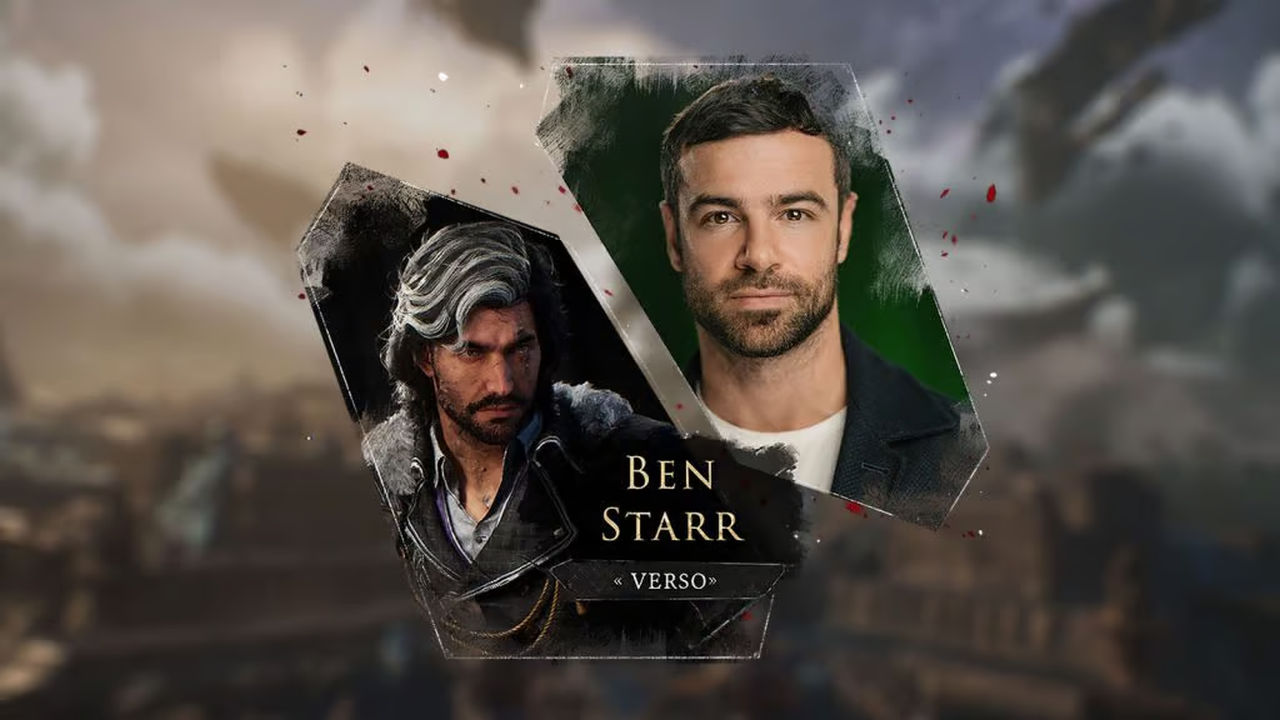
Clair Obscur: Expedition 33 has become an almost suspiciously perfect example for this discussion. Sandfall Interactive’s debut does not look inexpensive: it has striking Unreal Engine 5 visuals, extensive voice work, cinematic direction, a distinctive art style and an unusually polished combat system. Yet according to figures reported from Sandfall, its development budget remained below $10 million, while its core team numbered roughly thirty people. That is not a garage project, but it is a very long way from a modern blockbuster production line.
Nor was the game merely a critical curiosity. According to Sandfall’s official April 2026 announcement, Expedition 33 had sold more than eight million copies in its first year. Creative director Guillaume Broche has said that modern technology now allows developers to make games like this with “a relatively small team.” That observation may matter more than any teraflop figure: hardware has not merely become more powerful, the tools available to small teams have become dramatically more capable as well.
Sandfall also made deliberate choices about what not to build. It did not create an enormous seamless open world simply because modern RPG convention supposedly demanded one. The team used more structured environments, a traditional overworld and turn-based combat, spending its resources on the parts that actually supported the game’s identity. The result does not feel smaller; it feels more concentrated.
Of course, it would be foolish to conclude from one success that every thirty-person studio can now spend ten million dollars and produce a global phenomenon. Expedition 33 relied on external partners, outsourcing, publishing support and a sequence of unusually strong creative decisions, and success in entertainment is never a reproducible recipe. The real lesson is that production quality and production cost do not exist in a simple linear relationship. Thirty times the budget does not automatically produce thirty times the game, or accountants would have replaced creative directors years ago.

Players Are Voting for the Middle Price Tier Too
Market data suggests that this is more than a romantic idea among developers. According to Newzoo’s 2026 analysis, the $30-$50 premium price tier has emerged as one of the fastest-growing segments in PC and console gaming. That is an interesting development at a time when the largest publishers are discussing $70 and $80 standard prices and even more expensive premium editions. A meaningful part of the audience may not necessarily want cheap games; it may simply want prices that make sense for the scale of the production.
Saber Interactive CEO Matthew Karch was already arguing in 2024 that the $70 blockbuster model could not remain sustainable indefinitely. As he put it: “You can make great games and not sell them at a price that will empty someone’s bank account.” Saber’s productions do not always fit neatly into a traditional AA label, but the central point remains useful. Reducing costs does not have to mean producing something cheap or careless; it can mean designing a project that understands exactly what it needs to be.
The $30-$50 range is particularly suited to games that do not intend to contain everything ever invented. A fifteen-to-thirty-hour campaign, focused cooperative game, concentrated horror title, tactical experience or modern revival of an older genre does not necessarily need two hundred hours of content and three continents of open-world terrain. At fifty dollars, developers also have less pressure to pretend their game must occupy the next five years of the customer’s life. Players may in turn feel less offended when the credits appear after twenty-five excellent hours.
This pricing tier could also restore some of the middle market that gradually vanished during the HD era. It was once perfectly normal for publishers to produce smaller, stranger and more experimental games alongside their enormous flagship releases. Today the industry too often presents two extremes: an indie made by five people and an AAA production employing half a city. There is an enormous creative space between them for ideas that are too ambitious for a tiny independent studio but would be absurd to burden with a $200 million budget.
We Do Not Need Smaller Dreams, Just Less Waste
The return of AA games will obviously not solve every problem in the industry. A $20 million project can be boring, badly managed or completely unnecessary just as easily as a $200 million one, and small teams can be destroyed by terrible management too. It would also be disastrous if publishers simply turned “AA” into an excuse for smaller staffs, lower wages and more brutal deadlines. The goal should not be to make the same AAA game with one tenth of the people, but to design a different game from the beginning.
Focus is the crucial word. Does every game really need five crafting systems? Does it need 150 side quests, gear scores, daily challenges, photo modes, fishing, base building and three currencies? If those systems genuinely serve the experience, absolutely. If they exist because competitors have them too, perhaps a few could be politely left on the cutting-room floor.
For developers, this can also restore creative freedom. When a project does not need to recover hundreds of millions of dollars, it becomes easier to ignore a focus group, experiment with a strange combat system, tell an unusual story or resist turning every success into a ten-year service. Layden’s sarcastic “unicorn ballet” is ultimately about exactly this: games used to have more freedom to be weird because companies could afford weirdness. AA development can recreate some of that space.
Players may also need to stop calculating the value of entertainment exclusively in hours. I can remember a great twenty-hour game years later, while there are hundred-hour productions where I can barely remember why I had to clear the same enemy camp for the thirty-seventh time. Our time is finite even if our backlogs continue stubbornly pretending otherwise. Thirty great hours really can be worth more than a hundred empty ones.
I do not want enormous AAA games to disappear. We need the GTAs, the Red Dead Redemptions, the giant Final Fantasy projects and those rare productions that genuinely justify their scale. I simply do not want every game desperately trying to grow into the same weight class. If the return of AA development teaches the industry that success does not always require $300 million, eight years of production and a hundred hours of content, we may not end up with smaller games at all. We may end up with tighter, braver and simply better ones.
-Gergely Herpai „BadSector”-


![An id Software Developer Criticizes Microsoft Over Layoffs! [VIDEO]](https://thegeek.games/wp-content/uploads/2024/06/thegeek-doom-the-dark-ages-1-302x180.jpg)
![Rockstar Will Market Grand Theft Auto VI as a Single-Player Experience! [VIDEO]](https://thegeek.games/wp-content/uploads/2026/08/theGeek-Netflix-GTA-6-exclusive-footage-302x180.jpg)

![SilentPatch, an Essential Tool for the Classic Grand Theft Auto Games, Has Received a Massive Update! [VIDEO]](https://thegeek.games/wp-content/uploads/2024/10/gtasa-10-302x180.png)







![An id Software Developer Criticizes Microsoft Over Layoffs! [VIDEO]](https://thegeek.games/wp-content/uploads/2024/06/thegeek-doom-the-dark-ages-1-300x365.jpg)
![According to an Ex-BioWare Producer, Players Are Only Good at Identifying Issues! [VIDEO]](https://thegeek.games/wp-content/uploads/2025/08/thegeek-dragon-age-origins-1-nagy-1-300x365.jpg)
Leave a Reply