
TECH NEWS – Here’s how to overclock GDDR7 VRAM and exceed the power limit with the updated Hydra program.
The program has received a major update that provides unlimited VRAM overclocking and power limit control for Nvidia GeForce RTX 5000 series graphics cards. Yuri Bubliy (1usmus) released the latest update to Hydra, which is one of the most widely used overclocking programs. Hydra’s new capabilities include unrestricted VRAM overclocking and performance limit control. The importance of this update is quite simple: Nvidia has imposed strict restrictions on overclocking support for its latest-generation graphics cards. Most GPUs in the RTX 5000 series do not allow for performance limit adjustments beyond Nvidia’s restrictions. Only a few models, such as the MSI RTX 5090 Lightning OC, offer this capability to a certain extent.
The latest GPUs use GDDR7 memory modules, which offer speeds ranging from 28 to 34 Gbps. However, these modules have even greater potential. This solution is not a security workaround, vBIOS modification, or “magic driver.” Rather, it is a native Hydra solution that gives enthusiasts greater control over their hardware, as with the RTX 5000 series. The first version of the update prioritizes “user safety,” so the tool isn’t too aggressive with PL or VRAM clock speeds. The update includes the following limits: a maximum of 36 Gbps for GDDR7 memory modules on the RTX 5000 series, a maximum performance limit of 125%, and compatibility with any Nvidia GeForce RTX 5000 series graphics card from any manufacturer.
To demonstrate the device, 1usmus set the memory of an Asus RTX 5090 ROG Astral LC to the specified VRAM frequency of 36 Gbps. At this frequency, the card achieved a memory bandwidth of 2.3 TB/s. This represents a 28.5% increase in memory bandwidth, which could result in a significant performance boost. They used the Hydra RTX-Tuner feature to demonstrate the performance limit. This feature has been significantly enhanced so that users no longer have to deal with curve-modification limitations. The tool also supports voltage offsets (MSVDD and NVVDD), and XBAR offset control has been added. These features enable much better extreme overclocking capabilities than the reference configuration. The user set the graphics card’s performance limit to 105%, increasing power consumption from 600 W to 640 W compared to the default setting.
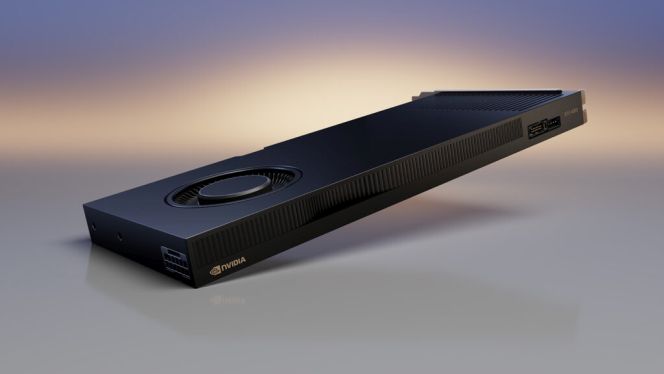
As with any manual tuning or adjustment to power consumption limits, this can potentially damage the graphics card. Changes to power consumption limits, voltages, frequencies, and other parameters beyond the default settings must be made with extreme caution. Only experts or PC enthusiasts well-versed in overclocking should make such modifications; otherwise, beginners could easily damage their expensive GPUs. The first version of Hydra featuring these functions provides experimental support for Nvidia RTX Pro 6000 GPUs and is scheduled for release next week. Initially, Hydra will be available to early access members, with a public release planned for a later date.
Source: WCCFTech






![A Quake 4 Expansion Thought to Be Lost Has Resurfaced, and You Can Even Download It! [VIDEO]](https://thegeek.games/wp-content/uploads/2026/08/theGeek-Quake-4-Awakening-300x365.jpg)
Leave a Reply