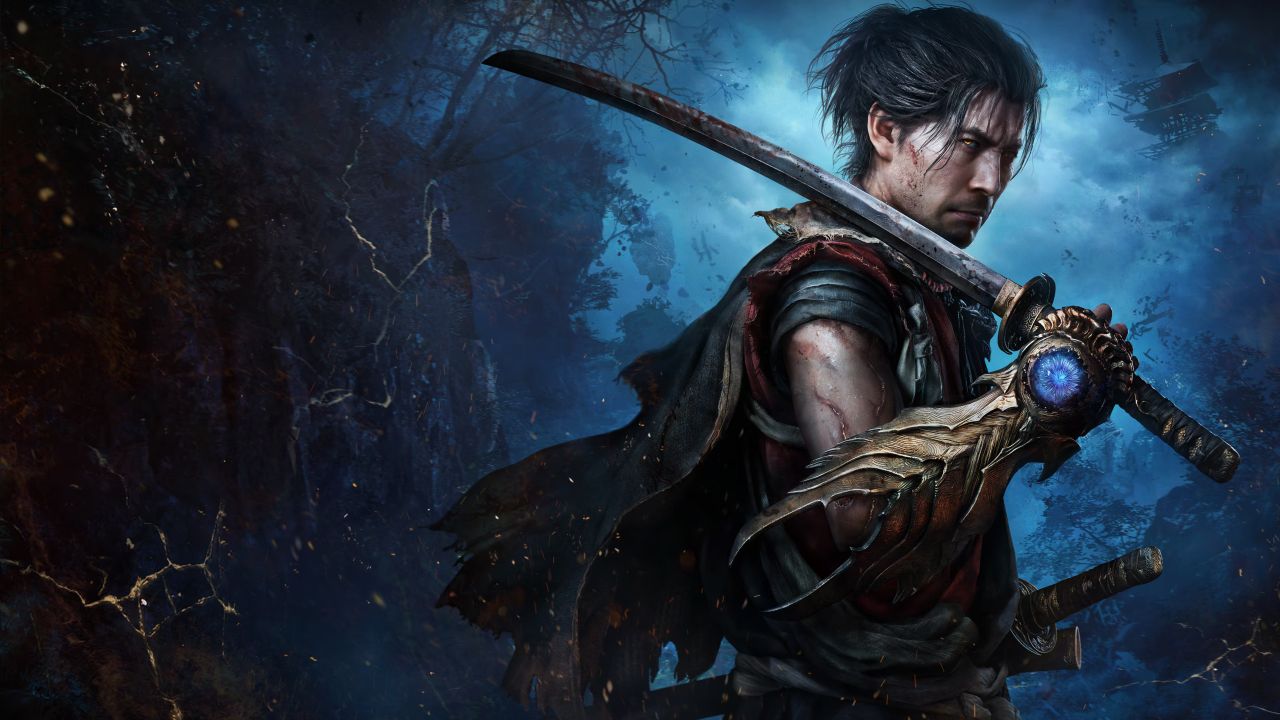
Onimusha: Way of the Sword passed one million copies sold within its first 24 hours, making it abundantly clear that players were ready for Capcom’s long-dormant series to return. Its success is not just about flashy visuals and aggressive marketing, though: the game’s director looked to Super Mario Odyssey for inspiration when shaping the controls, while its producer drew from Gundam when thinking about character design.
Capcom has had plenty to celebrate lately. Following the strong reception surrounding Resident Evil 9: Requiem and Pragmata, Onimusha: Way of the Sword has delivered another major result, while simultaneously reviving an IP that had spent years outside the company’s front line. Rather than relying exclusively on nostalgia, the new game attempts to rebuild Onimusha as a modern action title, and its initial commercial performance suggests that audiences were more than ready to give that approach a chance.
Capcom officially confirmed that Onimusha: Way of the Sword sold more than one million units after launching on September 4, reaching the milestone in only 24 hours. That success also pushed the wider Onimusha franchise beyond 10 million total copies sold across all of its releases. For a series that spent such a long period effectively dormant, crossing both milestones at once makes the comeback considerably more significant.
The publisher naturally credits several factors for the game’s strong opening. Marketing helped raise awareness, while the visual presentation had already attracted attention throughout the promotional campaign. Yet Capcom also points directly to the game’s distinctive action design, and one of the most important creative influences behind that system came from a source few people would immediately connect with Onimusha: Nintendo.
Nintendo’s Influence on the Action of Onimusha: Way of the Sword
Project director Satoru Nihei was asked by FZ magazine to name a game that influenced his work on the new Onimusha. Instead of pointing to Sekiro, Dark Souls, or another sword-focused action game, he chose Super Mario Odyssey. On the surface, Nintendo’s colorful platformer has very little in common with a dark action game built around blades, demons and brutal combat, but Nihei was not borrowing its setting or specific mechanics.
“Super Mario Odyssey,” Nihei answered, explaining that Nintendo’s game is fundamentally easy to pick up while still containing plenty of dynamic and genuinely demanding sequences. In his view, Nintendo is especially good at making the player’s actions generate immediate and understandable responses. The goal was not to make Onimusha play like Mario, but to create the same sense of direct connection between an input and the character’s reaction on screen.
Nihei specifically highlighted the feel of Odyssey‘s controls. Every movement produces immediate feedback, and the character responds in a way that makes control feel dependable even as the challenges become more complicated. That particular sensation became a reference point when Capcom considered how Onimusha: Way of the Sword should respond to the player, even though its animation, pacing and combat systems are obviously built around a completely different kind of action game.
That distinction matters because responsive combat is often difficult to reduce to a checklist of individual mechanics. A game can have parries, dodges, combos and an enormous collection of attacks, but if the gap between pressing a button and seeing the intended response feels inconsistent, the entire combat system can become cumbersome. Nihei therefore was not copying a Mario feature. He was studying why Nintendo’s controls feel so immediate and attempting to recreate that quality in a much heavier action framework.
Nihei was not the only senior developer FZ questioned about external influences. Akihito Kadowaki, producer of the Onimusha franchise, was given the same prompt and went in an entirely different direction. His primary influence was not another game at all, but the long-running Gundam franchise, particularly in the way it approaches its characters.
“Something I think has influenced my work on Onimusha is probably the character design,” Kadowaki explained. He pointed to the Gundam universe’s ability to create charismatic yet layered characters who actively drive the story rather than merely occupying it. That was something he wanted to bring into the new Onimusha as well, suggesting that the development team was thinking about narrative presence as carefully as combat responsiveness.
The two influences could hardly look more different from one another. Super Mario Odyssey is a bright Nintendo platformer built around movement and discovery, while Gundam is a decades-spanning science-fiction franchise filled with war, politics and giant machines. Capcom was not borrowing the obvious parts of either property, however. From Nintendo came the idea of immediate control feedback, while Gundam provided a model for strong, memorable characters capable of carrying a larger story.
With more than one million copies sold on its first day, Onimusha: Way of the Sword has already given Capcom a powerful indication that this unusual combination is working. Reviving an old name is never enough by itself, particularly after such a long absence, but the studio appears to have approached the comeback as a genuine redesign rather than a nostalgia exercise. Taking lessons from both Nintendo and Gundam may sound like an unlikely recipe for Onimusha, yet that willingness to draw from wildly different sources may be exactly what helped the series feel relevant again.
Source: 3DJuegos




![The System Requirements for Fable Are In! [VIDEO]](https://thegeek.games/wp-content/uploads/2026/08/vnews-05-fable-1280x720-1-302x180.png)