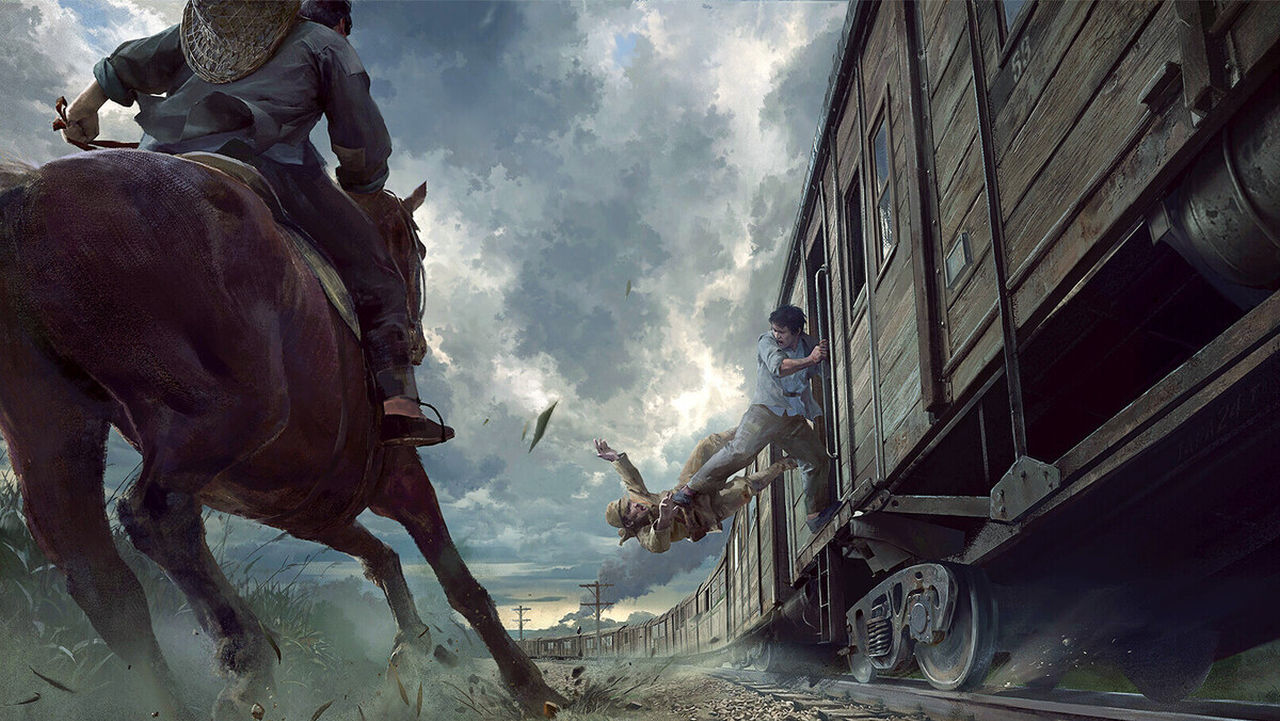
The Defiant is not relying on photorealistic visuals alone to stand apart from the crowded field of World War II shooters. After playing the Chinese FPS at Gamescom 2026, what stands out even more is its determination to revive the large-scale, punishing and memorable single-player campaigns that once defined games such as Medal of Honor and early Call of Duty.
For decades, the biggest World War II shooters have largely filtered the conflict through Western armies, with American forces in particular dominating many of the genre’s best-known campaigns. Call of Duty and Medal of Honor helped establish that perspective, while other games occasionally ventured into less familiar armies and fronts without always receiving comparable budgets or attention. Chinese developer Hoothanes is taking a very different starting point with The Defiant, placing Japan’s invasion of China at the center of the experience rather than treating it as historical background. Yet the unfamiliar setting is only half of the pitch. The studio also wants to recapture the kind of ambitious, difficult and dramatic campaign design that has gradually become less prominent in major Western military shooters.
The Defiant Wants to Recapture the Spirit of Classic War Shooters
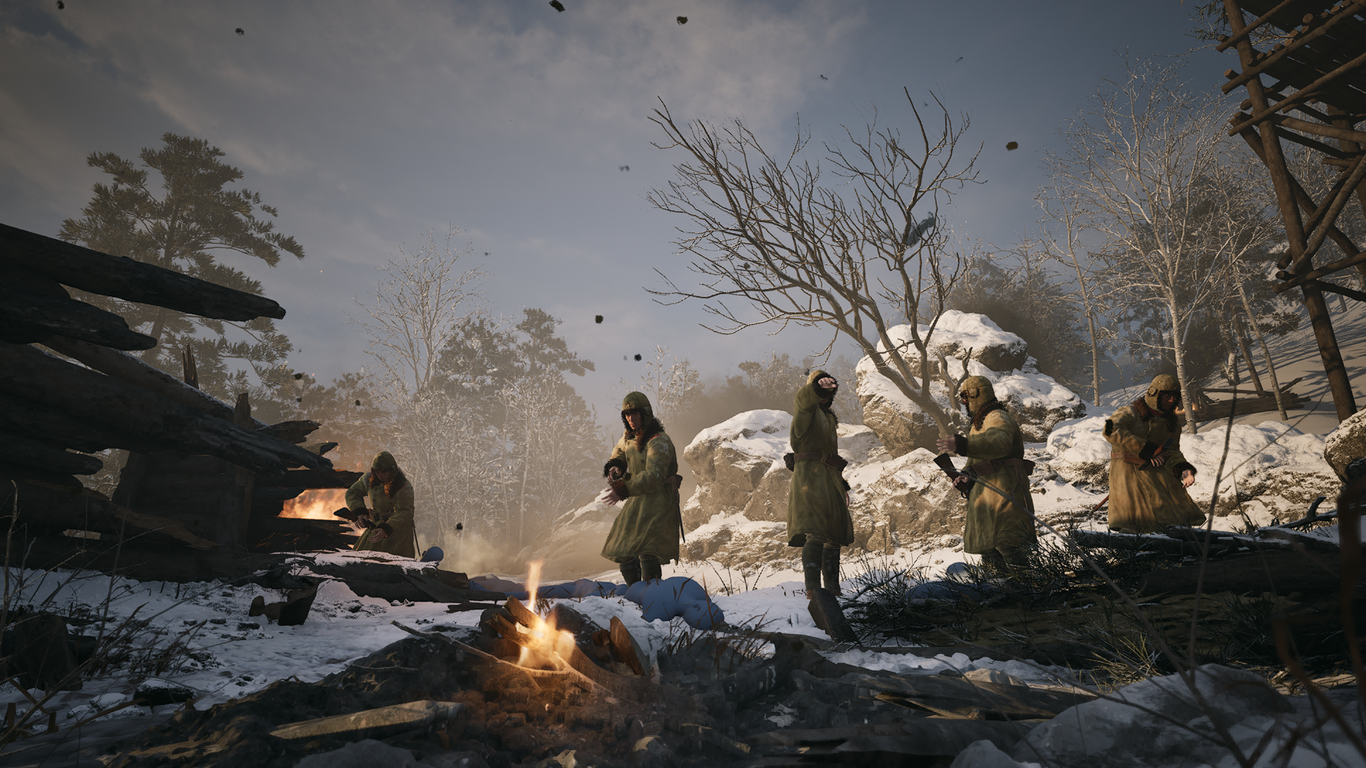
A roughly 20-minute Gamescom 2026 demo offered the first opportunity to see how that philosophy translates into play, with members of Hoothanes present alongside the build. Instead of returning to another familiar Western European battlefield, the mission dropped the squad into a snow-covered region that appeared to be Manchuria, an area deeply connected to Japan’s expansion across Asia. World War II games have occasionally escaped the standard American perspective before, of course, from the Soviet campaign in Call of Duty: World at War to The Last Tiger in Battlefield V. For Hoothanes, however, China is not an unusual side story being added for variety. It is the historical foundation around which the entire campaign has been designed.
The team has consequently treated historical research as a major part of production rather than something limited to costumes and weapon models. Developers spent months visiting museums, attending historical reenactments and collecting testimony connected to people who served during the conflict, all in an attempt to make the authenticity extend into the battlefield itself. That philosophy produces a grounded first-person shooter without supernatural abilities, spectacular mobility tricks or soldiers behaving like superheroes. The Defiant still wants cinematic scale, but it is perfectly willing to make the player feel weak when the situation demands it.
The playable mission demonstrated that idea immediately. A small group of Chinese soldiers pushed through the snowy landscape while Japanese ambushes repeatedly interrupted their advance, creating a deliberately old-school rhythm: move forward, identify a new threat, find protection, clear the area and only then continue. Stealth can occasionally provide another option, including approaching isolated soldiers from behind, but direct firefights clearly form the backbone of the combat system. Much like early Medal of Honor, the tension comes partly from knowing how vulnerable the player actually is. Enemies can kill with only a handful of accurate shots, some surfaces offer less protection than expected, and charging into exposed ground without thinking usually ends in seconds.
Even movement reinforces that physical vulnerability. The finished campaign will feature multiple playable characters covering different parts of the invasion, stretching geographically from Manchuria toward Shanghai, and the environment can directly change how those soldiers feel to control. In the Gamescom mission, thick fur clothing worn against the extreme cold gave movement a deliberately cumbersome quality and made crossing the landscape feel like work. Such heaviness might be frustrating in a fast competitive FPS, but here it serves the intended fantasy remarkably well. These characters are not superhuman operators gliding across the battlefield; they are soldiers carrying equipment through miserable terrain while trying not to die.
The enemy AI also showed more initiative than the traditional scripted shooting gallery might suggest. Japanese soldiers attempted to approach from different angles, used grenades to dislodge a player who stayed behind cover for too long and exploited multiple openings during the final defensive encounter inside a damaged building. Holding one room indefinitely simply was not reliable, because the pressure encouraged constant repositioning as attackers searched for another route inside. There is still work to do, however. Some enemies became so relentlessly aggressive that they undermined the realism the game was trying to create, charging recklessly into bayonet or melee range and becoming easier to eliminate as a result.
Weapons carry the same combination of historical grounding and deliberately rough handling. Chinese forces of the period used an unusually diverse collection of equipment sourced from countries including Germany, Russia and the United States, with some designs tracing their origins back into the 19th century. The demo included both a Mosin-Nagant and a Thompson, weapons that felt completely different while sharing convincing recoil, sound and physical weight. Hoothanes is not turning the project into a tactical simulator, though, and some features common in modern shooters are currently absent, including the ability to lean out from behind cover. With no release date announced yet, the team still has plenty of development time to refine those systems or expand the available mechanics.
Visually, The Defiant is already capable of delivering the spectacle expected from Unreal Engine 5, but the strongest moments are not simply demonstrations of graphical fidelity. Explosions kick snow from the ground, smoke disrupts visibility, particles fill the air and distant fighting makes the battlefield seem much larger than the player’s immediate encounter. Spatial audio reinforces that illusion by allowing gunfire from other units and battles to remain audible beyond the visible combat zone. When all of these systems overlap, the snow-covered forest becomes deliberately difficult to read rather than merely attractive to look at. The game is at its most convincing when it stops presenting the war as a showcase and lets the player experience it as an environment that is actively trying to overwhelm them.
Looking Impressive Is the Easy Part; Making the Story Matter in the West Will Be Harder
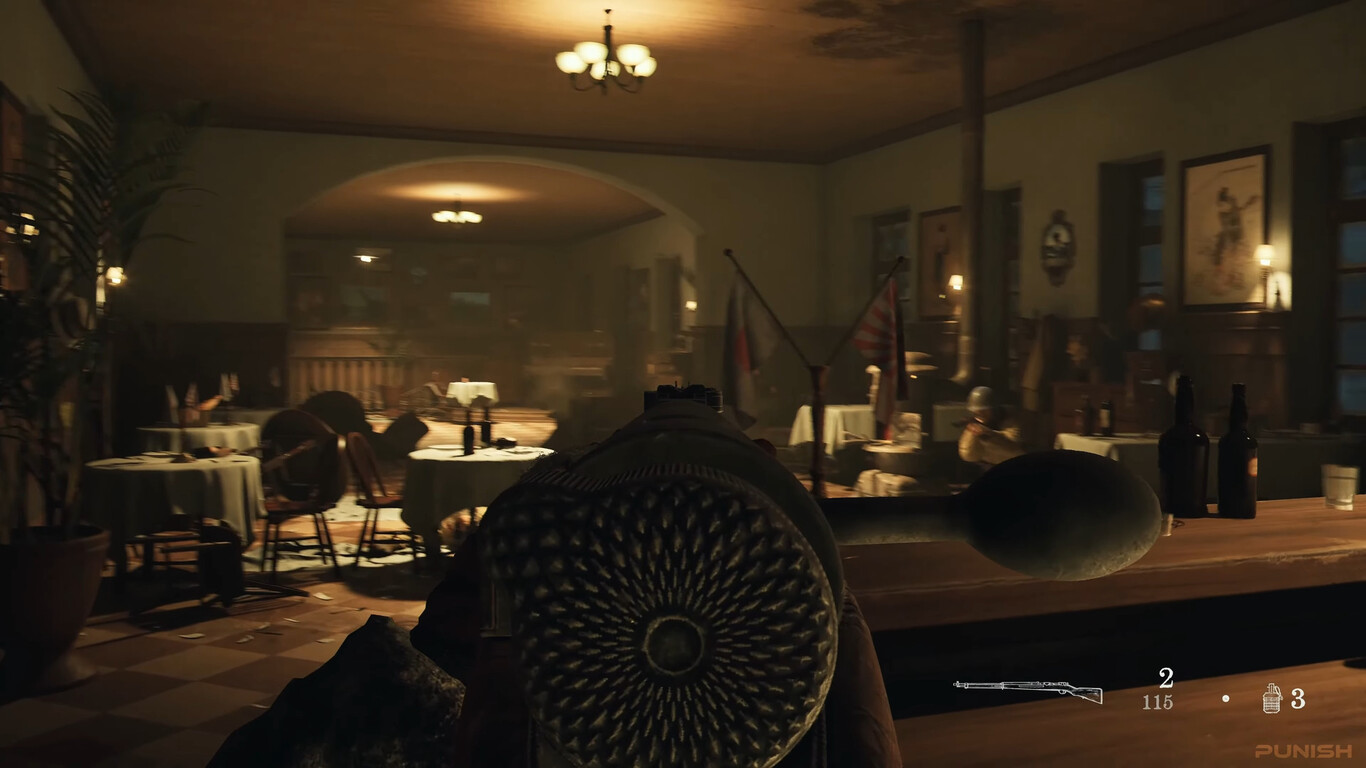
Hoothanes is planning something much broader than a sequence of snowy firefights. The campaign is intended to span 20 chapters and travel across China from north to south and east to west, moving from Manchuria through Shanghai and toward the coast while giving individual regions their own themes and visual identities. Shanghai, for example, will feature damaged apartment buildings, bars, homes and hotels, including interiors that appear almost frozen at the moment their occupants disappeared, with lights still burning inside abandoned spaces. That variety is not being introduced simply to prevent environmental repetition. The studio wants each location to contribute to a larger story about the people who fought, died and survived during the invasion.
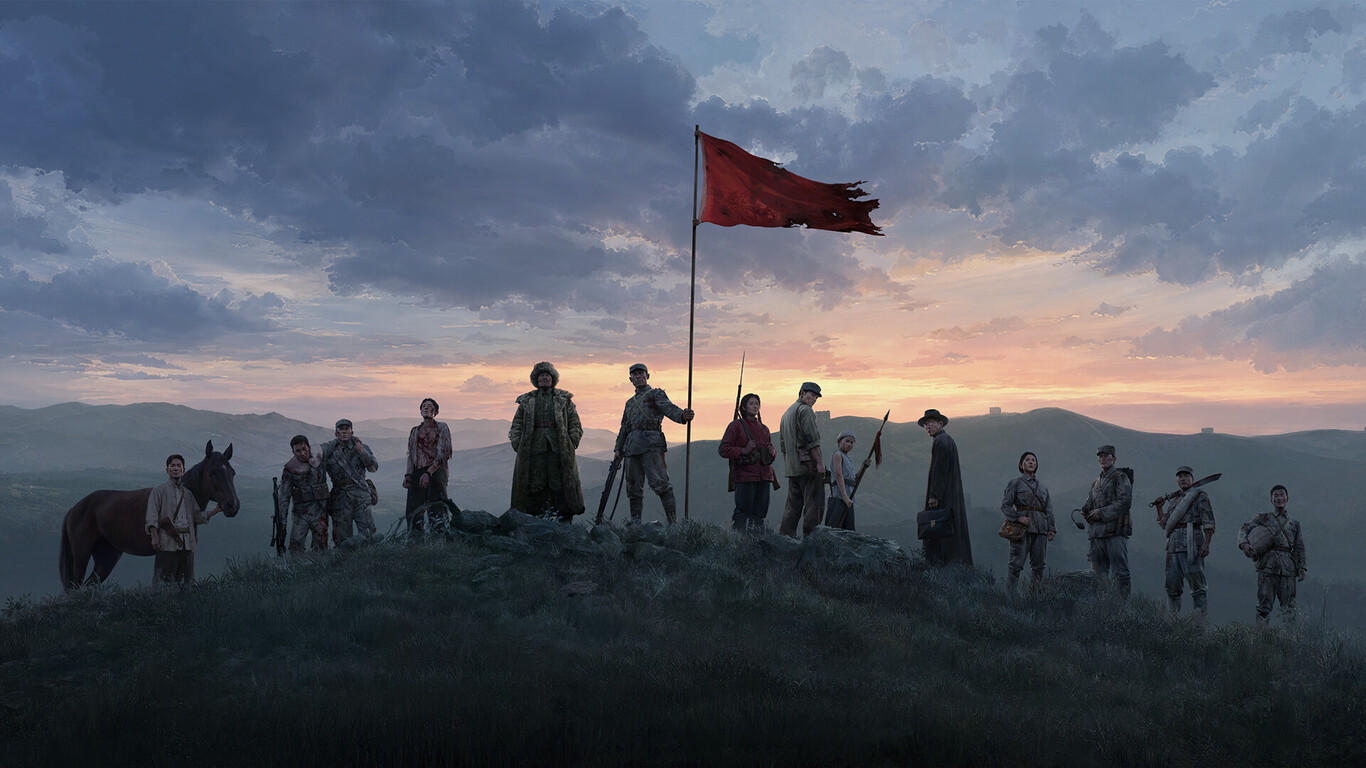
That ambition also exposes the project’s biggest risk. On a technical level and in basic combat design, The Defiant already has enough personality to make fans of classic military campaigns pay attention, but the Second Sino-Japanese War remains far less familiar to many Western players than Normandy, Stalingrad or the Battle of the Bulge. Hoothanes understands the problem and has openly considered how much context an international audience will need to become emotionally invested. The campaign cannot assume that players already recognize the people, political circumstances or military events involved. It will have to establish all of that while simultaneously creating characters whose personal experiences can cut through a genre that has already told hundreds of wartime stories.
One decision already separates the game sharply from today’s biggest military franchises: there are no plans for competitive online PvP. Hoothanes is building the campaign as the central attraction instead of designing it around a multiplayer ecosystem, although additional PvE modes are planned for later. Those cooperative or player-versus-environment features will be treated separately and are expected only after the campaign itself has launched. In an era when military shooters are often structured around seasons, progression systems and long-term multiplayer retention, that commitment to a substantial standalone campaign may ultimately prove just as important to The Defiant‘s identity as its Chinese setting.
Source: 3DJuegos