

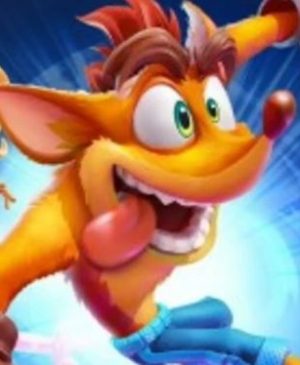
RETRO – PlayStation needed its own answer to Mario and Sonic in the mid-’90s, and Naughty Dog responded with a grinning, manic orange marsupial. Crash Bandicoot was never officially crowned Sony’s mascot, but he became one anyway in the minds of an entire generation, while simultaneously launching Naughty Dog into the big leagues and leaving a permanent mark on the history of 3D platformers.
Naughty Dog started building its reputation long before Uncharted and The Last of Us turned the studio into one of PlayStation’s most celebrated developers. In the mid-’90s, Nathan Drake and Ellie did not exist yet; instead, millions of players were discovering an orange marsupial named Crash Bandicoot. His impact was immediate enough that he came remarkably close to becoming the unofficial face of the original PlayStation. In practical terms, especially for players who lived through that era, he arguably already was.
Crash’s career after that breakthrough was anything but smooth. Following the Naughty Dog golden years, the character bounced between multiple studios and starred in games whose quality ranged from excellent to thoroughly forgettable, gradually losing some of the visibility he had enjoyed during the first PlayStation generation. His story, however, was nowhere near finished: Crash Bandicoot N. Sane Trilogy rebuilt the original three games for a modern audience, Crash Team Racing Nitro-Fueled revived his racing glory, and Crash Bandicoot 4: It’s About Time eventually gave him the long-awaited official fourth installment. Plenty of ’90s mascots disappeared into nostalgia; Crash somehow managed to claw his way back into relevance.
Three decades later, the importance of that first Crash Bandicoot is even easier to appreciate. It was brutally demanding at times, but it was also one of 1996’s most energetic, entertaining and technically impressive console games, especially on hardware that was still establishing its identity. Naughty Dog did more than launch a successful platformer; it helped shape what the early PlayStation felt like. Crash’s grin, spin attack and barely controlled body language became instantly recognizable parts of an entire console generation.
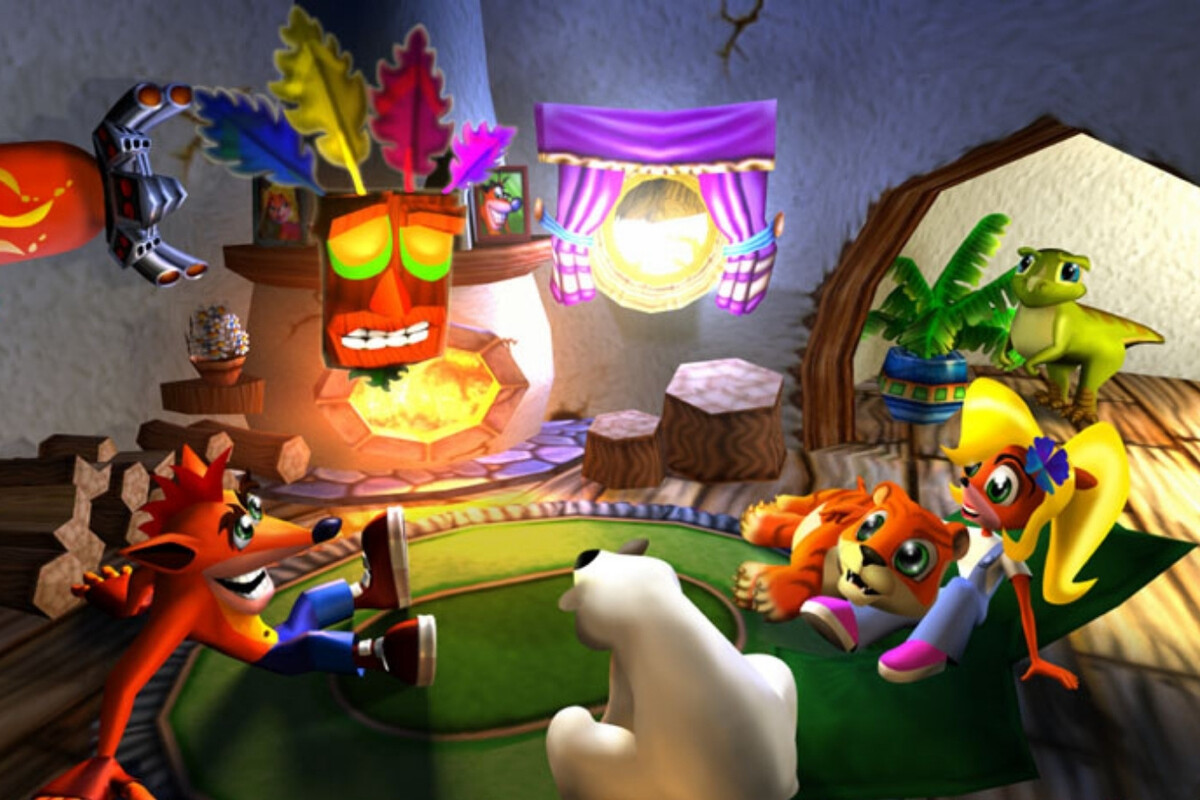
The Story Behind the Legend
In the console wars of the 1990s, Nintendo had the seemingly indestructible Super Mario, while Sega had Sonic positioned at the center of its brand. Sony was entering the market with PlayStation but lacked a character who could instantly communicate the identity of its new machine. Crash Bandicoot arrived at exactly the right moment and came extremely close to filling that vacancy. Sony never formally crowned him as its mascot, yet the advertising, commercial success and sheer visibility of the character effectively did the job anyway.
Naughty Dog was still a very different company at the time. Andy Gavin and Jason Rubin had worked together since 1984, when they founded JAM Software, the company that would become Naughty Dog five years later. Before Crash, they created games for platforms such as the Apple II, Sega Genesis and 3DO, including Way of the Warrior, a fighting game clearly shaped by the explosive popularity of Mortal Kombat. Those projects gave the team experience, but none came close to turning Naughty Dog into the industry name it would soon become.
The real opportunity emerged when Gavin and Rubin began working with Universal Interactive Studios. 3D graphics were rapidly transforming the medium, a new console generation was about to redraw the industry’s technical boundaries, and the pair saw a chance to attempt something far more ambitious than anything they had built before. Those circumstances ultimately produced the concept for Crash Bandicoot. It was the game that put Naughty Dog on the map for good.
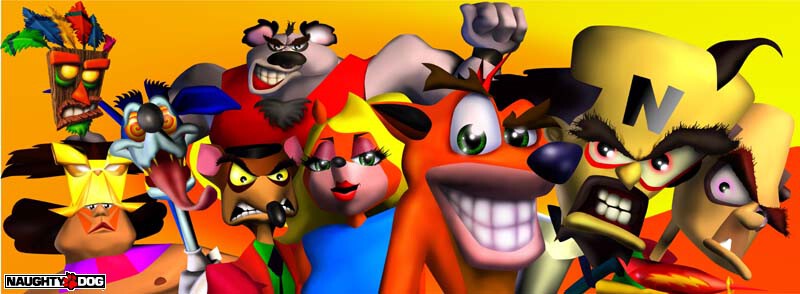
A Star Is Born
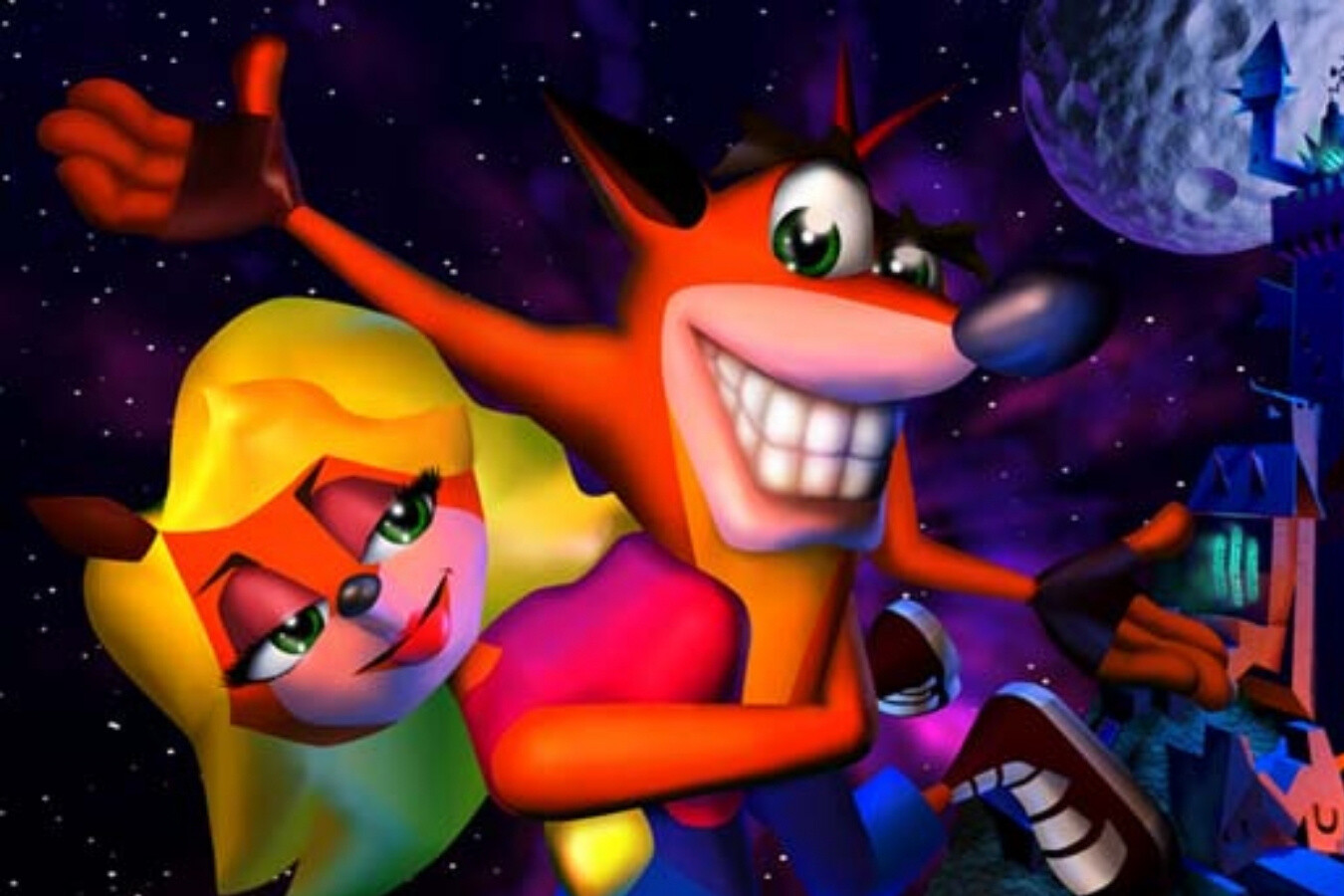
Video games have never suffered from a shortage of villains obsessed with world domination, but Dr. Neo Cortex at least had an unusually elaborate method. Using the Evolvo-Ray, he planned to transform the animals of the Wumpa Islands into evolved creatures and assemble them into his personal army. Crash Bandicoot was one of those experiments, except he escaped Cortex’s facility and set off to stop his creator while trying to rescue Tawna. Nobody was going to mistake it for Shakespeare, but it gave the platforming exactly the amount of narrative motivation it needed.
The story mainly existed to propel Crash through a succession of stages packed with enemies, traps, crates and precision platforming. That same year, Super Mario 64 demonstrated Nintendo’s radically more open interpretation of 3D platform design, built around large spaces and freedom of movement. Naughty Dog went in the opposite direction with narrow, linear stages that gave the team much tighter control over what appeared on screen. What looked like a limitation became a major technical advantage, allowing the developers to concentrate far more detail into each visible slice of the environment.
For much of the adventure, Crash ran away from the camera and deeper into the screen, but Naughty Dog constantly disrupted that basic arrangement. There were side-scrolling sequences, stages that sent Crash sprinting directly toward the player and sections built around riding animals, giving the game a restless variety that prevented any single gimmick from becoming too comfortable. It still followed many traditional platforming rules, yet the third dimension made possible situations that would have been much harder to sell only a few years earlier. The giant boulder chase, with Crash running toward the camera in panic, became iconic for a reason.
Crates, Wumpa fruit, gems and bonus stages added further layers to the formula, but the original game’s difficulty remains one of its defining characteristics. Simply reaching the end could be challenging, while completionists faced requirements that bordered on sadistic by modern standards. Certain gems originally demanded that every crate in a stage be destroyed without losing a single life, and even the save system was linked to bonus stages. Naughty Dog would wisely soften many of those rules in the sequels.
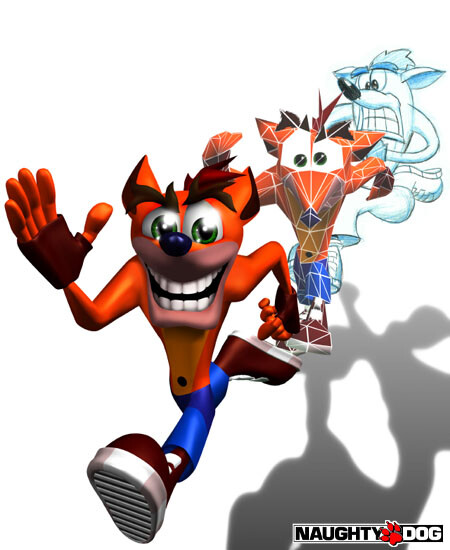
The Best of Crash Bandicoot
- Its pacing: stages are compact, tightly structured and rarely allow the action to lose momentum.
- Its difficulty: it can be vicious, yet failure usually makes you want another attempt instead of simply walking away.
- Its variety: platforming, chases, side-scrolling sections, bosses and animal-riding stages keep reshuffling the experience.
- Its visuals: it looked spectacular on a PlayStation that was still taking its first steps into the market.
- Its level design: the same core platforming ideas are repeatedly transformed through radically different perspectives.
- Its hero: Crash was expressive, ridiculous and charismatic from the beginning, eventually becoming one of the defining icons of the PS1 era.
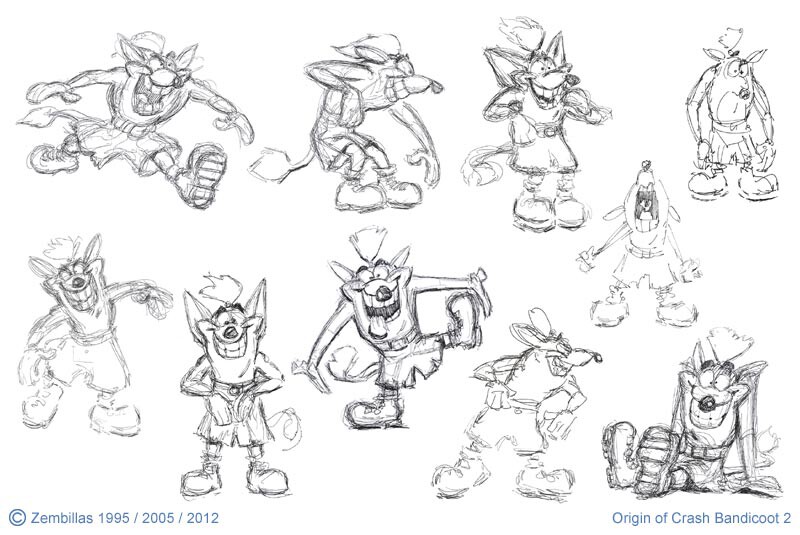
Dissecting the Influences
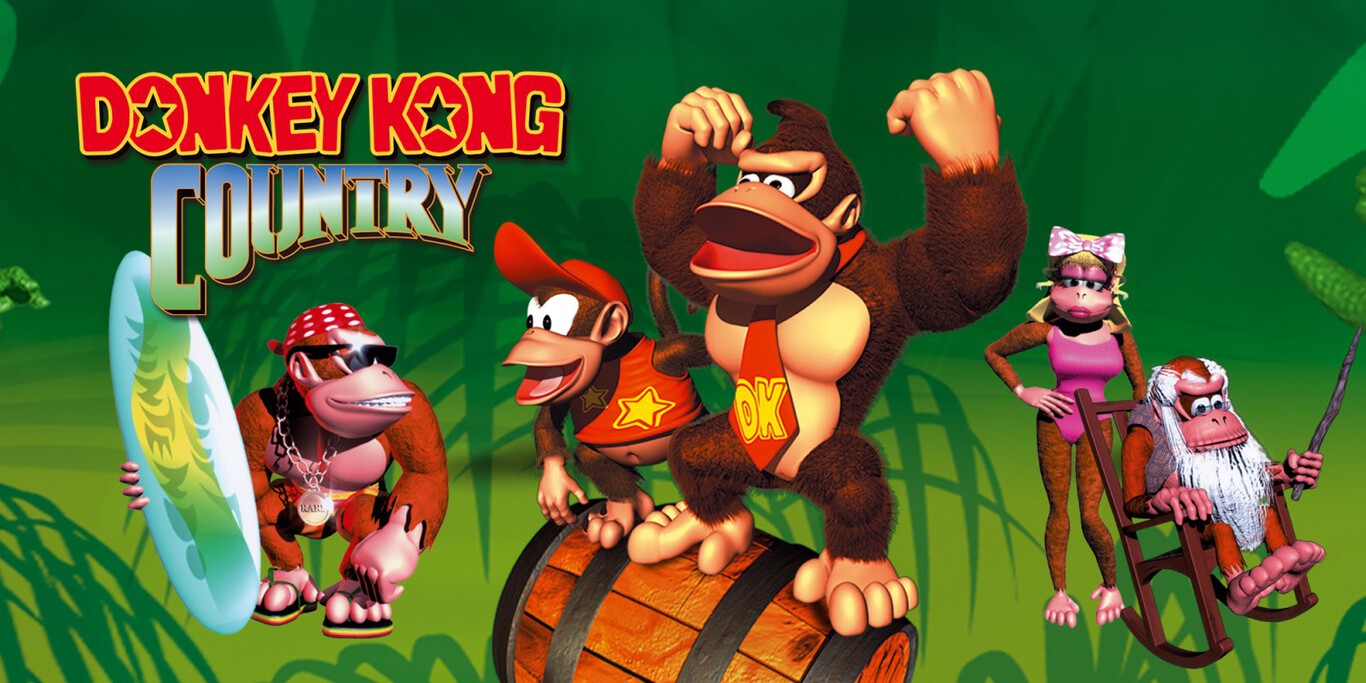
The birth of Crash Bandicoot was inseparable from one of the most dramatic technical changes the game industry had experienced. The 16-bit generation was fading away, 3D graphics were becoming the defining feature of new hardware, and developers everywhere were trying to figure out how familiar genres should survive the transition. Naughty Dog did not pretend to operate in a vacuum, and one of its strongest reference points was Rare’s brilliant Donkey Kong Country. Rare had already shown that a platformer could combine relentless pacing, expressive characters, secrets, animals and cutting-edge visuals without sacrificing accessibility.
Andy Gavin later revealed that the team used the wonderfully inelegant internal description “Sonic’s Ass Game” during development. Beneath the crude joke was a very clear design question: what would a fast platformer feel like if the camera sat behind the character, forcing the player to spend most of the game looking at the hero’s back while racing forward through 3D space? In other words, Gavin and company were literally thinking about the kind of game in which you would constantly be staring at Sonic’s backside. It was not a sophisticated title, but as a design shorthand it was brutally effective.
The PlayStation’s hardware also imposed serious restrictions on Naughty Dog’s ambitions. Its available memory simply could not support the huge, completely open environments the team might have wanted at the same level of detail, so the developers turned the limitation into part of the design. Narrow corridors and carefully controlled paths meant the studio always knew where the camera would point and which objects needed to exist at any given moment. Resources could therefore be concentrated on the exact slice of the world visible to the player, making Crash appear far richer than a straightforward reading of the hardware specifications might suggest.
The arrival of Super Mario 64 during development confirmed just how differently Nintendo was approaching the same technological transition. Mario embraced broad spaces, exploration and freedom, while Crash specialized in tightly directed routes shaped around camera placement and carefully constructed sight lines. At first, one approach could easily have looked destined to replace the other. History instead demonstrated that both design philosophies had plenty of room to survive.
Many of Crash’s most memorable sequences came directly from that constrained structure. The enormous boulder chasing him toward the camera, the wild boar stages and the bridges hanging over bottomless drops all turned the fixed perspective into part of the challenge rather than a passive viewpoint. The camera did not merely follow Crash; it actively defined the mechanics of each level. That gave Naughty Dog tools for creating situations that would have lost much of their tension in a conventional side view.
The Legacy of Crash Bandicoot
The success of the original Crash Bandicoot gave Naughty Dog the opportunity to improve nearly every aspect of the formula through two sequels. Crash Bandicoot 2: Cortex Strikes Back arrived in 1997, followed a year later by Crash Bandicoot 3: Warped, which added new moves, environments and increasingly elaborate scenarios. Together, the three games became one of the defining trilogies of the original PlayStation. Sales estimates place each installment above five million copies, making it impossible to dismiss Crash as a temporary marketing phenomenon.
Naughty Dog even had time to push the character into another genre before moving on. Crash Team Racing arrived in 1999 and became a beloved kart racer in its own right, while Eurocom’s Crash Bash followed with a collection of competitive minigames. From that point forward, however, Crash entered a new period of his life. Naughty Dog was leaving him behind, and other studios would have to decide what came next.
Over the following years, Crash moved from team to team and was dragged through nearly every conceivable experiment. Crash Bandicoot: The Wrath of Cortex tried to preserve the traditional formula, while Crash Twinsanity opened the environments and built a far more direct relationship between Crash and Cortex. Later titles such as Crash of the Titans and Crash: Mind over Mutant moved even further away from the foundations of the Naughty Dog games. The franchise survived, but it could no longer consistently reach the standard established by its original trilogy.
Crash gradually slipped out of the spotlight until 2017, when Crash Bandicoot N. Sane Trilogy brought him roaring back. Vicarious Visions rebuilt the original three adventures using modern technology while preserving their level layouts, underlying structure and recognizable gameplay. The response made it obvious that the audience had never really forgotten the character, and this was about more than a short burst of nostalgia. Crash Team Racing Nitro-Fueled followed in 2019, with Beenox not only remaking the kart racer but expanding it with tracks, characters and references drawn from across the wider franchise.
The next major step came in 2020 with Crash Bandicoot 4: It’s About Time. Toys for Bob made the bold choice to largely ignore the numerous post-Naughty Dog sequels and continue directly from the ending of Warped. New abilities, the Quantum Masks and additional playable characters expanded the formula, while the level design consciously returned to the precision and challenge associated with the original trilogy. For the first time in years, Crash was not merely revisiting old victories through a remake or remaster. He had a genuinely new adventure worthy of carrying a number in the title.
The franchise experimented again in 2023 with Crash Team Rumble, a competitive team-based multiplayer game also developed by Toys for Bob. It never generated anything close to the impact of N. Sane Trilogy or Crash 4, and it certainly was not the Crash game traditional fans had spent decades demanding. Even so, it represented something important: after years of uncertainty and disappointment, Crash was appearing regularly again rather than vanishing for another generation. The official Crash website still highlights N. Sane Trilogy, Nitro-Fueled, Crash 4 and Team Rumble as the franchise’s principal modern releases.
The business side of Crash’s story contains one particularly delicious irony. The character was born alongside PlayStation and remains one of the strongest symbols of Sony’s earliest console years, yet the intellectual property ultimately belongs to Activision. Microsoft’s acquisition of Activision Blizzard therefore placed one of the most recognizable icons of the original PlayStation inside the catalog of a company directly associated with Xbox. Viewed through the lens of the old console wars, it is the sort of plot twist nobody in 1996 would have believed.
Thirty years after his creation, Crash Bandicoot has accomplished something that seemed far from guaranteed during his long and uneven middle years. He survived disappointing sequels, changing developers, long periods of silence, genre experiments and multiple hardware generations before reclaiming his place among gaming’s most recognizable platforming heroes. He may never have officially become PlayStation’s mascot. For millions of players who grew up with Sony’s first console, however, he probably never stopped being one.
Did You Know?
- Crash originally had a tail, but the idea was abandoned because of hardware limitations.
- During early development, the character was known as Willie the Wombat before Naughty Dog decided he needed a more distinctive identity.
- The phrase “Sonic’s Ass Game” helped the team define the core concept of building a platformer viewed primarily from behind its protagonist.
- The original Crash Bandicoot contains two endings, with the gems collected during the adventure determining which one players see, similar to the later Jak and Daxter: The Precursor Legacy.
- Some gems in the original game required players to smash every crate in a level without losing a single life. The sequels eventually made this requirement considerably less cruel.
- Two keys earned through specific bonus stages unlock the additional levels Whole Hog and Fumbling in the Dark.
- Stormy Ascent was practically finished, but Naughty Dog removed it before launch because of its extreme difficulty. More than two decades later, Activision restored it as additional content for N. Sane Trilogy.
- N. Sane Trilogy allowed Coco to be used through a large portion of the three adventures, dramatically expanding her presence compared with the originals.
- Vicarious Visions created an entirely new Warped level called Future Tense more than twenty years after the original game’s release.
- Crash Bandicoot 4 has a peculiar place in the series purely because of its title: despite the many Crash games released after Warped, Toys for Bob presented it as the direct continuation of Naughty Dog’s trilogy.
- According to Guinness data available in 2014, all three original Naughty Dog Crash titles simultaneously ranked among the ten best-selling games on the original PlayStation.
- Jason Rubin and Andy Gavin used a Sony contact to show the company a video demo of Crash Bandicoot. Sony responded so positively that it quickly threw its support behind development.
- Combined sales of the four Crash games developed by Naughty Dog reached 22 million copies.
How Can You Play Crash Bandicoot Today?
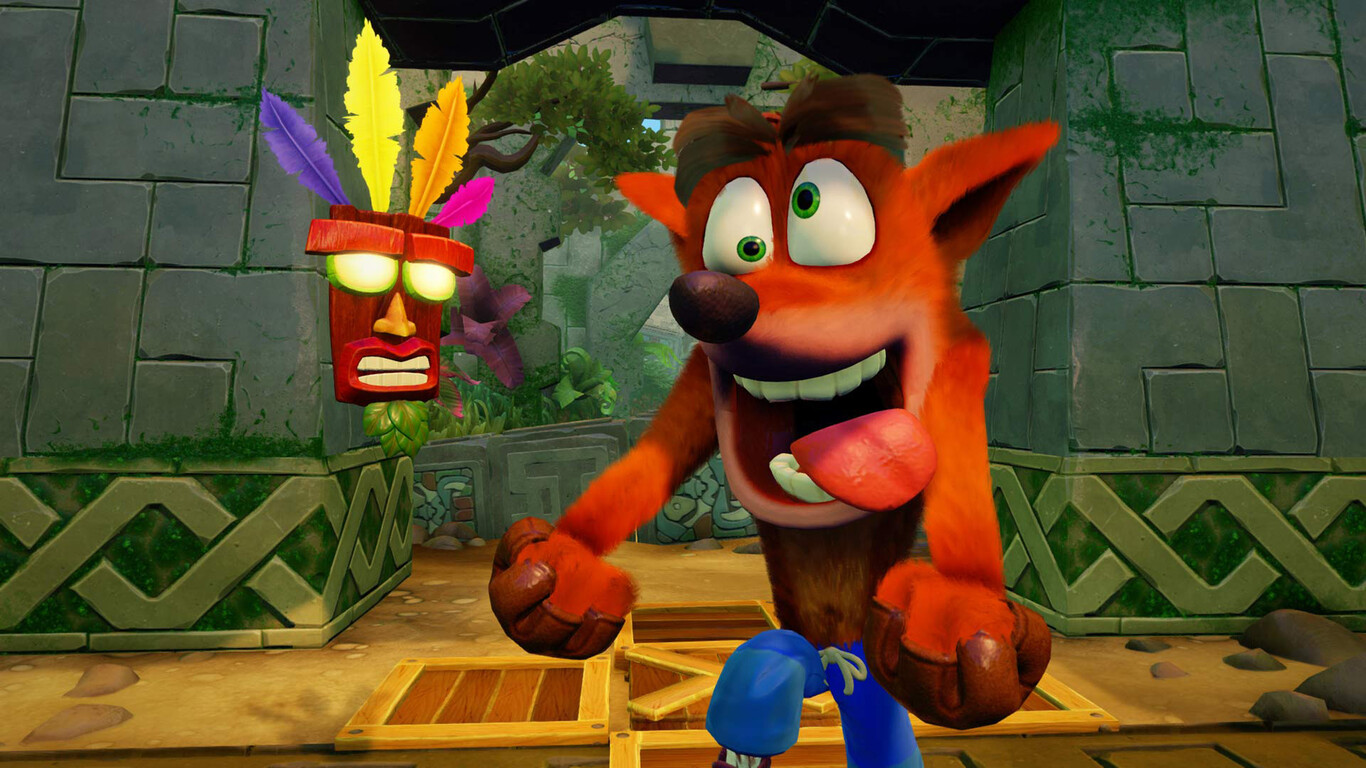
The easiest way to experience the original Crash Bandicoot today is unquestionably Crash Bandicoot N. Sane Trilogy. Developed by Vicarious Visions, the collection contains all three Naughty Dog adventures while retaining their stages, structure and core gameplay. Graphics, animation and sound were rebuilt for modern hardware rather than simply cleaned up. The result makes the classic trilogy easy to approach without stripping away the distinctive rhythm that made the originals memorable.
N. Sane Trilogy launched first on PlayStation 4 before making its way to Xbox One, Nintendo Switch and PC. Activision still lists those four platforms as the collection’s official systems. With PS5, Xbox Series X|S and Nintendo Switch 2 now part of the market, the same games can also be accessed on current-generation hardware through the relevant compatibility options. Ironically, it is now easier to play Crash across competing console ecosystems than it ever was when he was effectively serving as PlayStation’s unofficial mascot.
Players determined to experience the actual 1996 release can still use an original PlayStation and a physical copy. The first Crash Bandicoot was also sold for years as a downloadable classic on older Sony systems including PS3, PSP and PS Vita. Those methods are no longer the easiest ways to access the game today. For dedicated retro players, however, the original hardware still offers the closest possible recreation of what it felt like to encounter Crash during the mid-’90s.
There is also one remarkably conspicuous absence in the long relationship between Crash and PlayStation. Sony released the miniature PlayStation Classic in 2018 with 20 built-in games intended to represent the original console, yet not a single classic Crash Bandicoot title appeared on the machine. For a character remembered by millions as one of the defining faces of PlayStation, that omission remains difficult to ignore. It also perfectly illustrates how complicated Crash’s ownership and licensing history became after his Naughty Dog years.
That leaves Vicarious Visions’ remake trilogy as the most convenient entry point for anyone who wants to understand why Crash became such a phenomenon during the 1990s. Some of the first game’s design decisions feel vicious today, especially beside the refinements introduced by Cortex Strikes Back and Warped. Its compact stages, relentless pacing, perspective-driven level design and Crash’s gloriously stupid personality, however, still hold up surprisingly well three decades later. That is probably why the orange marsupial remains one of the greatest icons in PlayStation history.
Source: 3DJuegos
-Gergely Herpai „BadSector”-









Leave a Reply