Don’t Nod has been hitting the same wall for years: it keeps releasing well-received, carefully made games that fail to become real commercial successes. Aphelion, the studio’s latest science fiction adventure, launched on April 28 for PC, PS5, and Xbox Series X|S, but early signs suggest it has not broken the cycle that has been putting the creators of the first Life is Strange under pressure for years.
Some studios simply go through bad streaks, while others seem trapped in a cycle they cannot escape. Don’t Nod has spent the past few years in exactly that position: its games tend to receive positive reviews, but sales remain very low. The French studio that created the first Life is Strange released Aphelion on April 28 for PC, PlayStation 5, and Xbox Series X|S, yet the new title has not managed to generate much visible interest. That is especially frustrating because Don’t Nod is not an empty production line, but a team that still builds games around narrative, atmosphere, and emotional weight.
Aphelion Fails In Sales
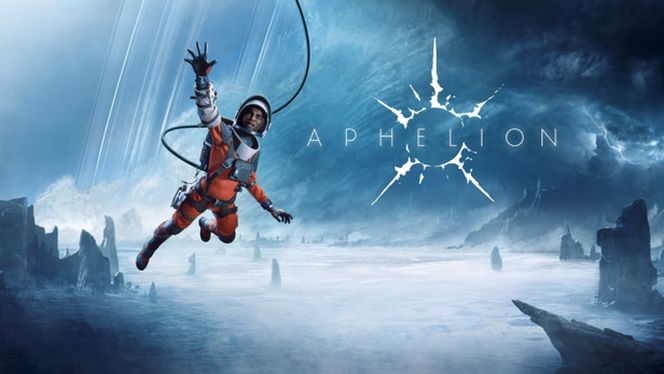
Aphelion is a science fiction adventure that tells an emotional story about two astronauts stranded on the edge of the solar system. The studio is once again working in the more intimate, story-driven space where it has often produced its strongest moments, yet the game has flown almost completely under the radar. A quick look at its SteamDB player count makes that painfully clear: at the time of writing, it has 94 concurrent players, while its peak was only 219 concurrent users five days earlier. At a price of €30, Aphelion is unlikely to easily cover its development costs with numbers like these, even if Microsoft‘s financial backing may have reduced some of the pressure on the studio.
The game is also available through PC Game Pass and Game Pass Ultimate, which means it has likely reached a much wider audience there than traditional sales figures would suggest. As usual, there are no concrete sales figures for the PlayStation 5 or Xbox Series X|S versions, but everything points to Don’t Nod‘s latest game suffering from the same problem as many of its recent releases. 3DJuegos’ own review noted that some have described Aphelion as the Interstellar of video games, even if that comparison may be going too far, while still acknowledging that its science fiction story leaves a lasting impression. That neatly captures the current paradox of Don’t Nod: quality, ambition, and a memorable atmosphere are not always enough to make a game visible in the market.
The studio is not making bad games. It is making games that simply do not find a large enough audience. Over time, that can become more dangerous than one poorly reviewed release. This is not a new situation: after Jusant and Banishers: Ghosts of New Eden failed to meet their sales targets in 2023 despite receiving positive reviews, Don’t Nod entered a restructuring cycle. In 2024, that process led to the dismissal of up to 69 employees and the cancellation of the P10 project. The studio then looked to Lost Records: Bloom & Rage, released in February last year, to break the streak, but its peak on Steam did not exceed 3,000 concurrent players. The better news is that the studio said the title met its sales expectations.
Don’t Nod, then, remains caught in a strange trap: few studios are as consistent at making atmospheric, author-driven, narrative-focused games, yet few seem to have such difficulty turning that into stable business results. Aphelion is another example of how positive reviews alone no longer protect a mid-sized studio if the market does not pay attention. The question now is whether the team that once broke through with the first Life is Strange can still find a form where critical respect and real buyer interest no longer drift so far apart.
Source: 3DJuegos







![The System Requirements for Fable Are In! [VIDEO]](https://thegeek.games/wp-content/uploads/2026/08/vnews-05-fable-1280x720-1-302x180.png)