
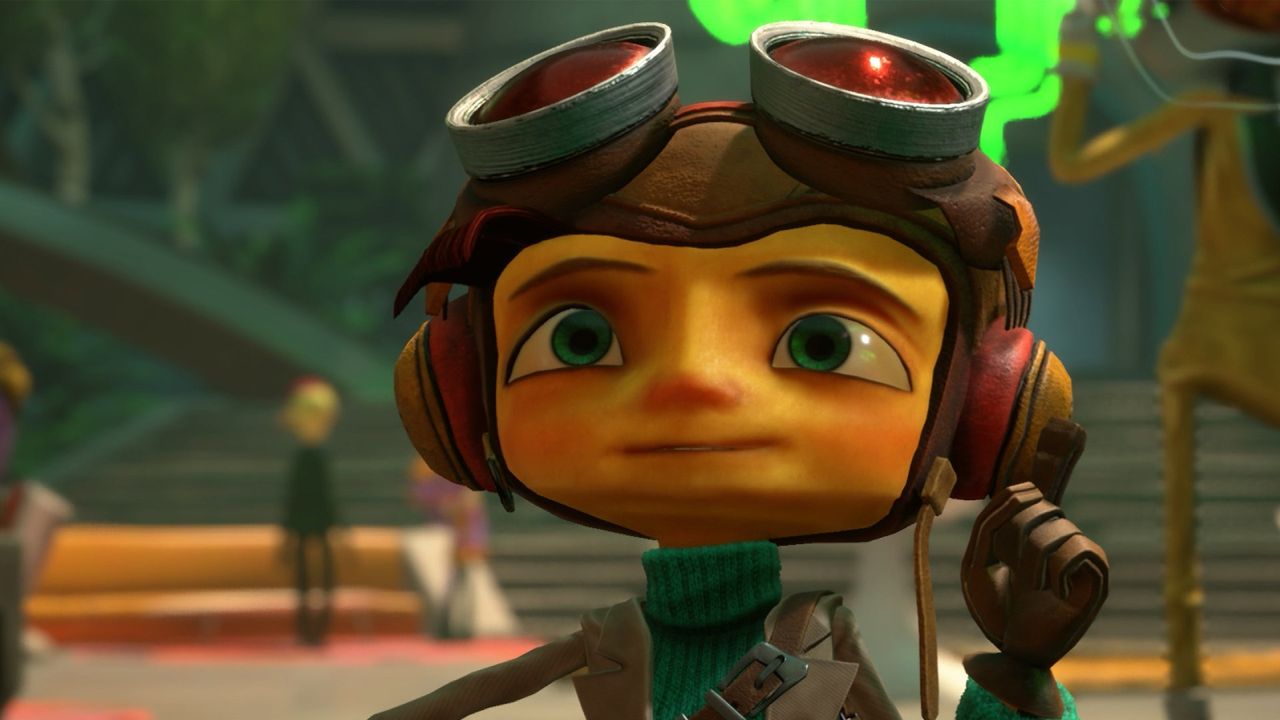
Double Fine is not in an easy position: Keeper and Kiln failed to break through on Steam, while Microsoft has shaken the Xbox division with several waves of layoffs in recent years. The studio beloved by many for the Psychonauts series has now taken an important step: its workers are forming a union with the CWA, which does not make the team untouchable, but can create a much stronger safety net in an unstable industry.
Double Fine is not exactly enjoying its strongest commercial moment. Keeper was released in October 2025 with polished art direction and positive reviews, but its Steam launch was still extremely modest: according to SteamDB, its all-time concurrent player peak sat around 191. Kiln, the studio’s multiplayer pottery brawler, arrived in April 2026 and also failed to draw a large crowd, with SteamDB listing a peak of 193 concurrent players. Those numbers do not tell the whole story, since both titles also existed inside Microsoft’s wider ecosystem and Game Pass can distort the usual sales and player-count picture, but it is clear that on PC, these were not broad mainstream hits.
That is especially sensitive because Double Fine remains one of Xbox Game Studios’ most beloved and distinctive teams. Tim Schafer’s studio has spent decades building its name around strange, creative, personal games, and Psychonauts and Psychonauts 2 gave it a cult status few Microsoft-owned studios can match. Love, however, is not the same as business security. Microsoft has cut across Xbox teams in multiple rounds over the past few years, and a studio that follows two small, commercially weak projects naturally becomes the subject of speculation. It is not surprising, then, that parts of the community have started asking whether layoffs, or in the worst case even closure, could be on the table.
Double Fine Is Unionizing – This Is Not About Mood, But Survival Instinct
Just a few hours ago, the studio’s workers delivered what may be one of the most important pieces of news for Double Fine in a long time. On May 7, the 42 full-time and regular part-time employees at Double Fine filed a petition with the National Labor Relations Board to form a union under the umbrella of the Communications Workers of America, or CWA. The CWA is one of the largest media and communications unions in the United States, and in recent years it has become increasingly active in the video game industry, particularly around studios owned by Microsoft. In a statement sent to Aftermath, the CWA said Double Fine workers are organizing to preserve and extend the studio’s commitments to creative excellence, diversity and inclusion, and quality of work life.
The important detail is that, according to the CWA, workers are requesting voluntary recognition from Microsoft while also filing an election petition with the NLRB to secure formal representation. The organization also said Microsoft has taken a neutral position and agreed not to interfere in any way with the workers’ right to organize. This is not happening in a vacuum: the CWA has already helped organize workers across several Microsoft gaming environments, including Activision, Blizzard, Raven Software, and ZeniMax-related teams. The trend is clear: after waves of layoffs, AI anxieties, and unpredictable studio decisions, more game developers want a collective voice that cannot simply be dismissed with one calendar invite or Slack message.
A union is not a bunker, of course. It does not mean a studio can never be closed, or that layoffs become mathematically impossible. In practical terms, however, it changes the process: layoffs, restructuring, or changes to working conditions can involve bargaining, protocols, compensation questions, communication rules, and worker representation. In an industry where tens of thousands of developers have lost their jobs worldwide since the end of the pandemic boom, that matters a great deal. In Double Fine’s case, it is especially interesting because the studio has always built its identity around creative weirdness, human voice, and personal ideas, and now the people inside the studio are trying to protect the culture that still makes the name mean something.
A Psychonauts Return Could Be The Safer Path, But Double Fine Is Only Teasing For Now
The big question now is what the studio’s next major move will be. Based on Kiln and Keeper, Double Fine still does not seem interested in playing it safe: one is a multiplayer pottery-themed party brawler, the other a surreal, wordless adventure starring a walking lighthouse. Those are exactly the kinds of ideas that make the studio lovable, but they are also much harder to sell commercially than a new entry or remake tied to a known brand. From that angle, it makes sense that fans keep looking back toward Psychonauts, because Raz’s world is cult, recognizable, and after Psychonauts 2, technically easier to imagine returning to.
At the end of April, a fan on X asked the studio to remake the original Psychonauts with the visual quality of the sequel. Double Fine’s response was not an announcement, but it was not a cold rejection either: the studio essentially said the idea would be amazing and that it would love to do it one day, with a crossed-fingers tone attached. That does not mean the project is in development, and there is no official announcement for Psychonauts 3 either; Tim Schafer previously indicated that the team is working on other things. Still, the logic is easy to see: a Psychonauts remake would likely carry less risk than another entirely new IP, especially since Psychonauts 2’s models, animation experience, and art direction could provide a useful foundation.
The situation, then, cuts both ways. Double Fine remains one of Xbox’s strangest and most beloved studios, but after the weak Steam starts for Keeper and Kiln, it is hard to pretend there are no questions about visibility, marketing, or how Microsoft handles smaller, more personal games. Unionization will not solve commercial problems overnight, but it changes the power balance: workers can have a voice in what the future of their workplace looks like, while the studio may be getting a safety net at exactly the moment when creative freedom and business reality can collide in ugly ways.
-Gergely Herpai „BadSector”-
Source: 3DJuegos, Aftermath, SteamDB – Keeper, SteamDB – Kiln, GamesRadar+














Leave a Reply