
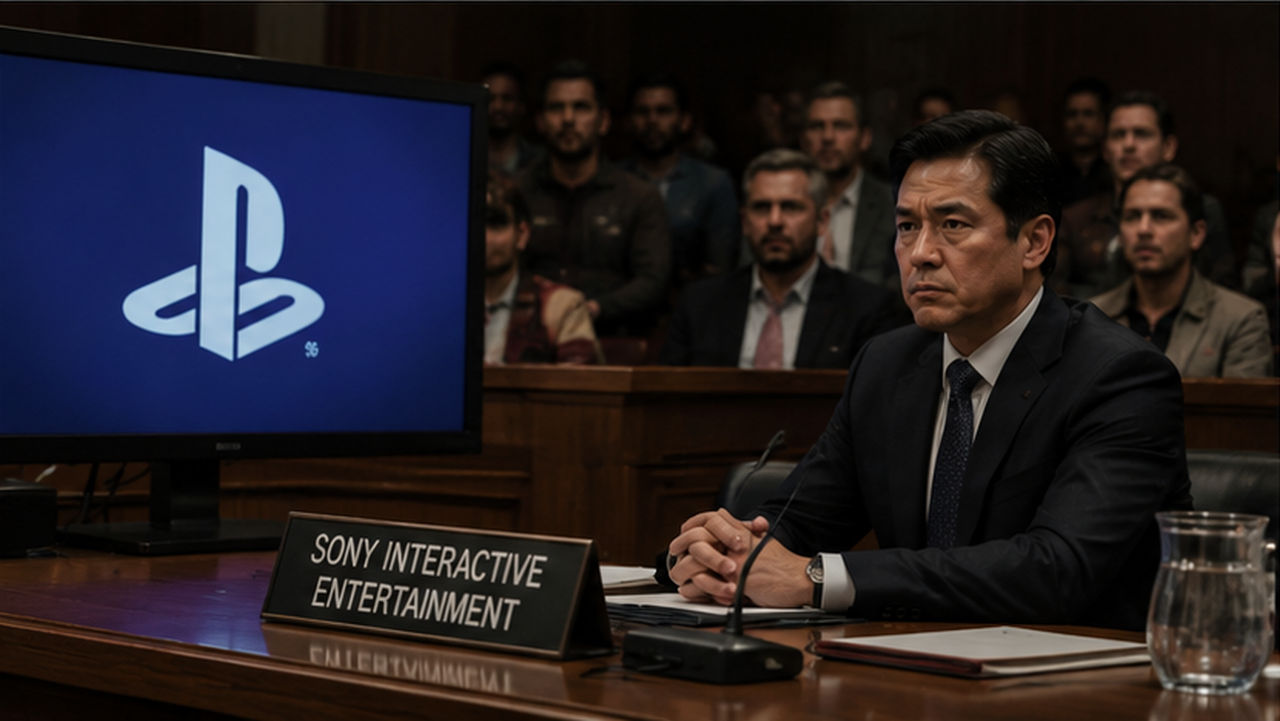
Sony is facing another proposed class action lawsuit in the United States, this time over PlayStation 5 price increases and tariff-related refunds linked to Donald Trump’s trade policy. The plaintiffs argue that the company may have benefited twice: first by passing higher tariff-related costs on to consumers, and then by potentially keeping refund money connected to tariffs later struck down by the courts.
PlayStation is under legal pressure again, and this time the dispute is not about digital store commissions or subscription rules, but console prices. The case, Walker et al v. Sony Interactive Entertainment LLC, was filed on May 6, 2026, in the United States District Court for the Northern District of California. Plaintiffs Amorey Walker and Bryce Foster-Quarles claim that players who bought PlayStation consoles at increased prices may have been harmed because Sony allegedly stood to benefit twice from the economic situation created by the Trump administration’s tariffs.
The lawsuit centers on Sony’s 2025 PS5 price increase, which the company justified at the time by referring to a “challenging economic environment.” The plaintiffs argue that this environment was tied to import tariffs introduced under Donald Trump, which pushed up the cost of many technology and consumer electronics products. The dispute becomes more complicated because several companies later sued the US government over those tariffs, and after a Supreme Court ruling, the door opened for affected importers to seek refunds. Consumers are now arguing that if they absorbed the higher costs through increased prices, those refunds should not simply remain with the companies.
According to Engadget, the lawsuit seeks refunds for buyers who purchased PlayStation consoles during the tariff period at elevated prices. The complaint alleges that Sony may have received a “substantial windfall profit.” The argument is straightforward: if a company raised prices because of tariff pressure and later became eligible for tariff refunds, then consumers say the company should not keep both advantages. For now, however, this remains an allegation in a proposed class action, not a court ruling, and Sony’s response, as well as the evidentiary record, will matter heavily.
The case is not necessarily simple for the plaintiffs. Sony did not always point to tariffs alone as the specific reason for the price increases, instead using broader language about the economic environment. That could become important for the defense, because the company may argue that pricing reflected inflation, manufacturing costs, currency movement, logistics pressure, and other market factors as well. Still, the lawsuit is uncomfortable for PlayStation because many players no longer view these price moves in isolation. Console pricing, subscription costs, and digital storefront economics are increasingly being seen as parts of one larger trust problem.
Meanwhile, PlayStation Continues to Raise Prices
The timing is especially awkward for Sony because PlayStation has returned to the headlines in recent weeks with more price increases. The company has raised PS5 prices again in several regions and also confirmed higher prices for one-month and three-month PlayStation Plus plans. In the United States, the official new Essential prices are $10.99 for one month, up from $9.99, and $27.99 for three months, up from $24.99. To players, this is not a legal abstraction. It is a visible pattern: the cost of staying inside the PlayStation ecosystem keeps going up.
PlayStation is also dealing with other legal and regulatory pressure. In recent years, Sony has faced complaints and lawsuits over its digital business model, including PlayStation Store pricing, digital commissions, and competition inside the platform. In the United Kingdom, the company has been challenged over its 30 percent commission on digital sales, while in Europe, questions around allegedly high digital pricing have also surfaced. Some disputes have been resolved or settled, but the broader picture remains clear: Sony is trying to protect the value of its closed ecosystem while also facing growing consumer resistance to higher prices.
This new US lawsuit matters less as an isolated complaint and more as part of the current mood around PlayStation. Players are increasingly skeptical when companies point to a “challenging economic environment” while continuing to raise prices and preserve margins. The court may ultimately reject the plaintiffs’ argument, and Sony may be able to show that multiple economic factors shaped its pricing rather than tariffs alone. But the message behind the suit is already clear: some players believe companies have been too quick to pass costs down to customers and too slow to return anything when the pressure eases.
Source: 3DJuegos, Engadget, Justia, Push Square









![Stranded Deep 2: After Two Years, We Finally Get to See More of It! [VIDEO]](https://thegeek.games/wp-content/uploads/2026/09/Stranded-Deep-2-1280x720-1-302x180.jpg)
![Sony Is Following the Same Path Xbox Took in 2013! [VIDEO]](https://thegeek.games/wp-content/uploads/2026/09/Live-TV-on-PS5-1280x720-exact-302x180.png)




Leave a Reply