
TECH NEWS – According to Morgan Stanley, Google and Amazon’s AI chips can be purchased for half the price, yet Nvidia still comes out on top thanks to its superior performance.
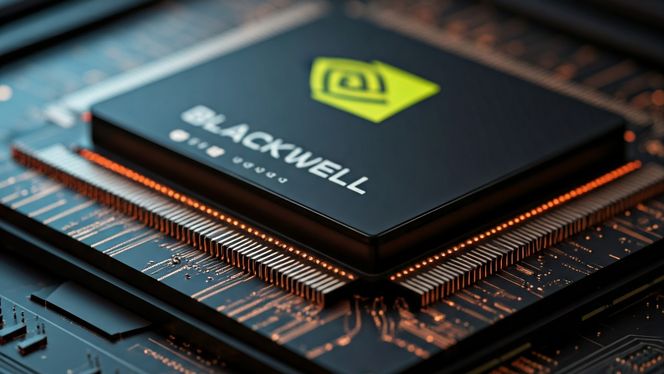
Building data centers equipped with Nvidia Blackwell GPUs costs twice as much as building centers with application-specific integrated circuits (ASICs) specialized for AI applications. However, the computational efficiency of Nvidia’s chips is significantly higher than that of custom chips. The high cost of Nvidia’s latest AI GPUs is a hot topic in the market. CEO Jensen Huang has stated multiple times that, although the chips are expensive, they provide greater returns in the long term.
Morgan Stanley compared the TFLOPS performance of Nvidia’s various AI GPUs with the custom AI ASICs offered by Amazon and Google. Hyperscalers require twice the capital investment to build a one-gigawatt data center with Nvidia’s Blackwell AI GPUs than with Google’s Tensor Processing Units (TPUs) or Amazon’s Trainium chips. However, Morgan Stanley claims that investing in Nvidia chips is worth the expense because they offer greater computational efficiency. Estimates suggest that Nvidia chips deliver two to eight times the performance per watt of custom ASICs.
Morgan Stanley: $NVDA “We estimate hyperscaler capex to build a 1 GW datacenter with current-gen NVDA GPUs (Blackwell) is up to ~2x the cost of current-gen custom ASICs (TPU, Trainium)…but compute power efficiency matters, and this is where NVDA shines…with compute… pic.twitter.com/VtAqrcSU9j
– tae kim (@firstadopter) May 18, 2026
The TFLOPs-per-watt performance of the Nvidia Vera Rubin (FP4), Vera Rubin (FP8), GB300 (FP8), and H100 (FP8) AI GPUs has been calculated. The Vera Rubin (FP4) is naturally the highest-performing GPU on the list, with a score of 19.5. The scores for the other chips are 6.8, 6.0, and 3.1, respectively. In contrast, the TFLOP/watt ratios for Google’s TPUv7 (FP8) and Trn3 (FP8) chips are 4.3 and 2.5, respectively. This places their performance between Blackwell- and Hopper-generation GPUs, but below Hopper chips.
Although Nvidia’s chips offer the highest performance per watt, users are looking at other metrics as well. For instance, an expert from the AI infrastructure provider Nebius says that AI chips are evaluated based on cost per million generated tokens compared to the hourly cost of running a GPU. Nebius estimates that Groq’s chips cost five to ten cents per token, while Nvidia’s Blackwell chips cost twenty-five cents. Groq’s chips reportedly produce up to 800 tokens per second, significantly higher than the 450 tokens per second produced by Nvidia’s chips.

Source: WCCFTech




![Moon Studios Has Postponed the Release of No Rest for the Wicked! [VIDEO]](https://thegeek.games/wp-content/uploads/2024/04/thegeek-no-rest-for-the-wicked-2024-302x180.jpg)

![Dragon’s Dogma II: Dark Arisen: Major Free Update Ahead of the DLC [VIDEO]](https://thegeek.games/wp-content/uploads/2026/09/dragons-dogma-dark-arisen-1280x720-2-302x180.jpg)







![Moon Studios Has Postponed the Release of No Rest for the Wicked! [VIDEO]](https://thegeek.games/wp-content/uploads/2024/04/thegeek-no-rest-for-the-wicked-2024-300x365.jpg)
Leave a Reply