
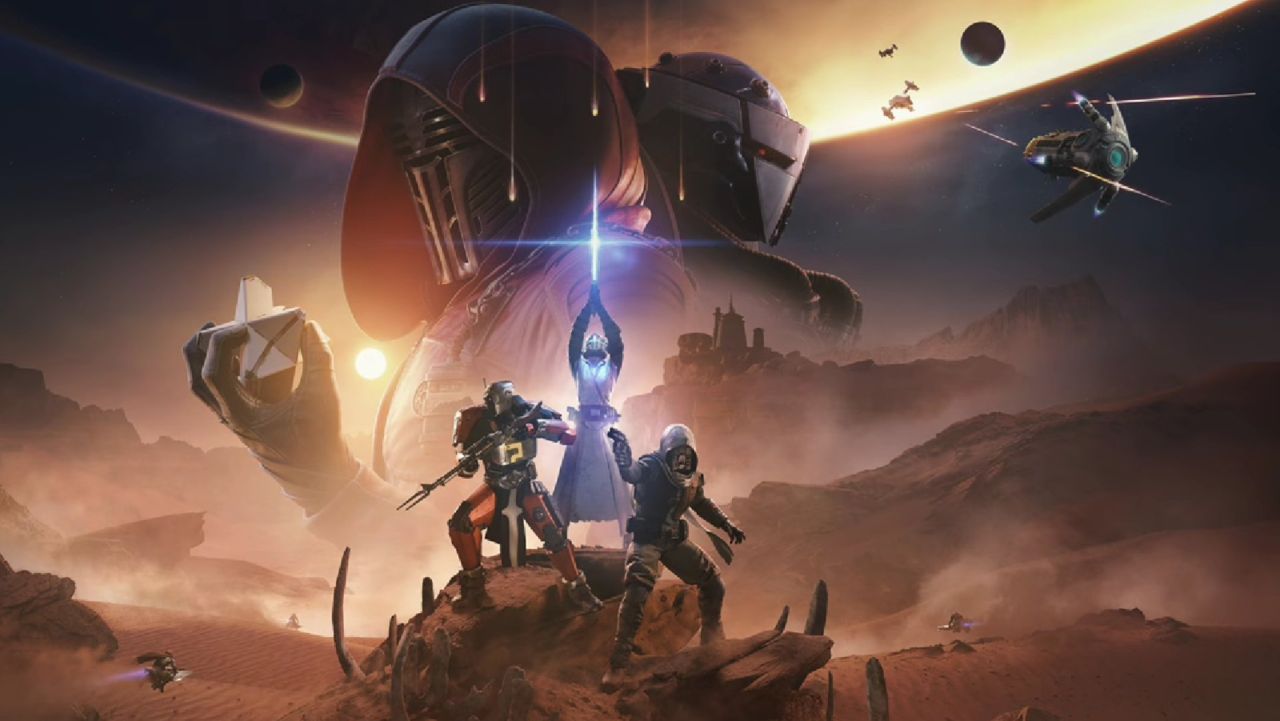
The end of new content for Destiny 2 looks, at first, like the closing of a long-running chapter, but Don McGowan sees something more troubling behind it. Bungie’s former General Counsel, who helped handle the studio’s acquisition by PlayStation, believes the company is turning into a publishing label rather than the world-building studio it once was.
Nearly nine years have passed since the launch of Destiny 2, and Bungie’s second major science-fiction saga is now moving toward a real ending. The studio has confirmed that Monument of Triumph, scheduled for June 9, will be the game’s final major update, a significant moment for a title that spent years functioning as a live-service adventure, a social ritual, and a constantly expanding space opera. The game will remain available, just like the first Destiny, but fans are understandably treating the end of new content as more than a routine production note. Bungie has framed the decision in an optimistic tone, presenting it as a new beginning that will allow the team to work on more games, but one former key figure at the studio is reading the situation in a much darker way.
Don McGowan, Bungie’s former General Counsel and one of the people involved in managing the company’s 2022 acquisition by PlayStation, reacted to the news in a LinkedIn post. McGowan is not speaking from the position of a sentimental superfan, and he does not pretend that Destiny 2 was ever exactly his favorite game, which makes his assessment of Bungie’s future feel even sharper. In his view, the decision confirms a fear he had after the Sony acquisition: Bungie is no longer becoming the world-building creative powerhouse it was once known as, but something closer to a publishing label under PlayStation’s control, a company that may still release games from time to time, but no longer plays the same role in the industry.
“For those of you who know my opinion of the current Bungie and its direction, and my time working there, my reaction to this news [the decision to halt development of new updates for the title] may be unexpectedly ambivalent”, McGowan wrote at the beginning of his message. He then made the point more bluntly: “I’m not happy to see what one of the most famous video game studios has become, and I wish I could have done more to keep it alive. It’s now transforming into what I always feared after the Sony acquisition: a publishing label that might still release a game now and then, but will no longer be a creator of worlds. Life goes on, but we can allow ourselves a moment to wish that, sometimes, it weren’t so.”
McGowan’s comments do not read like simple fan grief because he openly states that he is not attached to Destiny 2 through a love of FPS games or Bungie’s complex narrative structure. On the contrary, he says he does not like first-person shooters or the dense storytelling of Bungie’s title. Still, he clearly understands that for many players, Destiny 2 was not just another game sitting in a library, but a shared space, a daily habit, and in some cases a lifeline. “But not everything is for everyone. For many people, Destiny 2 was their life. It helped many people cope with COVID lockdowns. And, of course, it changed the video game industry in so many ways that resonate today and will continue to do so in the future”, he wrote. He added: “So, even though I don’t see them in person, I sympathize with those who are losing something that meant so much to them. Now, I hope this doesn’t mean thousands of people lose their jobs…”
A Major Layoff Wave Now Hangs Over Bungie
That final line from McGowan is especially worrying because current reports suggest it may come true. According to Bloomberg’s Jason Schreier, Bungie is preparing for a considerable wave of layoffs, which makes the end of new content for Destiny 2 feel less like the natural sunset of a game and more like a symptom of a much larger organizational shift. The studio is still expected to continue releasing new content for Marathon, its most recent title, and it will also keep developing projects that are currently in the concept stage, including new Destiny games. That does not remove the uncertainty, especially because Destiny 3 is not even actively in production at the moment, leaving Bungie’s future far less secure than an optimistic announcement can make it sound.
Over the last nine years, Destiny 2 became the kind of game players could love, resent, criticize, abandon, and still return to the next day. It carried all the strengths and frustrations of the live-service model, but it also built a community that stayed for more than shooting, raids, or loot. Many players remained because Bungie could still create the feeling of living inside a changing world with its own mythology. That is why McGowan’s phrase about Bungie no longer being a creator of worlds lands so heavily. He is not simply talking about one game receiving fewer updates, but about the possible collapse of a studio identity. If he is right, Monument of Triumph will not only be the final major update for Destiny 2, but also a marker for the end of an era in which Bungie still looked like a studio built around creating universes rather than managing portfolio assets.
Source: 3DJuegos







![The System Requirements for Fable Are In! [VIDEO]](https://thegeek.games/wp-content/uploads/2026/08/vnews-05-fable-1280x720-1-302x180.png)






Leave a Reply