
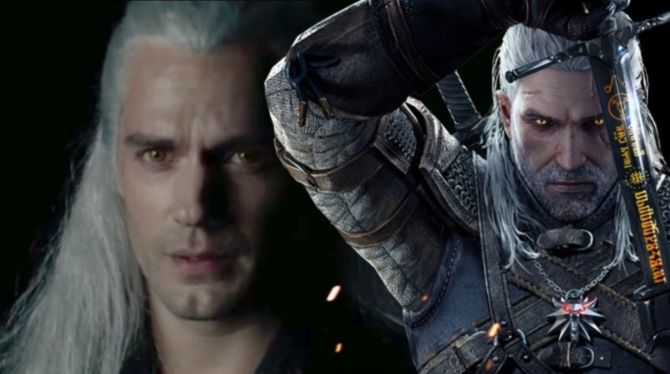
MOVIE NEWS – Henry Cavill’s relationship with The Witcher fandom was always more involved than what audiences typically expect from the star of a major franchise. In his view, even complaints that his Geralt did not resemble the character somebody had spent years playing in The Witcher 3: Wild Hunt were not automatically examples of toxic behavior.
Although Cavill’s forced departure as Superman was ultimately confirmed in 2022, uncertainty surrounding his future with DC and Warner Bros. had followed him for years. Netflix’s The Witcher consequently offered him a particularly meaningful opportunity to become part of a universe he had enthusiastically followed long before accepting the role. The series, which premiered in December 2019, pushed Cavill back into the center of pop culture, but his relationship with fans of Andrzej Sapkowski’s books and CD Projekt RED’s games was never limited to that of an actor simply portraying an established character. He also showed an unusually sympathetic attitude toward criticism.
Cavill Believed Fan Frustration Was Often an Expression of Passion
During an interview with Jake Hamilton while promoting The Witcher, Cavill was asked about the phenomenon usually described as “toxic fandom.” Rather than automatically treating every forceful or negative reaction as toxic, he argued that the situation becomes more complicated when audiences have spent years forming attachments to characters through novels or video games. “I don’t necessarily consider that toxic. I consider it passion,” Cavill explained.
Playing Geralt inevitably meant confronting versions of the character that already existed in people’s imaginations, Cavill argued. He specifically pointed to players who had become attached to Geralt through The Witcher 3: Wild Hunt and therefore instinctively compared the Netflix interpretation with CD Projekt RED’s depiction. That reaction could remain understandable even though the games essentially continue beyond the events of Sapkowski’s novels and represent their own interpretation of the universe. For Cavill, somebody thinking that his Geralt was not the Geralt they knew from the game did not, by itself, make that person a toxic fan.
He also rejected the assumption that fan resistance should always be interpreted as hostility. When people have followed a story, universe, or character for years, they naturally develop strong emotional attachments and personal expectations about how an adaptation should handle them. Cavill believed creators had to accept that those expectations exist and recognize that controversial creative choices will inevitably produce debate. In his view, passion only becomes something fundamentally different when it crosses the line into genuinely abusive or extreme behavior.
That perspective is especially notable coming from an actor who had already portrayed Superman before becoming Geralt, placing him at the center of two franchises whose audiences hold extremely strong opinions about their favorite characters. Cavill ultimately left neither role because of fan criticism: changes at the top of DC reshaped Superman’s future, while The Witcher continued with Liam Hemsworth as Geralt. His earlier comments nevertheless reveal that Cavill never automatically regarded fans who disagreed with his performance or an adaptation’s creative direction as enemies.
Source: 3DJuegos




![The System Requirements for Fable Are In! [VIDEO]](https://thegeek.games/wp-content/uploads/2026/08/vnews-05-fable-1280x720-1-302x180.png)


Leave a Reply