

REVIEW – 007 First Light is not the kind of licensed game that kneels before the British icon winking at us from inside the gun barrel, then spends two hours spraying the audience with nostalgia. IO Interactive takes a step back instead and asks: what was James Bond like before everyone knew how he took his drink, how he held his Walther, and how he said his own name as if even that were a contract with death? The answer is a full-fledged origin story in which Bond is not yet the fully formed 007 legend, but a reckless, cocky, wildly talented young soldier learning the hard way that bad decisions do not just have consequences; they come with a price. IO does not slavishly copy either the surgical cool of Hitman or the breathless blockbuster pace of Uncharted. Instead, it mixes just enough of both into the cocktail for Bond to carry it with elegance. The result is not perfect: it is sometimes too loud, sometimes throws too many armed enemies in our face, and the guards’ brains do not always feel like Q’s latest invention. But after a long wait, we finally have a Bond game that does not simply parade the name around like a relic, but stands before us as a living, stylish, fully functional action-spy game.
When James Bond and video games come up in the same sentence, most players instantly picture Rare’s GoldenEye 007, as if the franchise’s entire digital past were sealed inside a single Nintendo 64 cartridge. But Bond’s relationship with the games industry is much older, and far messier, than that. The romance began back in the eighties, while in the 2000s Electronic Arts and Activision both tried to keep the British agent’s interactive career alive with money, marketing, and ideas of very mixed quality. Then the momentum broke badly. 007 Blood Stone in 2010 and 007 Legends in 2012 did not merely put Bond’s video game future in parentheses; they also opened a fairly dark chapter in the histories of Bizarre Creations and Eurocom. From that point on, the agent went on such a long forced leave that, by comparison, a Bond villain’s plan for world domination felt like a weekend DIY project.
That is exactly why the December 2020 announcement hit so hard: the newly independent Danish studio IO Interactive, fresh from its split with Square Enix, had secured the video game rights to James Bond. And it did so without a massive publisher standing behind it with a full financial war machine. It came in with its own name, its own ambition, and a serious amount of confidence. Convincing Amazon MGM Studios and the Broccoli family was already quite the feat, but the situation became even more exciting because cinematic Bond was floating in a rather uncertain state at the time. The film world is still wondering who will put on the suit after Daniel Craig, while players have already received their own fresh start. That is how 007 First Light became not just another licensed game, but a major industry statement: Bond is not dead. He has simply changed platforms.
The phrase “fresh start” is not empty marketing here. IO Interactive made it clear early on that 007 First Light would be an origin story, meaning this is not the James Bond who has seen everything, survived everything, and probably knows where the emergency exit is even during a hotel breakfast. Here we meet the man before the legend. The approach is a little reminiscent of what Frogwares did with Sherlock Holmes: Chapter One in 2021: it takes a familiar figure back to a state where his own myth has not yet been fully burned onto him. From a writing perspective, that is a gold mine. You can play with the iconic elements that come later, dance around the obligatory beats, and still preserve everything that makes Bond feel like Bond. IO understands this. Its James Bond is daring, charming, quick-witted, and delivers sarcasm so naturally you would think Q installed a cynicism regulator at the factory. But this 26-year-old James is not the finished article yet. He is young, modern, loudmouthed, brave, sometimes reckless, and although the shadow of the future 007 is already visible in him, his heart has not fully learned how to grow armor.

He Does Not Have the Double-0 Yet, but Trouble Already Knows His Name
Bond’s physique and discipline do not come out of nowhere: an orphaned childhood and Royal Navy training have already put him through plenty by the time the game truly begins. The real test, however, starts when he unwillingly gets pulled into one of MI6’s operations in Iceland. This live field incident quickly turns into an improvised entrance exam for the world of His Majesty’s secret agents, one that shows very little respect for official regulations. The opening also works as a tutorial, but it immediately shows what shelf the game wants to sit on: strong direction, solid technical foundations, tight scene construction, well-paced dialogue, and convincing performances are all working from the very first minutes. The transition from a classic Bond quip into the sweeping opening title sequence sung by Lana Del Rey delivers exactly the kind of excited grin you want from the beginning of a well-made Bond film.
While movie audiences are still waiting to find out who will succeed Daniel Craig, and we still do not know for sure when the next big-screen Bond adventure will arrive, players have already been given a new face in Patrick Gibson. At first glance, the Irish actor may not seem like the kind of choice that makes you immediately say: yes, this is the man they would send to save the world and wreck the bar. I was not instantly convinced either. Then that small, mocking half-smile appears, a few perfectly placed lines land, and suddenly the whole thing starts to work. It is worth putting aside the inner Bond montage everyone has built from their personal favorites, whether that means Connery, Brosnan, Craig, or someone else entirely, because Gibson’s version is not trying to survive as an imitation. He has his own rhythm, and he finds his way to the player surprisingly quickly.
The same is true of the entire cast. M, Q, and Moneypenny are here, of course, but not merely as mandatory boxes to be checked. They receive strong performances, while the new characters genuinely create a fresh environment around Bond. That matters a great deal because James is not yet the kind of figure whose name alone works as an access card. After the Iceland operation, he still has to prove himself, which lands him in an MI6 training camp in Malta. There we watch Bond, coming from a military background, try to fit in among the service’s six most promising recruits, while also trying to convince John Greenway, a hard-edged, closed-off former 00 agent, to take him seriously as a student.
The montage-like lead-in to the training camp also makes it clear very quickly that IO Interactive wants to make a major leap not only in level design, but in cinematic storytelling as well. The Hitman games did not necessarily require the studio to lean this hard on character drama, team dynamics, and expansive scene construction, but here IO handles those tools with confidence. 007 First Light does not rush. It lets the world breathe and allows relationships to form around Bond. James grows close to two other future agents, Monroe and Cressida, to the point that they eventually even live together. The stakes do not explode in our face immediately, but the slower build does not feel like empty padding. Instead, it helps us believe that this Bond is still learning. Not only how to shoot or sneak, but also how trust works, how teamwork works, and how to stay alive in a profession where a good reflex sometimes matters more than good manners.

The Legend Still Gets Around on a Probationary Access Card
The game does not dive headfirst into the vodka martini glass in the first minute, and it is better for it. It lays down the foundations first: Bond is talented, fearless, instinctively good in the field, but also so rebellious that the service hierarchy probably gets a headache from him within the first week. He does not break the rules just to show off. He does it because he often trusts his own judgment more than his orders. One of IO’s smartest moves is showing a side of Bond the films have rarely explored in depth: camaraderie. This James is not yet an untouchable legend. No red carpet rolls out in front of him, he has no service number, half the underworld does not fear his name, and the bow tie does not sit in his hands as if he were born with it. He is one recruit among others, and his exceptional nature is not celebrated yet; at most, it is watched with suspicion.
This works especially well because the films have rarely examined Bond’s beginnings up close. The most important exception is, of course, 2006’s Casino Royale, where Daniel Craig’s Bond is still raw, angrier, and less polished, and in one of the film’s best moments, when asked whether he wants his drink shaken or stirred, he essentially answers: “Do I look like I give a damn?” 007 First Light carries that same spirit forward, only in a more playful and more spacious form. It does not tear down Ian Fleming’s character or cheaply twist Bond into something else. Instead, it shows what happens when the iconic habits of the later legend are still only halfway in place. James, for instance, discovers that charm is not a universal master key that opens every woman and every door. At another point, in the middle of a chase, he tries to save the day not from behind the wheel of an Aston Martin, but from inside a garbage truck. That is a long way from flawless elegance, but that is exactly what makes it endearing.
The story really shifts into a higher gear when Bond and his companions are dragged into deep water by a threat that puts all of MI6 under pressure. The renegade 009 resurfaces: a remarkably intelligent but uncontrollable former agent who has been outside the system’s field of vision ever since the previous 00 program was shut down ten years earlier. Hunting a former MI6 veteran is already a compelling setup, and it is hard not to think of 006 from GoldenEye. But 007 First Light does not take that idea on a simple nostalgia lap. It functions as a very present-tense story, so much so that one of its most current themes quickly emerges: the social role of artificial intelligence. Anyone already exhausted by the half-prophetic, half-marketing speeches about AI in everyday life will not find complete shelter here either. This will likely be one of the topics fiction keeps biting into again and again over the next few years. IO is therefore not only filling the gap left by cinematic Bond, but also timing itself smartly to the mood of the era.
Based on the Danish studio’s past and the footage shown before release, many people imagined 007 First Light as some kind of halfway blend between Hitman and Uncharted. After roughly twenty hours of play, a more accurate ratio would be this: 15 percent Hitman, 15 percent Uncharted, 70 percent Bond. That distinction matters. The game is not trying to replace another franchise’s absence with an elegant suit. It is trying to make Bond’s own world playable again. The Hitman connection shows most clearly when James moves through public, crowded locations: a nightclub in Malta, a luxury hotel in Slovakia, or a gala in London. In these spaces, it is not enough to pull out a gun and move forward. You have to observe, gather information, bypass restrictions, and somehow get into places where the civilians on the guest list can no longer follow. In other words: at last, we are actually spying.

Espionage Without a Vodka Martini, but With Pickpocketing and Plenty of Eavesdropping
In public locations, it is often enough for Bond to stroll around, listen in, and not behave like someone who is about to blow up the building in five minutes. Certain conversations provide clues, names, and small pieces of information, and these open new routes toward the objective. The game offers multiple solutions to a given situation, but it never becomes the kind of meticulous, coldly calculated chessboard that a well-planned Hitman assassination can be. The available opportunities can also be tracked in the menu, while a photo-based clue system helps when you are no longer sure which gossiping guest, locked door, or suspiciously well-guarded hallway is supposed to move you forward. Bond often has to lift keys or phones, but pickpocketing only works if the target’s attention is elsewhere. Fortunately, the world is full of conveniently usable distractions: vacuum cleaners, radios, computers, cameras, and all kinds of electronic odds and ends that Bond’s gadgets can remotely tamper with.
You can spend a surprising amount of time in these locations listening to optional conversations. This is not a case of two passersby repeating the same three lines while the player walks past. These exchanges are often longer, more interesting, and sometimes shed light on social or political issues as well. It is worth turning on subtitles for them in the settings, especially because the game is available only with English voice acting. That is not a tragedy in itself, but in a spy game built from small bits of information, half-sentences, and overheard rumors, it is easy to miss something that is either useful or simply well written.
The espionage sections do not yank the player around by the hand too aggressively, but you should not expect 007 First Light to become the grand historical handshake between blockbuster action game and immersive sim either. IO is clearly very deliberate about staying within AAA boundaries: it gives freedom, but not so much that a broader audience loses the thread. This mostly works, though there is a pleasant irony to it. In a game that talks so much about artificial intelligence, the guards’ own artificial intelligence is, to put it mildly, not Nobel Prize material. Non-player characters often react with surprising dullness, and their suspicion runs at such low RPMs that it feels like someone switched the entire security staff to power-saving mode. As a result, distractions often work a little too easily. Stealing a key, slipping behind a counter, or recovering from a failed stealth attempt rarely turns into a truly serious problem.
When we do get caught, two main paths remain. By spending a few skill points, Bond can bluff, talk his way out, and use an elegant lie to steer the situation back into calmer waters. Or we can simply discuss the matter with our fists. The melee combat is not trying to be a martial arts dissertation, but it delivers honestly on what it promises. You have to watch for yellow indicators, which signal counter opportunities, while red, unblockable attacks must be dodged in time. There is no deep combo system, but Bond uses the environment in spectacular fashion: he slams enemies into walls, tables, sinks, and bathroom tiles, and he can throw almost anything in their face if it happens to be within reach. It is not Sifu, nor does it want to be. It is fast, cinematic, pleasantly brutal brawling, and it works precisely because it does not pretend to be more than it is.

When Diplomacy Runs Out, Bring on the Gun, the Fist, and the Bathroom Tile
Since Bond is not officially an assassin, the game’s rules only allow us to draw a weapon once the enemy has opened fire. Honestly, this self-defense philosophy does not always fit perfectly with the pragmatic image of Bond as an agent who would not necessarily wait to be shot at before taking action. From a gameplay perspective, however, the decision makes sense. It helps keep the chaos under control and somewhat reduces ludonarrative dissonance, assuming there is still anyone willing to use that phrase with a straight face between two exploding barrels and a mercenary shot in the hand. Once the firefight breaks loose, the game pulls out the basics of cover-based third-person shooters, then adds a few Bond-flavored tricks. You can shoot enemies in the hand to disarm them, and if you are close enough, you can even catch the dropped weapon in midair. James does not waste an empty pistol either: he throws it into an enemy’s face, then jumps onto the problem.
The shooting does not necessarily feel easy to settle into right away. The first larger firefight, especially at the aerodrome, arrives rather suddenly, especially since the preceding hours are mostly about observation, stealth, and subtler problem-solving. Of course, this could be blamed on the aging journalist’s skill issue, since he was overconfident enough to choose normal difficulty instead of retreating nicely to the easy mode meant for him. But personal self-criticism aside, it is still noticeable that 007 First Light sometimes shows a bit too much enthusiasm when throwing armed enemies at us. There are moments when Bond has to be not only elegant and clever, but also capable of single-handedly directing a small army toward the afterlife.
IO Interactive clearly wrote on the whiteboard, in large letters, that a James Bond game has to explode. Preferably often, loudly, and with plenty of shrapnel. Barrels, bottles, gas pipes, and other environmental traps are almost everywhere, and the game actively encourages us not to treat them as decoration. This is necessary because magazines empty quickly, and enemies soon appear with equipment that makes them much more resistant to headshots. At times, this design does feel like it sent a message back from somewhere around 2006, but that does not make the fights boring. The mercenaries do not let you camp comfortably, grenades regularly force you to move, and you often avoid bigger trouble only if you take out the thrower at the exact moment he is fiddling with the pin.

Q Branch: Where Game Mechanics Get an Elegant Cover Story
And of course, there are the gadgets, because James Bond without Q would be roughly like an elegant suit without hidden pockets: it looks good, but something essential is missing. Good old Q Branch once again makes sure every video game mechanic has some kind of technological explanation. The Q lenses, for example, allow Bond to use focused vision to detect silhouettes through walls or spot keys hiding in trouser pockets. Alongside the lenses, there is also the classic Q watch, which can remotely activate or hack a wide range of electronic devices, including security cameras. At the start of the game, Bond can carry two extra gadgets, and later three, so the equipment gradually begins to feel like a portable spy playground.
Some tools are meant for stealth. One example is the dart, which makes the target feel sick within a few seconds and neatly removes them from the scene. Other gadgets are more useful in combat situations, such as the rocket-firing pen, which is especially helpful when the ammunition has run out but the enemy, unfortunately, has not. The controls are simple: hold L1, select the interactive element, then see what can be done with it. Since the game’s balance would immediately fall apart if Bond could use all this without limits, the gadgets essentially function as rechargeable abilities. Energy can be collected from the batteries of everyday objects scattered around the levels. In other words, Q is not only smart and elegant, but sustainable too, though he would probably write that in a much less boring way on the lab brochure.
IO Interactive already proved with Hitman that it is an excellent virtual tour guide, so expectations were high for the locations in 007 First Light. Fortunately, the game delivers the kind of exotic, varied globetrotting expected from Bond. The targets and locations together evoke roughly the travel budget of two full Bond films. The story and its twists are easy to enjoy, the pacing mostly works well, and the writing is sharp enough that Bond is not the only one getting good lines. The supporting characters often land a strong quip of their own, and the whole thing has a Bond atmosphere that both embraces the clichés and gives them a playful nudge in the ribs. IO has a good feel for the balance: it does not wink at the audience every minute, but it also does not leave out the elements without which this world would be nothing but expensive scenery. The villains, however, probably will not join the franchise’s most memorable rogues’ gallery. It seems the studio is deliberately keeping some powder dry for the sequel, and it makes one thing very clear: 007 First Light is not a one-night stand, but the opening act of a new series.
On the presentation side, 007 First Light is in very strong form. The Slovak castle, for instance, is built with astonishing detail, but the entire visual world of the game deserves a tip of the hat. The Danish studio’s own Glacier engine had already proven in the Hitman games that it is capable of serious work, especially when it comes to lighting. Here, that becomes one of the strongest pillars of the art direction. The game moves through enormous spaces, fills locations with hundreds of non-player characters, unleashes explosions and destruction, and still does not visibly fall apart in either performance or visual cohesion on PS5 Pro. The only truly noticeable weaker point is, once again, the AI, which sometimes behaves like a security service left over from the PS3 era and handed a new uniform. But that is not what ultimately decides the game’s fate.

The PC Puts on the Tux, but It Also Heats the Room
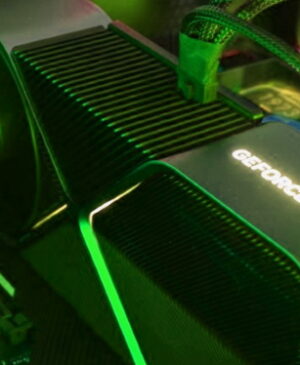
Starting 007 First Light on PC during a heatwave can easily feel like opening a small heating season, but at least the game earns the heat it generates. On a machine equipped with an AMD Ryzen 9 5900X 12-core processor and a GeForce RTX 4090 Founders Edition card, IO Interactive’s new Bond adventure runs very well. The Glacier engine, which had already made a strong name for itself on PC with the Hitman trilogy, works reliably here too: large spaces, countless NPCs, particle effects, impressive lighting, stable frame rates, all in His Majesty’s service. The Danish engineers clearly knew what they were doing, because even at Ultra settings, you do not feel the need to run back to the menu every two minutes to put out a fire. Technically, this is a solid, confident production.
Many modern AAA PC versions simply carry over the console performance-quality logic, then leave the player to be happy with two or three big buttons. Thankfully, IO takes the PC audience more seriously than that and offers a dedicated options system rather than a simplified console-style menu. Of course, it could still be better. Comparison images alongside the settings would have been nice, as would a RAM usage bar like the ones offered in some Capcom or Ubisoft titles. Those are genuinely useful extras for players who like to fine-tune every detail. But because the whole production runs so steadily, the restrained menu is easy to forgive. It does not shine at every point, but it does not need to be kept alive with a screwdriver either.
We have already touched on the Hitman connection, but the Uncharted influence is also worth discussing separately. 007 First Light is not an exploration-focused adventure game, so anyone hoping it will fill the same void left by Nathan Drake should probably chill the martini. Still, the influence of Naughty Dog-style cinematic action set pieces can be felt at several points, especially in the cargo plane sequence, which is one of the game’s best large-scale attractions. In a few scenes, you can almost hear IO’s developers calling out to California and to the other heavy hitters of the genre: “We can do this too.” With this blockbuster, Hakan Abrak’s studio clearly wants a seat in the top league, and now it has not only the intention, but the toolkit to get there.
Fan Service, but Not a Wax Bond Locked in a Display Case
Because this Bond does not yet carry a long secret-agent past with him, the references and winks are more restrained than they would be in a game leaning on the old films every other minute. The chapter titles feature clever twists on Bond movie names, while the musical fan service is just enough to awaken the fan reflexes without turning the whole thing into a cheap nostalgia show. The legendary Bond theme is handled carefully by the British duo The Flight, who previously worked on the music for Horizon and Assassin’s Creed Shadows. They do not overuse it or slap it onto every other scene; they let it appear only when it truly has weight. John Barry’s theme from On Her Majesty’s Secret Service also appears, which is a fan favorite and fits the game’s mood beautifully. The stranger choice is that a cover of Skeeter Davis’s The End of the World comes up multiple times, while a classic so deeply tied to Bond, such as We Have All the Time in the World, would probably have sent a full-body shiver through the audience if placed at the right moment.
The game does not immediately empty out after its generous campaign. The Tactical Simulations mode sits in a separate part of Q Branch, where Dr. Selina Tan’s team has prepared a set of extra missions through virtual reality. This is not simple campaign replay, but a system of separate challenges with various gameplay modifiers. The goal is to climb as high as possible on the global leaderboard, while also earning experience that unlocks new outfits and customization elements. Since IO Interactive already proved with Hitman: World of Assassination that it understands how to feed long-term, service-style content, this mode could provide a solid foundation for the studio to keep 007 First Light alive with new missions for as long as needed.
Ultimately, 007 First Light works because it does not treat Bond as a brand logo trapped under a glass dome. It does not merely dust off the name, play the greatest hits, or cling desperately to the past. Instead, it tries to tell the story of how a cocky, talented, sometimes uncontrollable young soldier becomes the man whose name the entire underworld will one day remember. The stealth is not as deep as in Hitman, the big adventure set pieces do not rewrite the Uncharted rulebook, the shootouts occasionally unleash too many enemies at once, and the guards’ intellectual abilities do not always honor the service. Even so, the overall picture is strong. The game is elegant, spectacular, well-paced, witty, and perhaps most importantly: it does not just look like Bond. While playing, it feels like Bond.
The game was tested on PS5 Pro and PC.
-Herpai Gergely “BadSector”-
Pros
+ A fresh, effective, and distinctive Bond origin story
+ Strong cinematic direction, lavish visuals, and confident technical foundations
+ A good balance of espionage, action, gadgets, and Bond atmosphere
Cons
– The guards’ artificial intelligence is often awkwardly dim
– Some firefights dump too many enemies onto Bond at once
– The villains do not quite rise to the level of the best Bond antagonists
Publisher: IO Interactive
Developer: IO Interactive
Genre: action-adventure, third-person shooter, spy game
Release date: 2026
007 First Light
Gameplay - 9.4
Graphics - 9.1
Story - 8.6
Music/audio - 9
Hangulat - 9.2
9.1
EXCELLENT
007 First Light handles James Bond’s early origin story with intelligence and style, while trying to function not as a simple licensed game, but as the foundation of a new series. The direction, visuals, gadget system, and character building are especially strong, and Patrick Gibson’s young Bond quickly finds his own voice. Weak AI and occasionally overcrowded combat encounters sometimes drag the experience down, but they do not break it. Even with its flaws, this is one of the best Bond moments of recent years, only this time not on the big screen, but with a controller or keyboard in hand.













Leave a Reply