
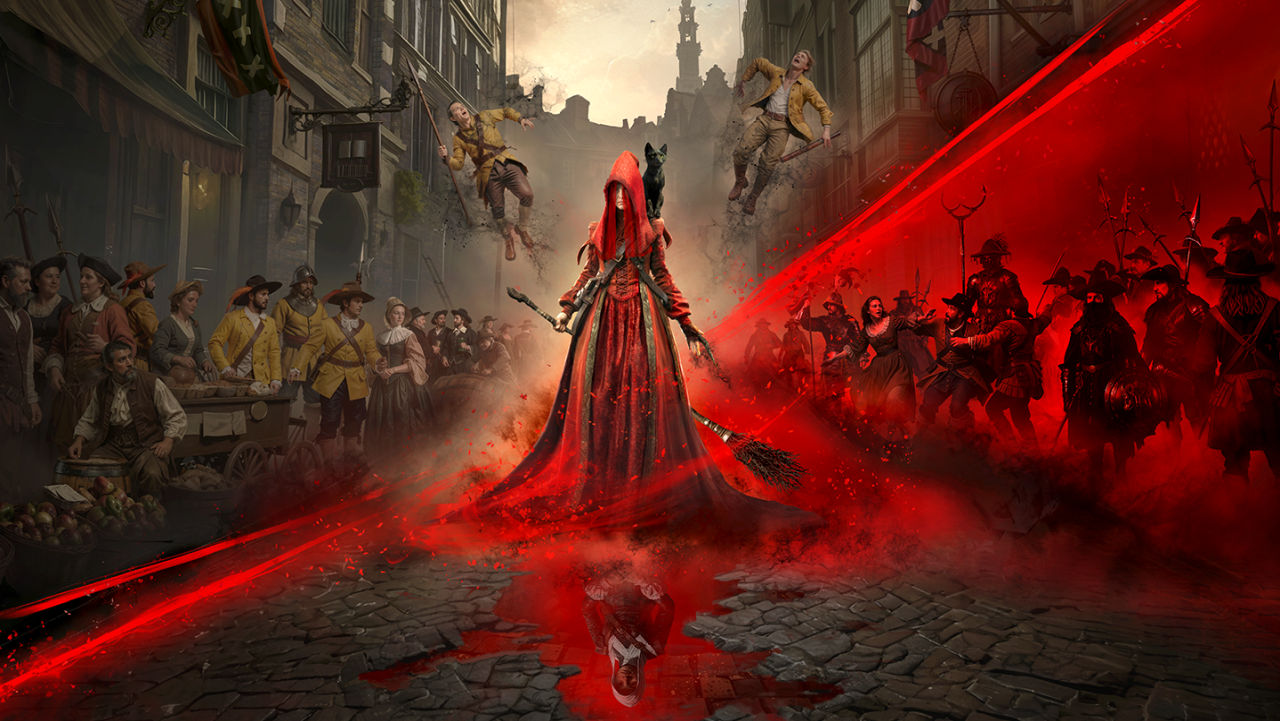
Patrice Désilets and Panache Digital Games have admitted that generative AI assets appeared in the 1666: Amsterdam demo, but the studio now promises that every visual asset in the released game will be made by human artists.
Seeing Patrice Désilets back in the spotlight is always interesting, since he remains one of the key creative figures behind Assassin’s Creed. After a bitter split with Ubisoft, he now finally seems to have a chance to bring back one of his long-buried dream projects. 1666: Amsterdam is essentially a strange, witch-hunt-era spiritual cousin to Assassin’s Creed, built around an idea Désilets had already been exploring during his years at Ubisoft, and one that later became part of the legal dispute between the designer and the French publisher. Now free of those old constraints, Panache Digital Games wants to release the project through a community-driven route, first in early access and later as a full game – but after its first major public showing, the discussion has shifted away from the concept and straight into the controversy over AI-generated art.
The game was shown last Friday at Summer Game Fest 2026, and at first it looked like a comeback story waiting to happen. The trouble started shortly after the Steam demo went live, when players noticed that the promotional artwork attached to the free trial differed from the material used by other outlets covering the game. The more elaborate image was quickly flagged as potentially AI-generated, and from there some players began digging through the demo itself, spotting similar signs in certain frames. At that point, this could no longer be treated as a harmless communication mix-up. The community wanted to know how much generative material had entered the project, and why it had not been disclosed earlier.
The 1666: Amsterdam Team Says All Final Art Will Be Human-Made
As the debate grew, Panache Digital Games issued an official statement. The studio admitted that some assets in the prologue had indeed been created with generative artificial intelligence, but claimed that these were only temporary placeholder materials mistakenly included in the public demo. According to the explanation, those images will be replaced by final versions created by the team’s “brilliant artists”, and the same will apply to the game’s promotional artwork. The studio apologized for the situation and said that neither the early access version nor the full release will include generative AI assets.
The apology did not calm down a large part of the community. For many players, it did the opposite. Critics argue that the studio only started explaining itself after players publicly pointed out the problem, and that words like “placeholder” and “oversight” sound more like damage control than transparency. Reactions quoted by GRYOnline included blunt comments such as “Did you think you could get away with it?” and accusations that the studio had been caught using AI and was now trying to cover it up. It also backfired when Panache Digital Games emphasized that it has more than a dozen experienced artists on the team. To critics, that is not a defense, but the opposite: if the studio has that many artists, why use generative AI at all, even temporarily?
The situation is more complicated because the debate is no longer only about 1666: Amsterdam. Some players believe Panache Digital Games has simply become the latest target in an industry-wide anti-AI campaign, where communities examine trailers, promotional images, and demos in increasingly microscopic detail to hunt for generative traces. Others argue that this kind of scrutiny is necessary, because if players do not catch these assets, studios may simply carry them into final products without saying anything. A similar pattern already appeared around Crimson Desert, where the developers made changes after players complained about AI-generated imagery. In the case of 1666: Amsterdam, then, the issue is not only whether a few bad demo assets will be replaced. It is whether studios are willing to be honest about AI use before players catch them in the act.











Leave a Reply