
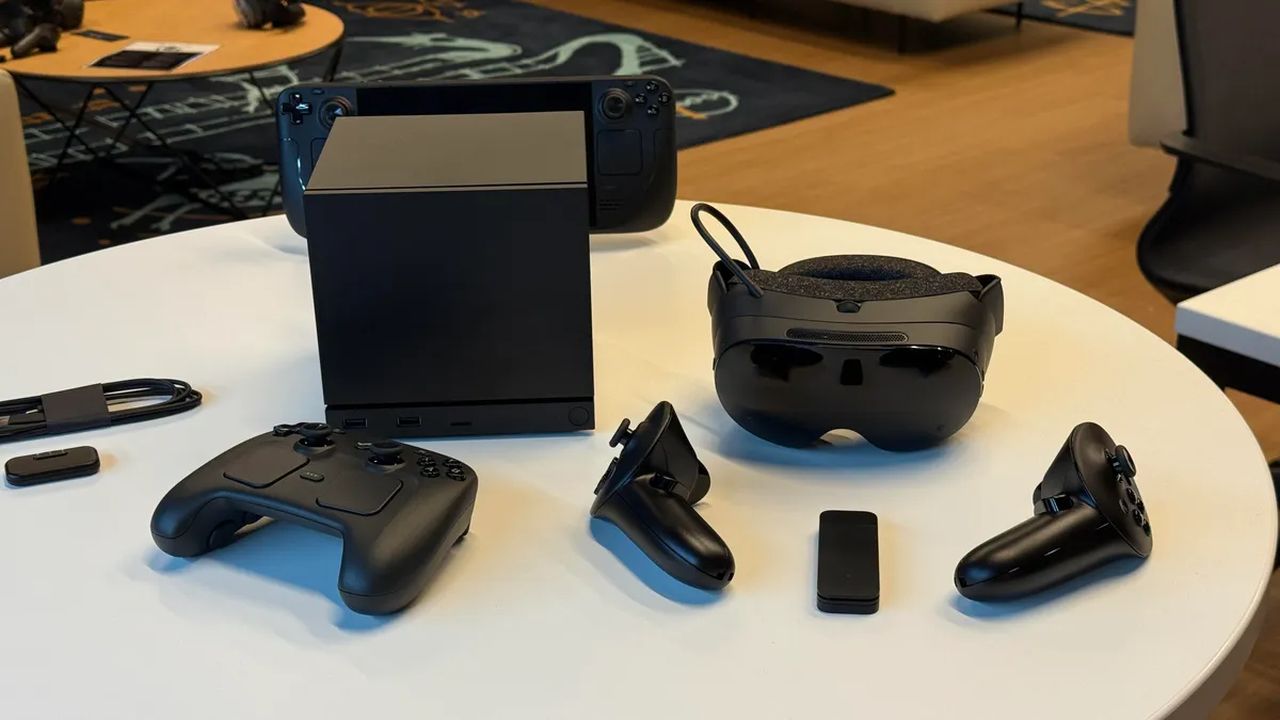
Valve has finally revealed the release date and price of the new Steam Machine, but its living room-focused SteamOS PC could immediately trigger a major backlash: European buyers will have to pay between €1,039 and €1,428, depending on the configuration and whether a Steam Controller is included. Valve says its original pricing target is simply no longer viable, largely because the cost of memory and storage components has exploded.
After months of speculation, Valve has finally confirmed when its new Steam Machine will arrive and how much it will cost. The launch itself is good news, as the company is once again attempting to bring PC gaming into a more approachable, living room-friendly form. The price, however, is far less encouraging. The cheapest model costs €1,039, while the most expensive package rises to €1,428.
Valve clearly knows that the number will be difficult to swallow. The company is already explaining why the machine became so expensive, placing most of the blame on the crisis affecting RAM and storage components. Valve says it began stockpiling parts in 2023 because it expected hardware costs to gradually fall over time. Over the last year or so, however, the opposite happened, especially across memory and storage markets.
In Valve’s own words, “the original price target is no longer viable.” The prices announced now reflect the cost of components the company has acquired over the past six months, not the amount Valve originally hoped to charge for the device. Estimates suggest that the entry-level model may originally have been aimed at roughly €749, meaning the current market situation has added around €300 to the level at which the Steam Machine could have been a much easier sell to players coming from consoles.
The issue is not limited to pricing, either. Valve says there have been periods when it was simply unable to acquire certain components regardless of how much it was willing to pay. That has also affected production and directly limited how many Steam Machine units can be ready for launch. The company will therefore use a waiting-list system: users who register by June 25 will be placed into a randomized purchase order, an approach designed to reduce the influence of bots, scalpers, and resale abuse.
The Steam Machine Is Not a Console, and Valve Does Not Want to Price It Like One
The other key part of Valve’s explanation is not about the RAM crisis, but about what the machine is meant to be. According to the company, the traditional console model relies on selling hardware at a loss or with very little profit, then recovering that money later through subscriptions, proprietary digital stores, and exclusive games. Valve does not want to follow that model with the Steam Machine.
The company argues that this approach may make sense in the short term for a single business, but that open ecosystems are better for customers over the long run. The history of PC gaming, Valve says, demonstrates exactly that: an open system has encouraged competition, hardware development, software innovation, and greater freedom. The Steam Machine is therefore not meant to be another closed Valve console, but a compact PC designed for a television, capable of running a player’s existing Steam library without trapping them inside one platform holder’s walls.
That argument does not solve the biggest issue, though. Starting at €1,039, the Steam Machine no longer looks like a mass-market console alternative. It looks like an expensive premium device aimed at dedicated PC players. Valve is selling openness and long-term freedom, but the starting price also means that many people will be priced out before they even get the chance to decide whether those benefits are worth it.














Leave a Reply