
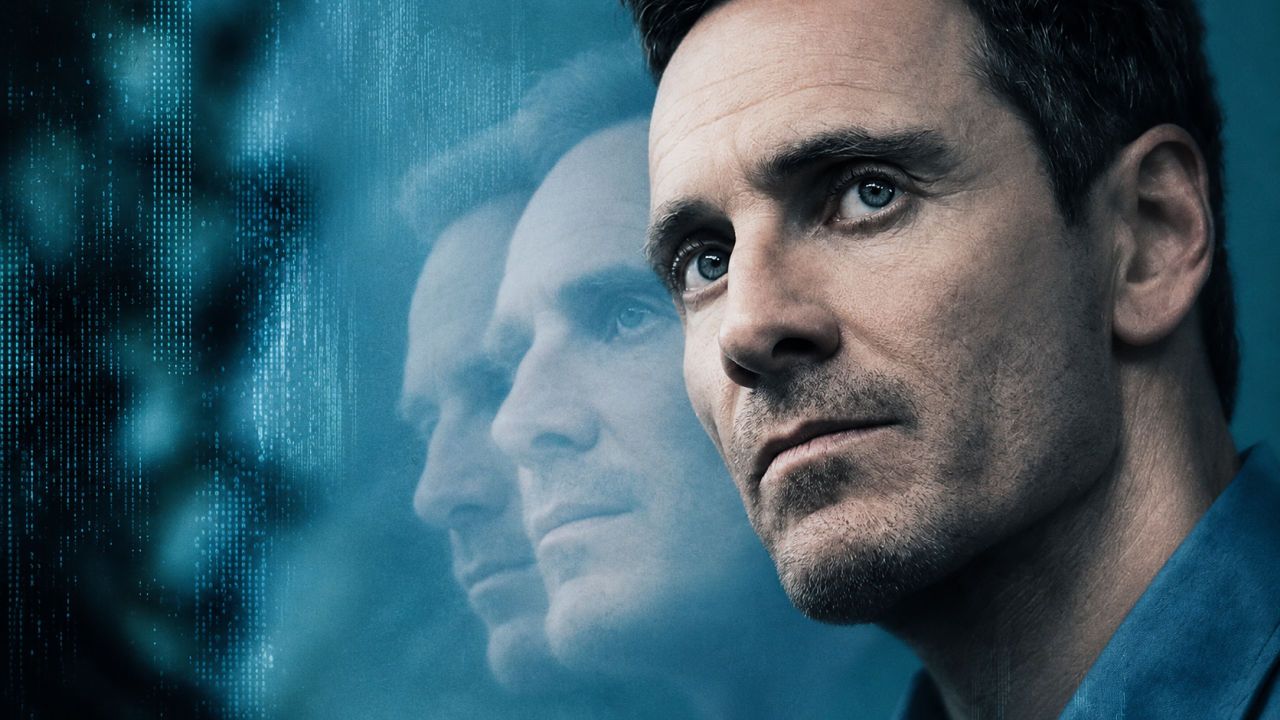
SERIES REVIEW – The first season of The Agency operated much like a real intelligence service: slowly, methodically, with endless briefings, cover stories, and conversations whose true meaning often became clear much later. Season 2 begins at a much higher level of tension, as CIA operative Martian is forced by MI6 into a double game while Samia remains a political prisoner in Sudan and the CIA’s London Station begins hunting for a mole. Michael Fassbender now has to save the woman he loves, deceive his own colleagues, and keep several covert operations alive at the same time, with every new lie placing another person in danger. The series remains committed to a grounded and patient view of espionage, but the suspense finally moves at the same pace as the people doing the spying.
One of the first season’s greatest strengths was also its most serious obstacle. The Agency deliberately avoided the glamorous spy tourism of James Bond and presented intelligence work as a profession where lengthy briefings, psychological evaluations, false identities, and seemingly endless office meetings matter just as much as action in the field. That realism often produced fascinating detail, but the story sometimes slowed beneath the weight of its own thoroughness. From its opening minutes, Season 2 makes it clear that the writers understood exactly where the series had previously lost momentum.
Brandon Colby, better known as Martian, ended the previous finale in a position with no clean exit. MI6 knows his weakness, Samia’s life remains in immediate danger, and one of the CIA’s most experienced officers is therefore forced to pass information to British intelligence. Every report, every half-spoken sentence, and every omitted detail creates another risk. Martian still walks into London Station every day, runs briefings, manages agents, and works beside people who would turn against him immediately if they discovered the bargain he had made.
The double-agent situation gives Michael Fassbender’s character far more tension than the first season’s prolonged romantic uncertainty. Samia remains the emotional centre of his life, but her imprisonment in Sudan now places a tangible deadline on every decision he makes. Martian knows that one mistake could cost her life, while suspicions are also growing inside London Station that someone is leaking information from within. The two crises gradually press against each other, and the series makes excellent use of the irony that its hero is hunting a traitor while secretly handing intelligence to another service.

Between Two Services, There Is No Safe Side
Season 2’s smartest decision is to connect Martian’s story more closely to the other operations. Owen is trying to keep his people alive during another dangerous undercover mission, while Danny continues building the relationship that could bring the CIA closer to Iran’s nuclear programme. Samia’s captivity in Sudan, the hunt for a mole in London, and the intelligence operation in Iran could each support a full spy thriller of their own, yet the season moves between them with confidence.
The faster rhythm improves the story enormously. Scenes arrive in shorter bursts, so a long strategy meeting is soon followed by an operation in the field, before a new piece of intelligence completely changes someone’s position. The series does not become an action spectacle in the process. Viewers still need to follow names, cover identities, competing intelligence interests, and minor remarks that acquire their real importance two episodes later.
The influence of the French series Le Bureau des Légendes is now more valuable than ever. During its first season, the American adaptation often followed the original structure too cautiously, even though its Hollywood cast and expensive production suggested a distinct identity. The continuation feels far more comfortable in its own world. The CIA’s London Station becomes a functioning workplace where professional trust, personal loyalty, and national interest constantly collide.
The internal investigation into the mole fits this environment especially well. Old decisions are reopened, familiar colleagues become potential suspects, and every piece of information is examined from a different angle. Paranoia slowly enters the daily routine. An unfinished conversation, an inconvenient phone call, or an answer delivered too quickly can be enough to place someone on the investigation’s invisible list.

Fassbender’s Silence Says More Than Any Briefing
Michael Fassbender remains the series’ strongest weapon. Martian rarely raises his voice, and his emotions usually appear through the smallest gestures. A long silence, a delayed reply, or a brief moment of uncertainty reveals more than a dramatic speech ever could. Fassbender understands that this man has spent years moving between different identities and now monitors himself with the same care he applies to any agent under his control.
Jeffrey Wright once again gives London Station a calm sense of authority as Henry. His relationship with Martian is simultaneously professional, personal, and cautious, which means every scene between them carries the possibility that one precise question could break through the protagonist’s defences. Richard Gere’s Bosko shows less emotion, but his decisions increasingly reflect the burden of command. Katherine Waterston brings a harder, more direct energy to Naomi, and the season repeatedly proves that a carefully constructed interrogation can be every bit as tense as an armed raid.
John Magaro’s Owen and Saura Lightfoot-Leon’s Danny receive more room to function as independent characters. Owen spends much of his time managing the consequences of other people’s mistakes while carrying responsibility for the agents under his command. Danny’s work in Iran becomes one of the season’s most compelling threads because the young operative has to appear believable, curious, and harmless during every encounter. The smallest exaggeration could create suspicion, giving her quieter scenes a constant sense of danger.
Jodie Turner-Smith receives fewer opportunities as Samia than the importance of the character deserves. Her captivity creates serious stakes for Martian’s story, although long sections reduce her to the motive behind his decisions. Whenever the series moves closer to Samia herself, Turner-Smith immediately restores the intelligence and inner strength that made the character memorable in Season 1. More scenes built around her own choices would have made the storyline even stronger.

Silence Can Be Deadly Inside the CIA Too
The Agency remains one of television’s most elegant spy dramas. The glass walls and narrow conference rooms of London Station constantly suggest that everyone is being watched, while the locations in Sudan and Iran carry a more immediate physical threat. The visual language is restrained, cold, and precise. The camera rarely tries to impress for its own sake, focusing instead on the distance between characters and the tension created by what they refuse to say.
The atmosphere benefits greatly from the writers’ refusal to romanticise intelligence work. Deep-cover agents are isolated, case officers constantly calculate other people’s chances of survival, and senior officials make decisions whose consequences are felt across several countries. Success often means turning a terrible situation into one that is only slightly less damaging. That sober approach separates the series from lighter and more spectacular spy adventures.
Season 2 still requires patience. Some episodes slow down, the intelligence jargon occasionally becomes dense, and certain supporting characters appear only when the plot needs them. The series enjoys withholding information for long periods, so it may frustrate viewers expecting a major twist or action sequence at the end of every episode. This time, however, the gradual construction has a much clearer rhythm and rarely feels like delay for its own sake.
The full-season release also suits the story. Names, operations, and unfinished conversations constantly overlap, making continuous viewing more effective than long weekly breaks. A single episode can feel restrained, but several chapters together reveal how carefully Martian’s options are being reduced. Every solution creates a new problem, until it becomes difficult to tell which service intends to save him, exploit him, or remove him entirely.
The Slow-Burn Spy Thriller Has Finally Found Its Pace
Season 2 of The Agency is a considerably stronger continuation. The writers preserve the realistic, detail-driven portrait of intelligence work while tightening the story and connecting the different operations far more effectively. The double-agent plot keeps Martian under constant pressure, while the search for a traitor inside London Station makes every relationship uncertain.
The series still refuses to become easy entertainment. It demands attention, rarely overexplains anything, and often finds tension in a conference room or an intercepted phone call rather than an action sequence. This time, that patience receives a much greater reward. The twists build more effectively, the consequences of each decision arrive sooner, and the season follows a clearer dramatic direction.
Michael Fassbender, Jeffrey Wright, and Katherine Waterston remain excellent, while the supporting stories finally feel connected to the same central conflict. After this second season, the possibility that the American adaptation could eventually stand beside the French original no longer sounds unrealistic. There are still a few cover identities left to dismantle, but this mission has been completed with confidence.
-Gergely Herpai „BadSector”-
The Agency Season 2
Direction - 8.3
Actors - 8.8
Story - 8.1
Visuals/Music/Sounds/ - 7.9
Ambience - 7.9
8.2
EXCELLENT
Season 2 of The Agency corrects most of the first chapter’s weaknesses with a tighter story, a stronger double-agent conflict, and intelligence operations that finally feel part of the same larger design. Michael Fassbender’s restrained performance remains the centre of the series, while Jeffrey Wright, Katherine Waterston, and the supporting cast receive more meaningful dramatic weight. The pace can still be slow, but this grounded CIA spy thriller finally knows exactly when to remain silent and when to pull the trigger.














Leave a Reply