

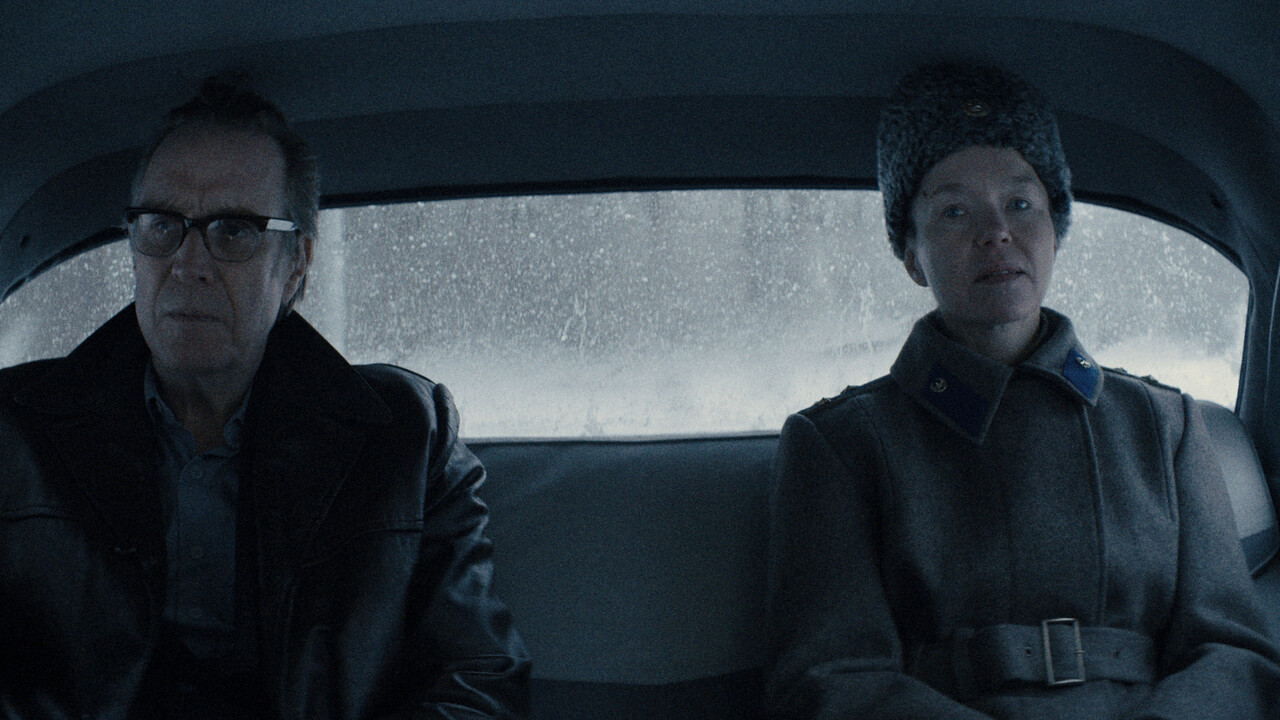
SERIES REVIEW – For All Mankind showed what happens when the Soviets win the space race from the American side; Star City reveals that victory does not automatically come with happiness tucked beside the lunar samples. Across Apple TV’s eight episodes, Rhys Ifans’ unnamed Chief Designer tries to assemble rockets while Anna Maxwell Martin’s KGB colonel methodically takes people apart, in a community where apartments appear to contain more listening devices than reliable electrical outlets. Oxygen is scarce in space, trust is even scarcer on the ground, and an unfortunately phrased sentence can be more dangerous than a failing engine. Star City does not always reach the heights of its parent show’s strongest seasons, but it succeeds as a cold-burning, superbly acted paranoid thriller that stands firmly on its own.
One of the smartest things about For All Mankind has always been the way it changes a single historical event and then follows the consequences through politics, science and private lives. The Soviet Union reaches the Moon first, America refuses to accept defeat, and the space race continues for decades. The parent series has generally examined that timeline through an American lens, mixing optimism, family drama and occasional stretches of full soap-opera propulsion. Star City moves to the other side of the same history, where a scientific triumph is followed not by champagne but by a careful review of what everybody said in their kitchens.
The premiere quickly establishes that the creators have not merely placed Soviet uniforms over the existing formula. There is a launch, a technical crisis, desperate improvisation and a control room full of engineers trying not to panic simultaneously. It delivers classic For All Mankind tension, except nobody can relax after the rescue because people on the ground are already calculating who made the mistake, who knows about it and who can be removed from the official photograph if necessary.
There is one adjustment required during the opening half hour: the Soviet space program discusses Marxism-Leninism through Welsh, Irish and English accents. At first, it can sound as though a BBC repertory company has occupied a Politburo meeting, but the performances inhabit the characters so quickly that the issue soon fades. The series avoids coating every sentence in an exaggerated Russian accent, which ultimately feels more liberating than distracting.
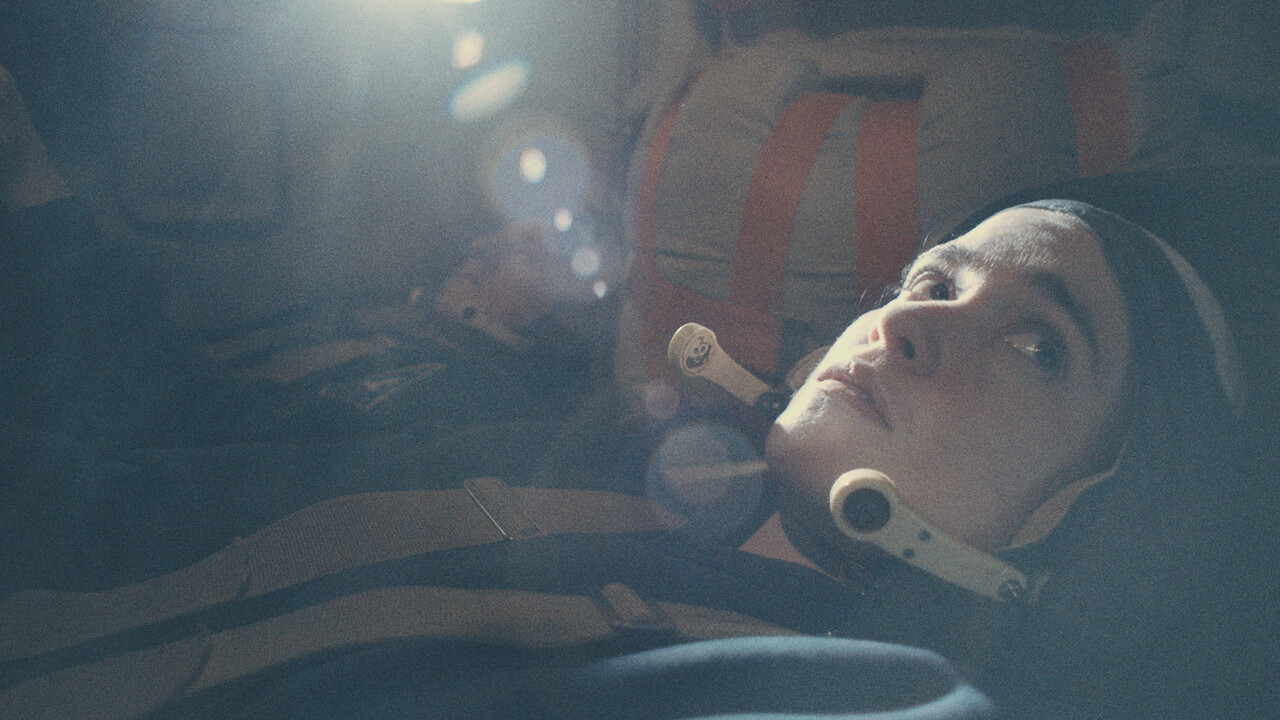
A Flag on the Moon, a Microphone at Home
It is 1969, and the Soviet Union has become the first nation to place a person on the Moon. The broadcast is historic and magnificently staged, but one cosmonaut’s wife is dragged from bed by the KGB because, naturally, even she was not allowed to know that her husband was busy changing history. The state adores its heroes. It simply does not trust them enough to inform their families.
Rhys Ifans’ character is known only as the Chief Designer, which already summarizes the world perfectly. He is one of the most important men in the Soviet space program and officially barely exists. After the landing, he receives a secret decoration and is then required to return the medal immediately, in case American intelligence discovers whom it should kidnap or kill. It is difficult to imagine a more Soviet human-resources procedure.
The Chief Designer dreams of Mars, Venus and humanity’s scientific future. The bureaucrats above him are mainly interested in whether the next mission will humiliate NASA sufficiently. Scientific achievement matters only while it can be converted into propaganda. An experiment may be valuable, but if it cannot be photographed beside Comrade Brezhnev for the morning newspaper, it risks being placed in the same drawer as inconvenient citizens.
Ifans does not romanticize the man. He is exhausted, irritable, stubborn and occasionally very unpleasant, while carrying plans that could genuinely move humanity forward. He understands that the state is the only reason his rockets can leave the ground, and that the same state can crush him and everyone around him without hesitation. The Chief Designer is therefore not a noble scientist standing above politics. He negotiates with his conscience and the party budget committee every day, and it is not always clear which one presents the greater threat.
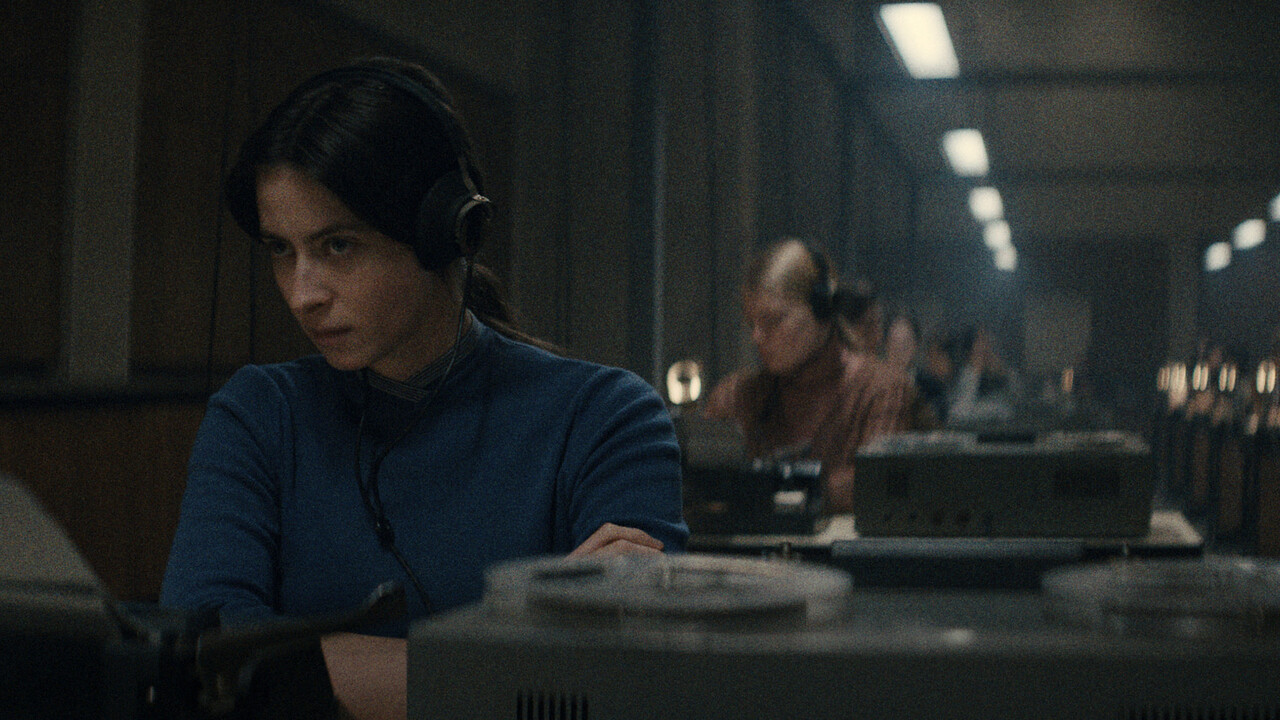
In Building 12, Privacy Is Raw Material
Across the base stands the visually anonymous Building 12, a name that already sounds like a place from which few postcards are sent. This is where Anna Maxwell Martin’s Lyudmilla runs the KGB surveillance department. Young women sit in immaculate rows listening to recordings gathered by microphones installed throughout the residential complex. Love declarations, marital arguments, toilet habits, music preferences and sexual partners all receive timestamps, files and somebody who may eventually find a use for them.
One of the show’s best formal devices arrives when the clean sound of a private conversation suddenly becomes the muffled recording heard by the women in Building 12. The shift immediately destroys the illusion that anybody is ever alone. Someone is always sitting on the other side of the wall, even when that wall is miles away, noting that a decorated hero criticized the party twice last night and failed to flush properly.
Irina begins as one of the many women processing these recordings. Agnes O’Casey carefully charts her movement from conscientious, slightly naive employee to Lyudmilla’s protégé and then an active participant in a system she may once have believed served the truth. When she attempts to help a person she knows has been falsely accused, she is informed that the state does not arrest innocent people because its authority depends upon justice. It is a lovely sentence, particularly because everybody in the room understands that it bears no relationship to the situation.
Anna Maxwell Martin turns Lyudmilla into the most frightening person in the series while barely raising her voice. She needs no desk pounding or extended threatening speeches. A look and a politely phrased question are enough, especially when it is clear that she already knows the answer. Lyudmilla is the kind of superior who never says there is a problem. One of your colleagues simply fails to appear the following morning.
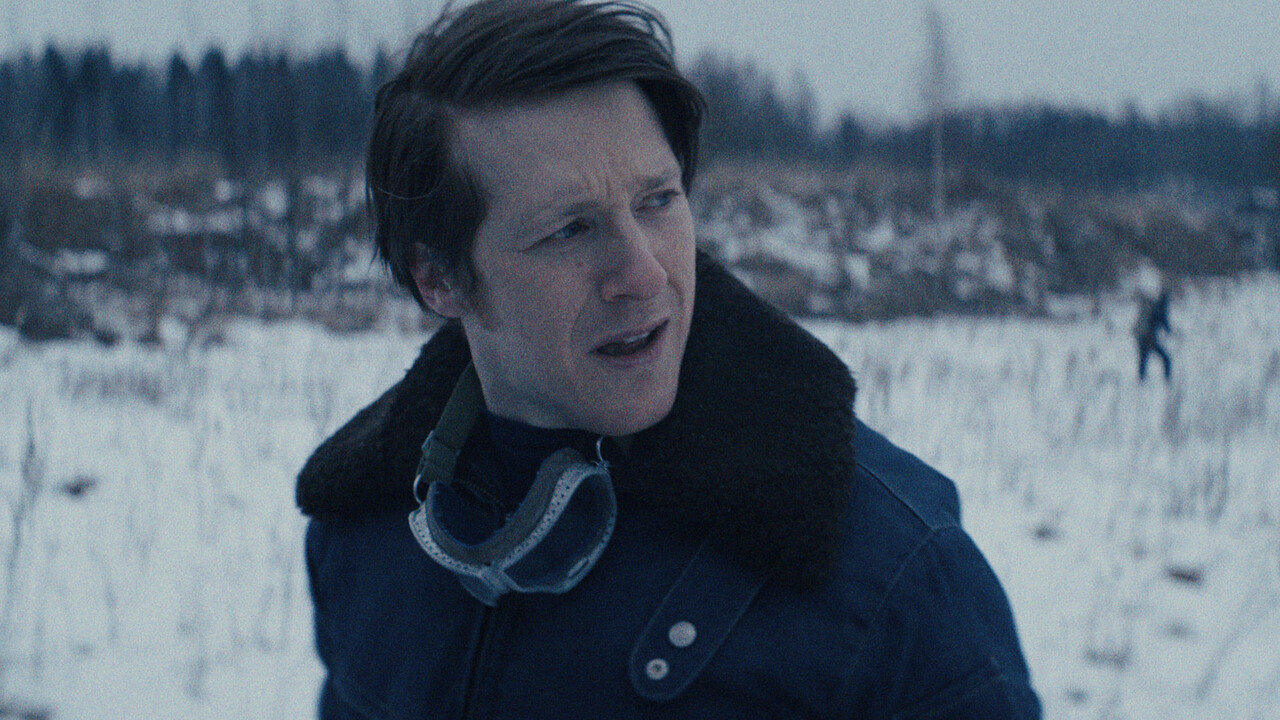
A Cosmonaut Is Human Until Propaganda Requires Otherwise
Star City is not limited to its two centers of power. The lives of cosmonauts, engineers, spouses and intelligence officers gradually knot together, and the deliberate distance of the opening episodes becomes harder to maintain. Many characters initially appear to be functions rather than people: experienced pilot, loyal recruit, dissatisfied wife, young surveillance officer. Time reveals that almost everyone is hiding something from the party, a spouse or themselves.
Alice Englert’s Anastasia is an inexperienced cosmonaut who tells interviewers that she joined the program for the glory of the Soviet Union. The leadership is delighted because personality is an unnecessary component in propaganda and tends to increase the risk of malfunction. Anastasia soon discovers the price of being presented not as a person but as the newly polished embodiment of ideal Soviet womanhood.
The relationships involving Valya, Tanya, Sasha and the others occasionally approach melodrama, but surveillance transforms even a conventional affair into something more dangerous. Infidelity is not merely a marital crisis here; it is blackmail material, a political vulnerability and potentially an invitation to an interrogation room. These people attempt to preserve ordinary emotional lives while never knowing which sentence from a bedroom argument will be sitting on Lyudmilla’s desk the next morning.
Whenever the story returns to space, it becomes enormous again. Launches, spacewalks and technical emergencies are staged with precision, suspense and genuine emotion, but the danger above Earth is at least honest. Vacuum does not lie, prepare reports or claim that it removed your oxygen supply for your own protection. One of Star City‘s darkest jokes is that space often appears safer than the cosmonauts’ homes.
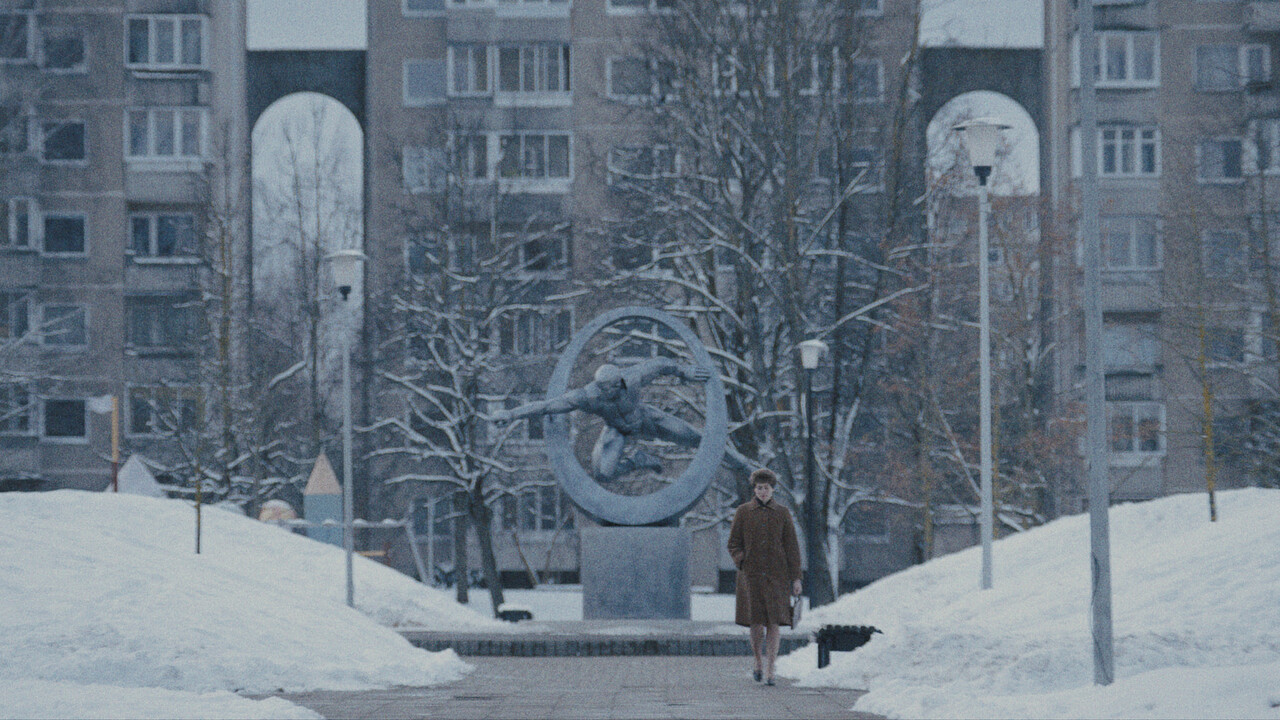
Not a Side Story, but the Other Side
One of the series’ greatest strengths is that it works without prior knowledge of For All Mankind. Longtime viewers recognize events, names, historical divergences and missions previously described from the American perspective, but none of them function as compulsory examination questions. Star City does not reduce its shared universe to an endless Easter-egg hunt whose success is measured by the number of references checked off on Reddit.
Seeing familiar events from a new perspective is not repetition because their meaning changes completely. What appears in America as national humiliation and the beginning of a renewed scientific push becomes, in the Soviet Union, a victory, a propaganda weapon and another excuse to tighten control. Historical success does not produce freedom. It produces higher expectations, and because the state has won, its citizens are permitted even fewer mistakes.
In tone, Star City frequently feels closer to The Lives of Others than to a conventional space adventure. Behind the rockets and lunar vehicles are surveillance rooms, interrogations, dossiers and private lives slowly crushed into administrative material. For All Mankind asks how far humanity could travel if the space race never ended. Star City asks whether scientific advancement still matters when every human relationship is being fed into the machinery.
Not every trajectory is perfect. The initial flood of characters is demanding, and several episodes pass before it becomes clear who is monitoring whom, who is sleeping with whom and who is secretly arranging somebody else’s arrest. Some figures remain opaque for too long, while the central espionage plot occasionally repeats the same rhythm of suspicion. The show is tense from scene to scene, but the season’s larger shape can feel less decisive, as though the narrative itself fears revealing too much over a compromised line.
Trust Runs Out; Oxygen Can at Least Be Measured
The real subject of Star City is not the space race but what happens to people inside a state that sees potential danger in every relationship. Friendship, love, professional integrity and scientific curiosity remain acceptable only while they support the state’s survival. Wanting something else is suspicious. Wanting nothing is probably even worse, because that clearly means you are hiding something.
The visual world is deliberately gray, grainy and cold, but the production has done more than apply a generic Soviet filter. Corridors, offices and apartment blocks look as though the architecture itself is filing reports on the people inside. Individuals become tiny in the vast halls, replaceable in the surveillance room and indispensable beside a rocket only until the party finds somebody more loyal. The sound design is especially effective, using the transition between clean dialogue and bugged recordings to remind us that even silence may not qualify as private property.
The political parallels are not subtle, but the series fortunately avoids pausing halfway through each episode for a PowerPoint presentation about authoritarianism. It shows people learning to speak in incomplete sentences, persuading themselves that torturing an innocent person is necessary just this once, and gradually converting lies into routine procedure. The viewer can decide how much of this feels like historical science fiction and how much feels unpleasantly current.
Star City is less expansive and hopeful than For All Mankind, but it is more concentrated, colder and frequently crueler. Rhys Ifans is excellent, Agnes O’Casey’s gradual transformation is compelling, and Anna Maxwell Martin dominates every room as though she has already read the interrogation transcripts of everybody inside it. The story occasionally tries to keep too many people and secrets in orbit at once, but when space-race excitement meets KGB paranoia, the series produces extraordinary tension without needing to launch a single rocket.
-Gergely Herpai „BadSector”-
Star City
Direction - 8.4
Actors - 8.9
Story - 7.9
Visuals/music/sound - 8.2
Atmosphere - 8.3
8.3
EXCELLENT
Star City does much more than turn the For All Mankind camera around, transforming an optimistic space drama into a cold and tightly wound espionage thriller. The large cast and initially tangled storylines occasionally slow it down, but Rhys Ifans, Agnes O'Casey and especially Anna Maxwell Martin, together with the suffocating sense of permanent surveillance, more than compensate. Apple TV has delivered another excellent science-fiction series in which reaching the Moon ultimately seems easier than speaking honestly to your own spouse.














Leave a Reply