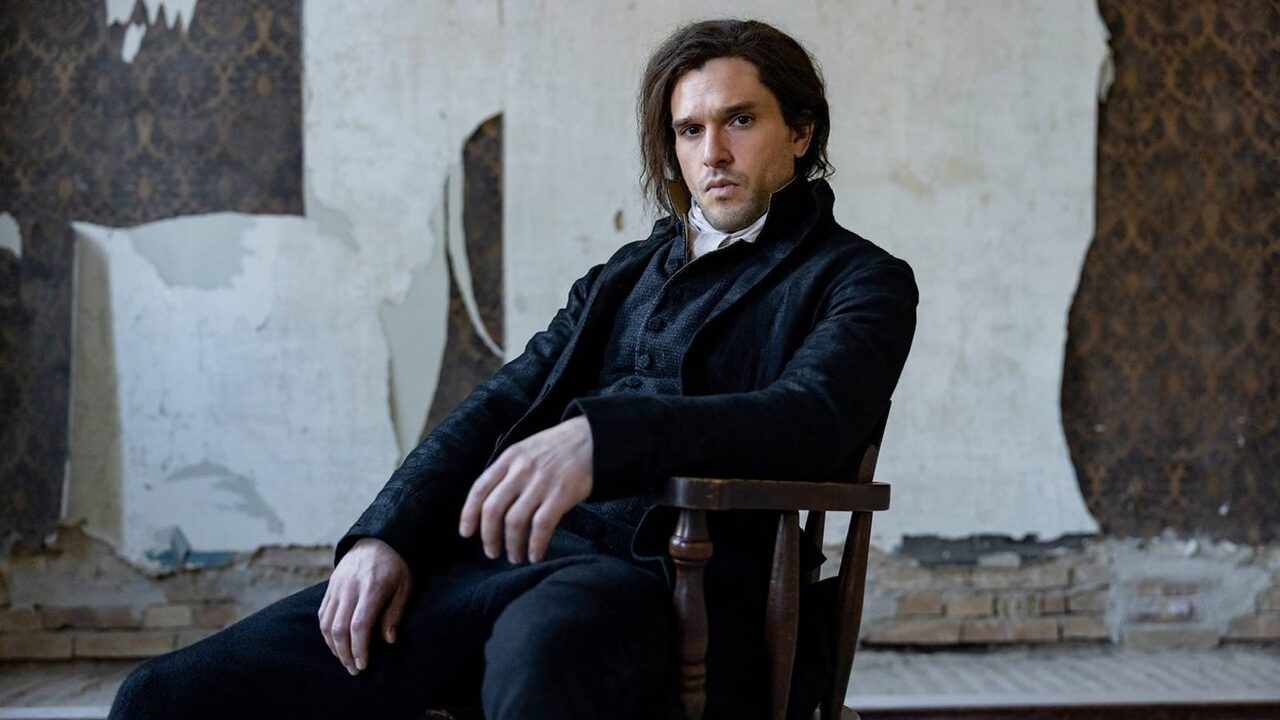
MOVIE NEWS – MGM+’s four-part adaptation of A Tale of Two Cities is deliberately bringing Charles Dickens’ 167-year-old story closer to a contemporary audience, according to star and executive producer Kit Harington. The historical setting and central framework remain intact, but the series uses more immediate dialogue, gives Lucie Manette considerably greater control over her own story, and reframes the famous love triangle in a way Harington believes younger viewers can recognize.
Charles Dickens’ A Tale of Two Cities has already survived generations of screen adaptations, but MGM+’s new four-part version is not interested in simply reproducing the novel scene by scene. Kit Harington, who stars as Sydney Carton and also serves as an executive producer, told MovieWeb that the creative team wanted the relationships to feel emotionally current even while leaving the story inside its historical world. The political upheaval and period setting still shape everything around the characters, yet the adaptation spends considerably more time examining the volatile connection between Carton, Charles Darnay, and Lucie Manette. The intention is to make them feel like recognizable human beings rather than distant literary figures preserved behind glass.
Harington argues that although some elements of Dickens’ novel inevitably reveal their age, its emotional foundation has lost surprisingly little relevance. The central triangle between two very different men and the woman both love is one of the clearest examples. From his perspective, younger audiences are accustomed to conversations about complicated relationships, overlapping feelings, and the possibility of loving more than one person at the same time. The series consequently treats that conflict as far more than a conventional romantic subplot, turning it into one of the principal engines of the adaptation.
The Series Updates Dickens’ Language Without Moving the Story Into the Present
One of the most obvious changes can be heard in the dialogue. Rather than preserving Victorian phrasing for the sake of literary authenticity, the writers opted for language that is more direct, emotionally exposed, and accessible to a modern audience. The period itself has not been replaced, and this is not a contemporary relocation of Dickens’ story. Instead, the characters speak in a way designed to reduce the distance between the viewer and people living inside a world more than two centuries removed from our own.
Lucie Manette receives the most significant structural change. In the novel, Lucie is indispensable to both Sydney Carton and Charles Darnay, but she frequently functions as the emotional force that drives the men’s stories rather than as the dominant author of her own. The MGM+ adaptation gives Mirren Mack’s version of Lucie a much stronger independent trajectory. She has ambitions, makes consequential decisions, and moves the plot herself instead of existing primarily as the object around which two male characters compete.
Harington said the production wanted the characters to possess greater agency and motivation, and that philosophy is especially visible in Lucie’s rewritten role. Her journey no longer simply runs alongside those of Carton and Darnay. She chooses her own direction, which also changes how the romantic triangle works. Rather than framing the story as two men competing until the woman becomes the reward for one of them, the series is interested in three people making choices that reshape one another’s lives.
Harington and François Civil Play Lookalikes Who Could Hardly Be More Different
The relationship between Sydney Carton and Charles Darnay remains at the heart of the four episodes. Harington’s Carton and François Civil’s Darnay resemble each other physically, but they are built as emotional and moral opposites. Carton is self-destructive, erratic, and burdened by his own failures, while Darnay approaches the world from a very different place. Both are drawn toward Lucie, yet the adaptation uses that attraction to explore how three sharply contrasting personalities change when their lives become inseparable.
The result is a much more concentrated version of Dickens’ sprawling novel. Historical instability and approaching revolution still surround the characters, but the series repeatedly pulls attention back toward personal choices, loyalties, desire, and resentment. In practical terms, MGM+ has shaped the material into a relationship drama with the scale and tension of a period thriller rather than treating history itself as the only dominant subject.
Modern screen versions of literary classics now exist on a broad spectrum. At one end are relatively faithful adaptations such as Ang Lee’s Sense and Sensibility or the BBC’s 1995 Pride and Prejudice; at the other are far more aggressive reinventions such as the latest Wuthering Heights and East of Eden. A Tale of Two Cities sits somewhere between those approaches. It retains the novel’s core narrative and historical framework while substantially rewriting the emotional dynamics inside it.
That balance makes the MGM+ version feel closer to a prestige relationship drama wrapped inside a historical thriller. Its protagonists are allowed to be contradictory, damaged, ambitious, and difficult rather than functioning only as recognizable archetypes from a classic novel. Harington’s argument is that this is where Dickens can still feel contemporary 167 years later: not by dragging the story into the present day, but by making its emotional conflicts immediate enough that a modern audience can see itself inside them.
Source: MovieWeb