
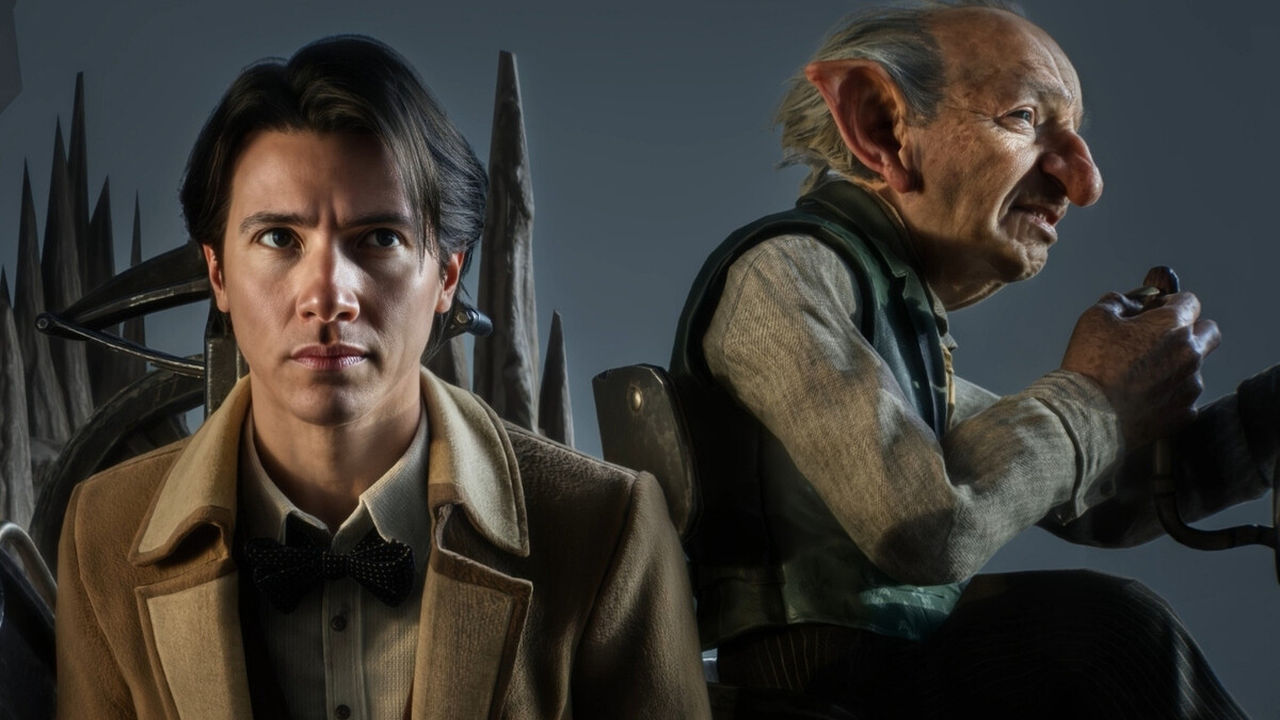
TECH NEWS – This isn’t an official solution, but we can get Nvidia’s new technology to work with the PCSX2 PS2 emulator.
Just a few days have passed since the leak of Nvidia’s experimental DLSS 5 Neural Rendering runtime via NBA 2K27, and the PC modding community has already made remarkable progress in adapting the technology for environments it wasn’t originally intended for. After initially porting DLSS 5 to RTX 4000 GPUs, fans made it work on older GeForce RTX 3000 and RTX 2000 series cards. Another project makes Neural Rendering runnable in games that don’t natively support DLSS and in emulators. So far, Nvidia has only presented DLSS 5 as a technology for GeForce RTX 5000 series cards, with an official launch planned for fall.
DLSS 5 now works on 20 and 30 series running FP16, performance should be substantially better than the FP8 version that was running on 30 series.
Any 20/30 series owners are welcome to share their experiences in the comments. pic.twitter.com/kVyYSAUEft
— DystopianSunset (@DystopianSuns) August 30, 2026
According to Twitter user @DystopianSuns, DLSS 5 can be run on older RTX cards with an FP16 implementation. This implementation is expected to be significantly better suited to Turing and Ampere architectures than the previous FP8 approach. This is a much more sensible implementation path for older Tensor cores. This work is also being incorporated into RHI (ReShade HDR Installer), an all-in-one utility for installing the experimental DLSS 5 implementation. RHI 2.4.9 comes with the modified “nvngx_dlssnr.dll 310.8.SF” file by ShortFuse, which extends Neural Rendering support to all RTX cards. The update also installs the necessary DLSS DLL and the Neural Rendering library, significantly simplifying a process that previously required much more manual configuration.
DLSS 5 just leaked. It uses neural rendering to increase graphical fidelity.
In the pictures we see Aerith from Final Fantasy 7 Rebirth. First is with DLSS 5, second is with DLSS 4.
How to install DLSS 5;
1) Use RHI (see picture 5) – install it from Github. Just google RHI… pic.twitter.com/7wgEazTQEF— HDR Game Analysis (@HDRgameAnalysis) August 28, 2026
RHI essentially handles the installation and configuration, while ReShade and the RenoDX DLSS add-on perform the in-game modifications. A Twitter user named @HDRgameAnalysis demonstrated this setup in Final Fantasy VII Rebirth. Using RHI, the user installed ReShade and the Neural Rendering DLL. Then, they loaded the RenoDX DLSS 5 add-on and made the controls accessible through the ReShade interface. Interestingly, native DLSS is no longer strictly necessary. @DystopianSuns recently demonstrated DLSS 5 in Batman: Arkham Knight, a DirectX 11 game that lacks native DLSS support. The DLSS5-Feeder project and ShortFuse’s latest RenoDX effectively provide the data and DLSS calls expected by Neural Rendering. They use depth and motion vector information from ReShade before passing the result on to a genuine DLSS evaluation.
DLSS 5 can now work in DX11 games without DLSS support. Here’s a before and after of Batman Arkham Knight, it’s subtle but makes the game look a lot grittier. pic.twitter.com/6jmDQ7qBkJ
— DystopianSunset (@DystopianSuns) August 29, 2026
DLSS5-Feeder has reported successful tests with Metro 2033 Redux under D3D11, Splinter Cell: Blacklist under 32-bit D3D11, BioShock Remastered and Fable Anniversary with a D3D9 wrapper, and the 2016 Vulkan version of DOOM. ShortFuse’s latest DLSS add-on for RenoDX now natively supports 64-bit D3D9, D3D11, and D3D12 games. Meanwhile, Feeder remains useful for Vulkan and 32-bit titles. Then there are the emulators. @DystopianSuns demonstrated that Manhunt runs on PCSX2 with DLSS 5 Neural Rendering enabled.
Well, DLSS 5 can work with emulators too now, here’s a quick shot of Manhunt running on PCSX2. pic.twitter.com/2kVYgPdcCV
— DystopianSunset (@DystopianSuns) August 30, 2026
However, the leaked DLSS 5 runtime is still a work in progress. Its impact on performance could be significant. Motion vector reconstruction isn’t perfect. HUD elements may be rendered in parallel with the game world. Compatibility varies widely.
Source: WCCFTech, GitHub – RHI, GitHub – DLSS5-Feeder, GitHub – RenoDX, ReShade

![Stranded Deep 2: After Two Years, We Finally Get to See More of It! [VIDEO]](https://thegeek.games/wp-content/uploads/2026/09/Stranded-Deep-2-1280x720-1-302x180.jpg)
![Sony Is Following the Same Path Xbox Took in 2013! [VIDEO]](https://thegeek.games/wp-content/uploads/2026/09/Live-TV-on-PS5-1280x720-exact-302x180.png)








![Stranded Deep 2: After Two Years, We Finally Get to See More of It! [VIDEO]](https://thegeek.games/wp-content/uploads/2026/09/Stranded-Deep-2-1280x720-1-300x365.jpg)
![Sony Is Following the Same Path Xbox Took in 2013! [VIDEO]](https://thegeek.games/wp-content/uploads/2026/09/Live-TV-on-PS5-1280x720-exact-300x365.png)

Leave a Reply