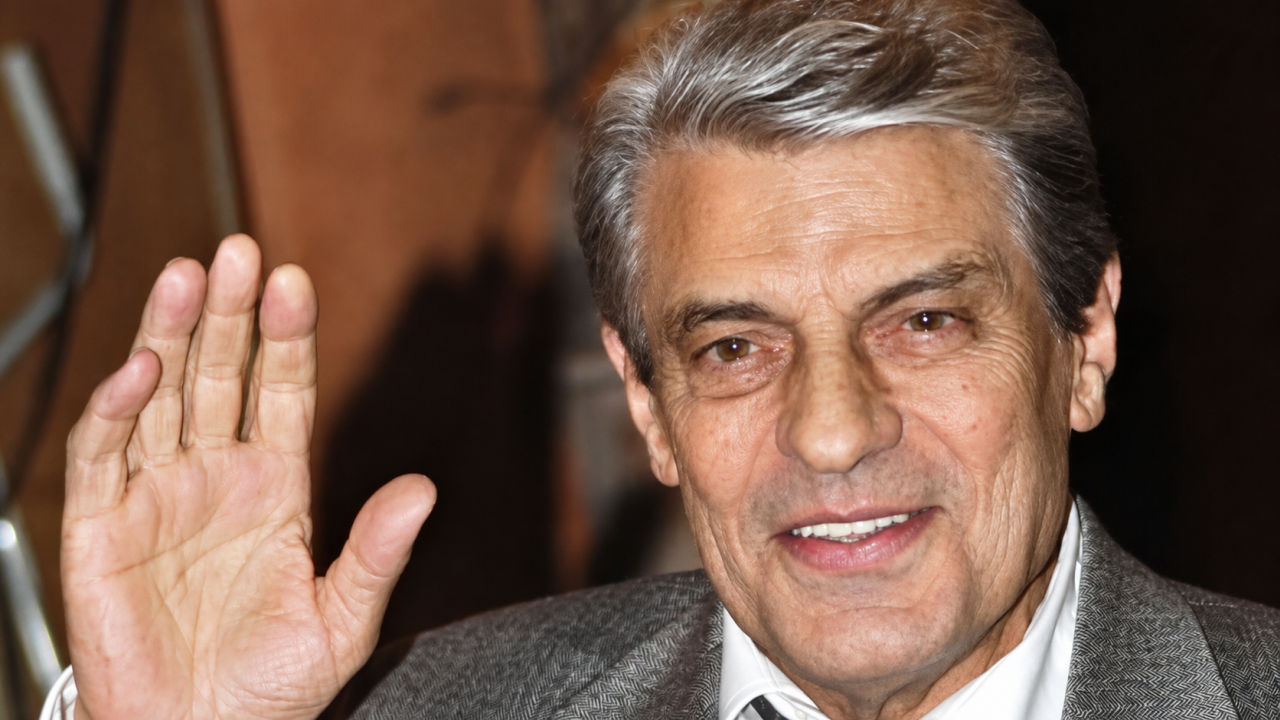
MOVIE NEWS – István Sztankay, Kossuth Prize-winning actor, two-time recipient of the Mari Jászai Prize and one of Hungary’s Actors of the Nation, died on September 12, 2014. Twelve years after his death, his stage, film, television, and dubbing work remains deeply embedded in Hungarian cultural memory, as does the unmistakable voice and presence that made him one of the country’s most recognizable performers.
István Sztankay was born in Budapest on February 14, 1936. His father was a Greek Catholic priest and his mother worked for the postal service, while Sztankay himself became involved with acting early through Kálmán Rózsahegyi’s private drama school. As a young man, however, he initially dreamed of a career in soccer and played as a goalkeeper until realizing at the age of 18 that he had not grown tall enough for the position. Before committing himself fully to acting, he worked in several very different jobs, including as an assistant cantor, delivery boy, construction material handler, and mine-cart worker during the construction of the Budapest metro.
He was admitted to the Academy of Theatre and Film Arts on his third attempt in 1957 and graduated in 1961. His first professional engagement took him to Miskolc, but by 1963 he had already joined the National Theatre in Budapest. In 1974 he moved to the Madách Theatre, and from 1991 onward he performed at the József Attila Theatre, where he was named a permanent honorary member in 2006. His distinctive personality and unmistakable voice proved equally effective in classical and contemporary theater.
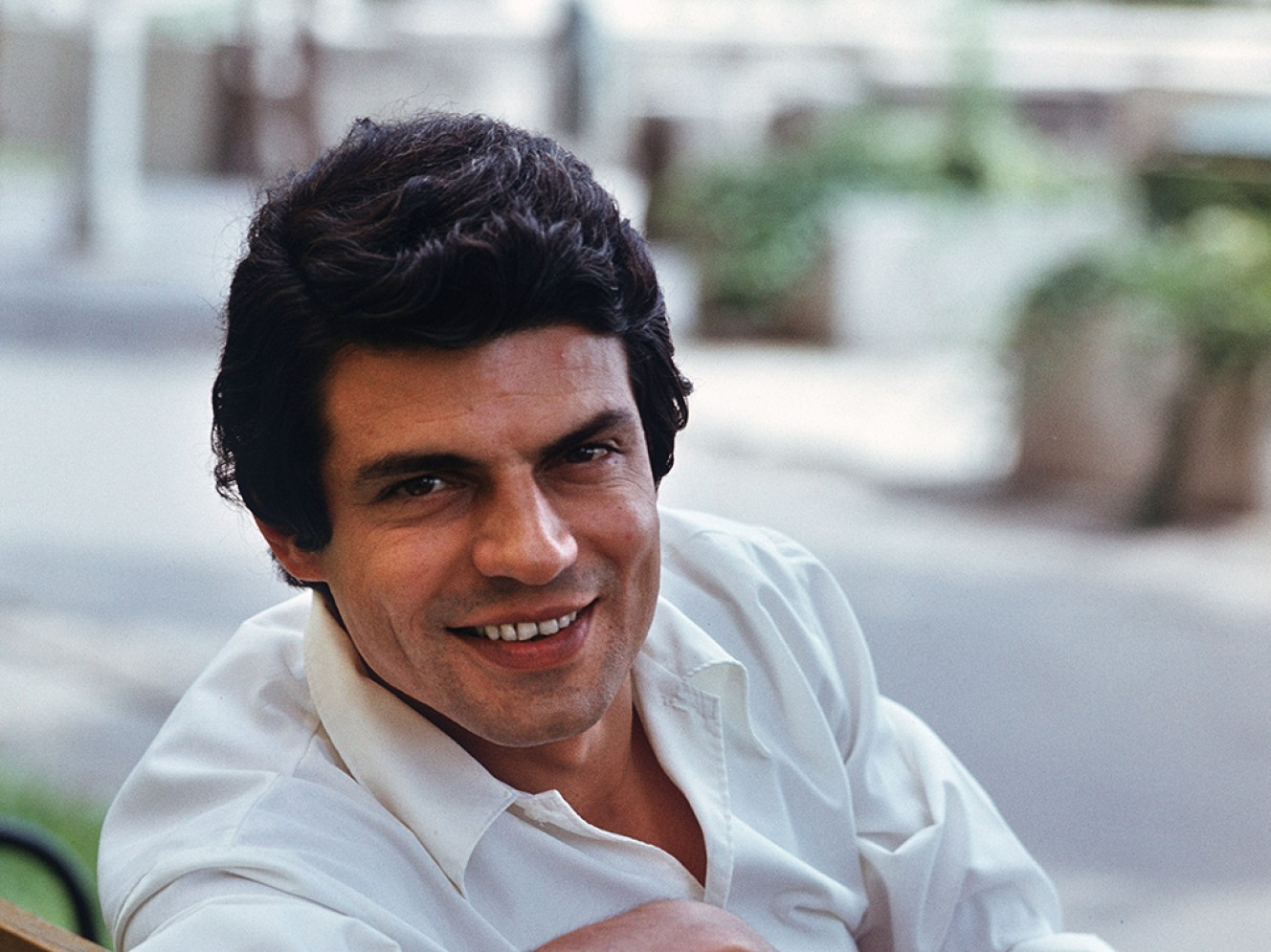
From Romeo to John Calvin
Among his major early roles in Miskolc were the title character in Bertolt Brecht’s The Resistible Rise of Arturo Ui and the Dauphin in George Bernard Shaw’s Saint Joan. At the National Theatre he portrayed an extraordinarily broad range of characters, including Shakespeare’s Romeo, Viktor in Leonid Zorin’s Warsaw Melody, Péter Agárdi in Jenő Heltai’s The Mute Knight, Zoltán Sebők in Imre Sarkadi’s Paradise Lost, and John Calvin in András Sütő’s Star at the Stake. Another memorable part was Michael Kohlhaas in Sütő’s Palm Sunday of a Horse Dealer.
Mari Törőcsik was his partner in both Romeo and Juliet and Warsaw Melody. Sztankay also excelled in two-character plays, performing Ferenc Karinthy’s Danube Bend with both Éva Ruttkai and Ildikó Hámori. At the Madách Theatre he appeared alongside Ildikó Piros and László Mensáros in Sarkadi’s Paradise Lost, while The Mute Knight was performed with Ildikó Bánsági over three consecutive summers.
His greatest popular stage success was arguably Bernard Slade’s Same Time, Next Year. The comedy was performed roughly 450 times, with Ila Schütz as his partner, and the two went on to appear together in numerous other plays as well as regularly in television comedy programs. Theater remained Sztankay’s true home throughout his career. Critic Péter Molnár Gál once wrote that Sztankay could almost instinctively make Schiller, Shakespeare, and Bernard Shaw sound Hungarian.
At the József Attila Theatre he continued to tackle remarkably diverse parts. He played an elderly Jewish father in Péter Horváth’s Nine Like the Wicked, while in András Kern’s Spencer he portrayed Stalin. The sheer range of his roles showed how difficult he was to confine to any single type, moving freely between romantic leads, historical figures, drama, and comedy.
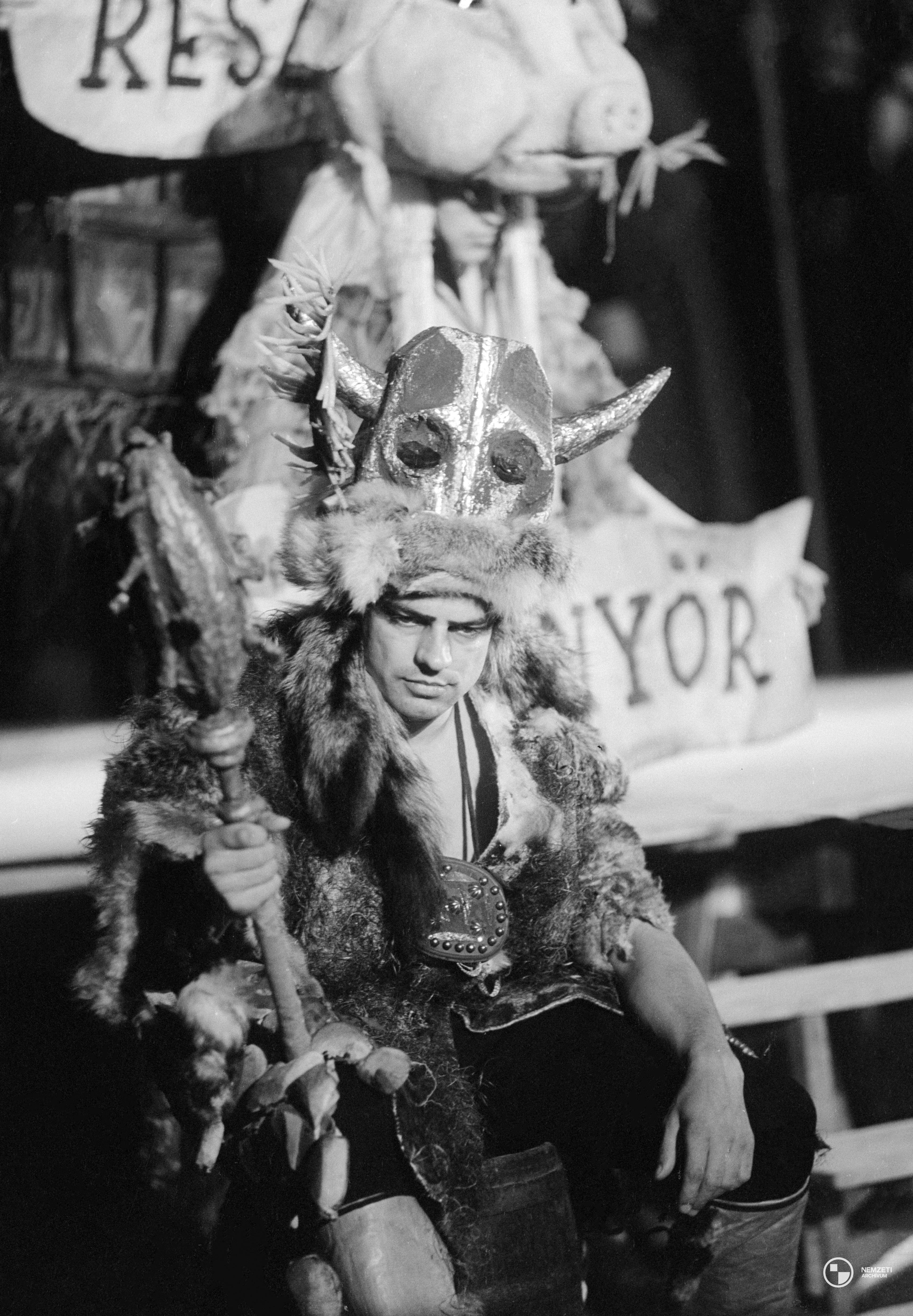
He Became a Favorite on Film and Television as Well
Sztankay made his film debut in the 1963 movie Swan Song, appearing alongside Antal Páger and Gyula Bodrogi and joining them in performing one of the film’s famous songs, The Romance of Villa Negra. His later notable films included Dialogue, Twenty Hours, and Do You Know the Sand-Mandit?. On television he became particularly famous as the title character in the hugely successful series Bors, and he also appeared in television adaptations of Ferenc Molnár’s One, Two, Three and Karinthy’s Danube Bend.
His unmistakable, warm, masculine voice also made him one of Hungary’s major dubbing actors. Over the years he served as the Hungarian voice of international stars including Richard Burton, Laurence Olivier, Marcello Mastroianni, Jean-Paul Belmondo, Leslie Nielsen, Tony Curtis, and Gregory Peck. His voice could be instantly recognized in serious drama and broad comedy alike, helping make him familiar even to audiences who rarely had the chance to see him onstage.
Sztankay also tried his hand at directing. He staged Friedrich Dürrenmatt’s Play Strindberg and Georges Feydeau’s comedy Monsieur Chasse!. His relationship with theater therefore extended beyond acting alone, reflecting a broader curiosity about the craft and an artistic environment he regarded as his true home throughout his life.
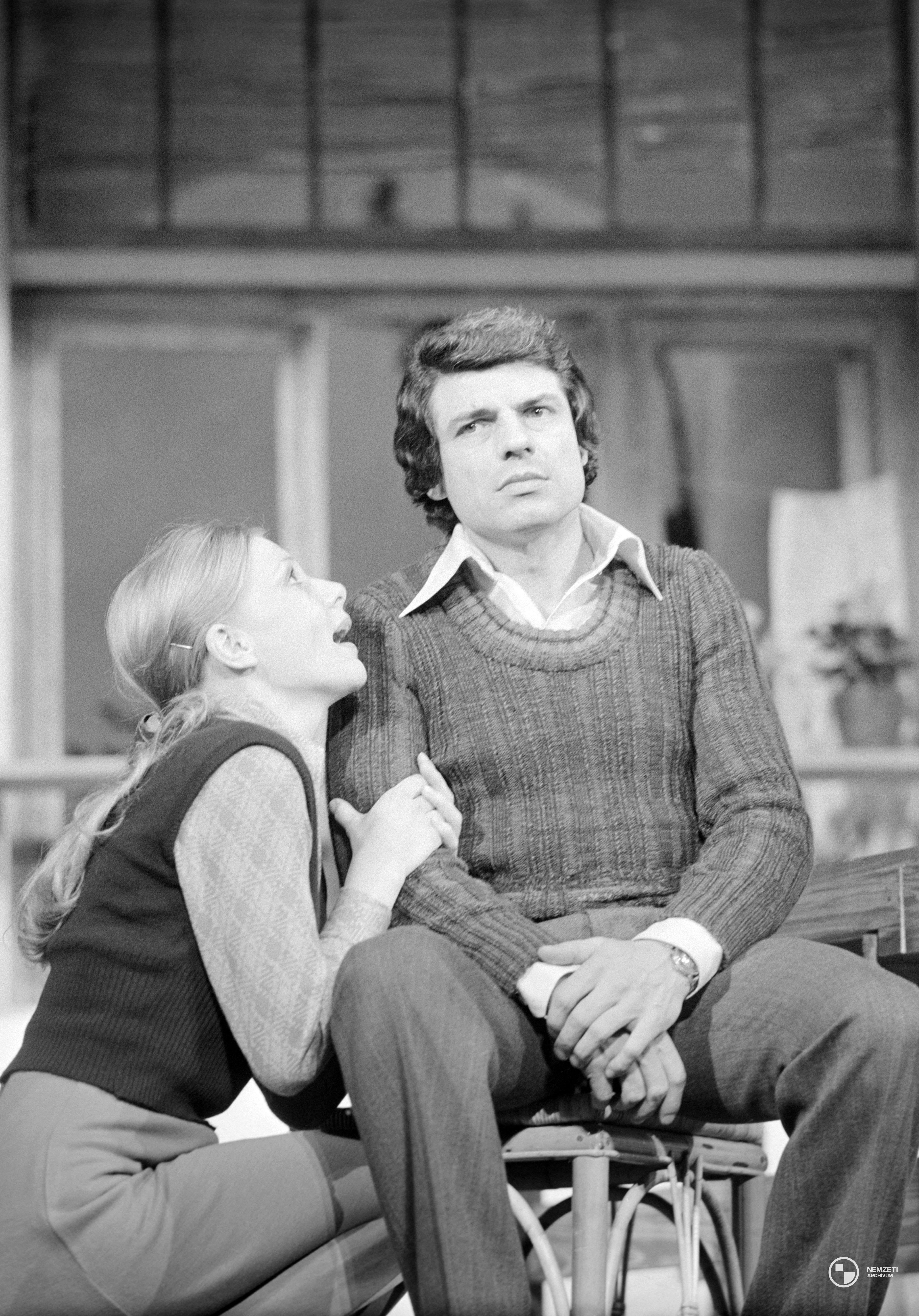
A Kossuth Prize Winner and Actor of the Nation
His artistic achievements were recognized with many of Hungary’s most important honors. He received the Mari Jászai Prize in both 1966 and 1974, was named an Artist of Merit in 1978, received the Officer’s Cross of the Order of Merit of the Republic of Hungary in 1997, and was awarded the Kossuth Prize in 1998. In 2012 he was elected an Actor of the Nation, formally placing him among the performers whose work had become a defining part of Hungarian theater history.
His family also remained connected to public and artistic life. His son, Ádám Sztankay, became a journalist and television host, while his daughter Orsolya followed him into acting before also working as a tour guide and coach. For István Sztankay himself, however, theater remained a fundamental part of his identity until the end, not simply as a profession but as a way of understanding the world.
István Sztankay died on September 12, 2014, after a long illness, in his 79th year. He was laid to rest at Farkasrét Cemetery. His widow, Bea Bedők, established an award in his name in 2015 for an artist of the József Attila Theatre, while a memorial plaque at his former home on Városmajor Street in Buda also preserves his memory.
Shortly before his 76th birthday, Sztankay summed up his belief in the importance of theater in words that still resonate: “I love theater, and I root for theaters not to close. Theater is a course of study. It is entertainment that nourishes the brain and gives people a broader perspective. If they abolish theaters, then they might as well abolish everything.” Twelve years after his death, his performances, his voice, and his passion for the stage remain an enduring part of Hungarian cultural memory.
Source: Retro Rádió






![An ex-Bethesda Dev Says Including More than 1,000 Planets in Starfield Was a Bad Decision! [VIDEO]](https://thegeek.games/wp-content/uploads/2025/09/thegeek-starfield-nagy-1-302x180.png)