
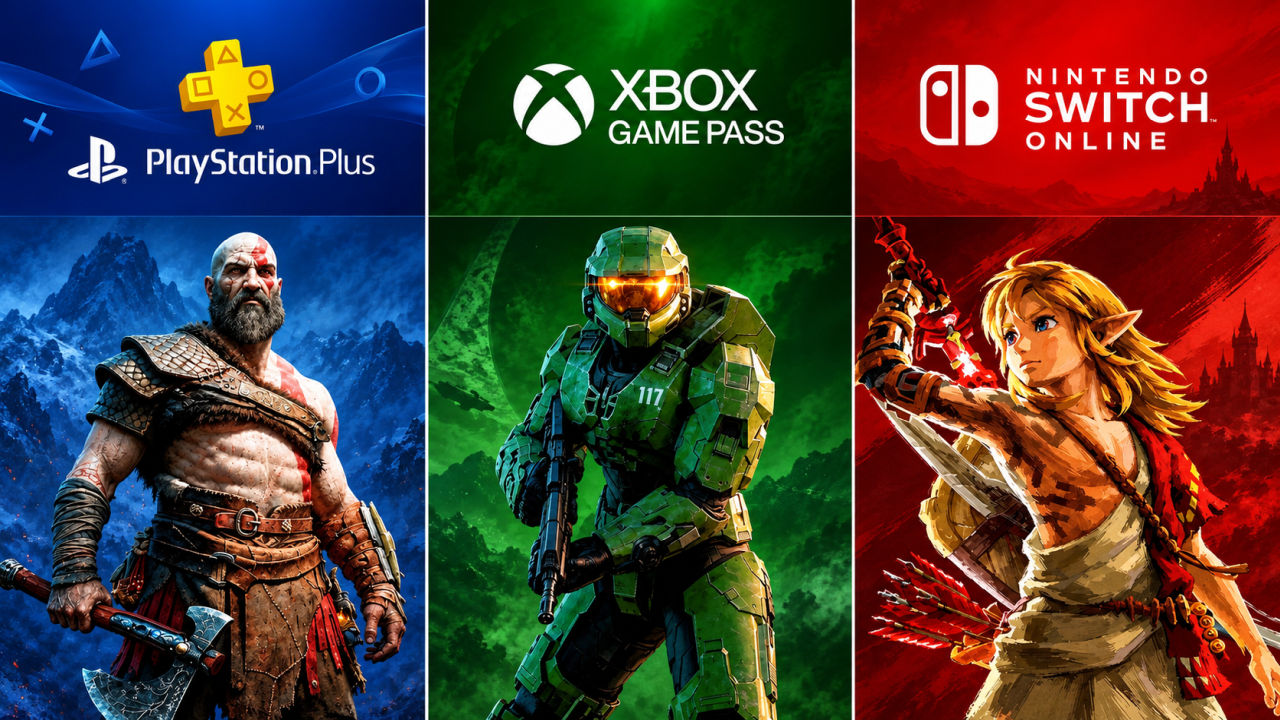
Console subscriptions were once promoted as an affordable gateway to online multiplayer, large game libraries, and a steady stream of additional benefits, but price is becoming an increasingly serious obstacle in the United States. New Circana survey data shows that more than 40% of people canceling Xbox Game Pass Essential, PlayStation Plus Essential, or Nintendo Switch Online now cite cost as a primary reason, with the figure climbing since the beginning of the year.
For years, subscription services were positioned as one of gaming’s more economical propositions: pay one recurring fee and receive multiplayer access, rotating or permanent game catalogs, discounts, and other perks. That equation has become harder to defend as the cost of gaming has risen across the board. Consoles and other hardware have become more expensive, while Xbox and PlayStation have both raised subscription prices more than once. As a result, players are paying closer attention not only to what these services offer, but to whether those benefits still justify another monthly or annual expense.
New research from Circana, one of the most closely watched gaming market analysis firms in the United States, suggests that price is playing a larger role in cancellation decisions. Mat Piscatella, Circana’s executive director and video game industry analyst, shared figures from the company’s Future of Insights for Video Games survey on Bluesky. According to the data, more than 40% of U.S. users who canceled Xbox Game Pass Essential, Nintendo Switch Online, or PlayStation Plus Essential now identify cost as a major reason for leaving.
Why Are Players Canceling Gaming Subscriptions?
Piscatella emphasized an important distinction: the survey does not necessarily show that more people are canceling subscriptions in absolute numbers. What has changed is the explanation given by those who do cancel. Price is becoming a stronger reason, while dissatisfaction with game catalogs or other service-related factors appears to carry comparatively less weight. In other words, the key signal is not necessarily a surge in departures but a shift in why departing customers decide the service is no longer worth keeping.
Nintendo Switch Online provides the clearest example. Among U.S. customers who canceled the service in recent months, 50% selected the explanation that they liked the service but could no longer justify its cost within their budget. At the beginning of the year, only 40% of Nintendo Switch Online cancellers gave that same answer. That represents a ten-percentage-point increase in just a matter of months, even though the service itself has not become more expensive for American subscribers.
That detail makes Nintendo’s results especially noteworthy. Nintendo Switch Online has never received a price increase in the United States, Europe, or Latin America. Nintendo has raised prices only in Japan and South Korea, where increases ranged from roughly 20% to 30% depending on the selected plan. Rising price sensitivity in the U.S. therefore cannot be explained solely by a direct Nintendo price hike. It may also reflect broader household budget pressure, with even unchanged entertainment expenses becoming harder to justify alongside other rising costs.
Game Pass and PS Plus Have Already Seen Multiple Price Increases
The situation is easier to connect directly to subscription pricing for Xbox Game Pass Essential and PlayStation Plus Essential, both of which have become more expensive several times in recent years. Circana reports that 40% of recent cancellers said they liked the service but could no longer justify its cost within their budget. Earlier in the year, that figure stood at 37%, meaning the same price-related concern is moving upward on both platforms as well.
A three-point increase may not sound dramatic by itself, but the broader pattern is consistent across all three major console subscription ecosystems. Players appear less willing to accept the argument that a large catalog, multiplayer access, or recurring perks automatically make a subscription worthwhile if the total annual cost continues to rise. That pressure becomes even greater for people who own multiple systems, since maintaining Game Pass, PlayStation Plus, and Nintendo Switch Online at the same time can turn into a substantial yearly expense.
The Circana figures therefore do not suggest that the subscription model is collapsing. Instead, they show that consumers have a clearer price ceiling and are becoming more demanding about value. Adding games and features may still help retain subscribers, but platform holders increasingly need to demonstrate that those additions genuinely justify the amount being charged rather than assuming the recurring model itself will keep players locked in.
Nintendo’s numbers may ultimately be the strongest warning. If a service can become harder for customers to justify even without an actual U.S. price increase, every future price adjustment from Xbox or PlayStation carries additional risk. The survey does not show that players have rejected gaming subscriptions, but it does show that more of them are actively asking whether those subscriptions still deserve a place in their budgets.
Source: 3DJuegos













Leave a Reply