
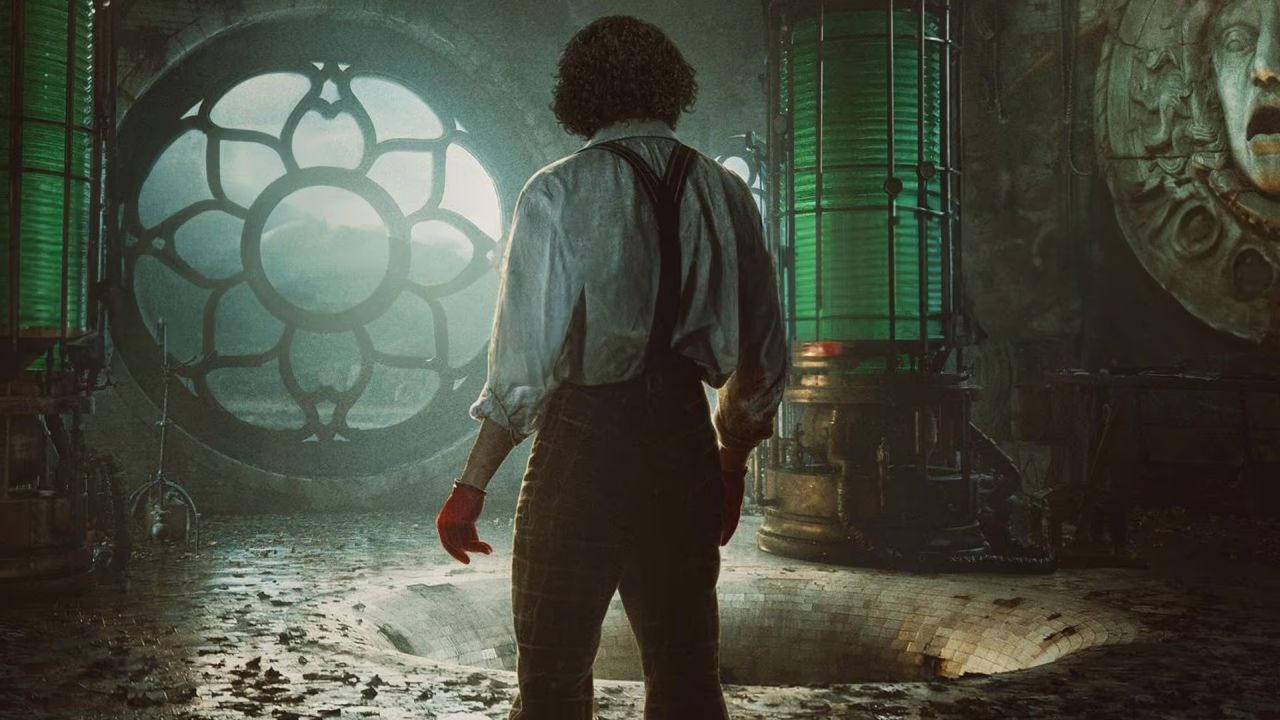
FILM REVIEW – Guillermo del Toro revisits Mary Shelley’s timeless tale and forges it into a sweeping, operatic gothic melodrama. Oscar Isaac’s icily methodical Victor Frankenstein and Jacob Elordi’s tender-souled Creature are lashed to one another by fate, while the film probes both the intoxication and the price of stepping over the line. The craft and the feeling often flatten everything in their path, but one question remains: who is the real monster when humans play God.
It has been thirty-one years since Hollywood last attempted a version of Mary Shelley’s novel at this scale. Kenneth Branagh’s Mary Shelley’s Frankenstein landed to mixed notices, while 2016’s Victor Frankenstein functioned more as a loose homage. The name del Toro alone draws in genre devotees and awards-season voters, and here he assembles a top-flight craft team and a glittering cast that also features Mia Goth. His favorite concerns – empathy for outsiders, the beauty and pain of otherness – course through a film that does not twist Shelley’s material so much as charge it with feeling and fervor.

A Confession Frozen in Ice, a Myth Stitched in Blood
Set in the latter half of the nineteenth century, the story finds a dying, blood-smeared Victor Frankenstein (Oscar Isaac) discovered by Arctic explorers. They are immediately attacked by a fearsome being (Jacob Elordi) demanding Victor, but the creature is driven back long enough for the scientist to explain how he vowed to conquer death and animated a body sewn from disparate corpses. First, we hear Victor’s cautionary account, then the film shifts focus and lets the Creature speak – two narrators, two versions of the truth, one fatal spiral.
Del Toro’s gaze is most compassionate toward the Creature, while it throws Victor into a harsh light. Isaac plays him as a man propelled by unbridled ambition and frosty indifference, a drive rooted in an early wound: the loss of his adored mother and the resentment toward his father (Charles Dance), a cool-handed surgeon he blames for not doing enough. Grief, though, is only a fig leaf here – vanity is the real fuel. Whether belittling his creation as dull or trying to claim his younger brother’s enigmatic fiancée, Elizabeth (Mia Goth), Victor keeps revealing himself as less a man of science than a prisoner of his own ego. Isaac leans into a purposeful theatricality that fits the character’s warped grandiosity.

Innocence the World Cannot Abide
Elordi’s Creature, by contrast, is gentle and eager to learn, a childlike curiosity that nonetheless frightens others, and when cornered, he becomes a wrecking force. After his ethereal, dreamlike turn in Priscilla, the actor crafts a fractured soul searching for bearings in a world that treats him as a threat on sight. Early sweetness curdles into fury under pressure, and there is real poetry in Elordi’s melancholic yet volatile performance – especially as the Creature realizes he cannot be killed, a cruel paradox that robs him of the chance to truly live.
The movie’s visual and thematic backbone bears del Toro’s signature: the allure of the outcast, scars of body and spirit, the polished collision of myth and reality. The filmmaker shows, unsparingly, how wonder hardens into disgust, curiosity into hatred, and how an act of creation can slide into self-erasure.
Gothic That Enchants – and Sometimes Overwhelms
Several long-time collaborators return. Production designer Tamara Deverell (Nightmare Alley) conjures crumbling palaces and intricately carved interiors, shaping Frankenstein into a full-blooded gothic melodrama. Prosthetics lead Mike Hill to remake Elordi into something inhuman, whose vivid eyes carry a trapped spark. Alexandre Desplat’s orchestral score drapes the film in a soaring lament that amplifies both horror and tragedy, especially late on, as Victor and his creation, locked in a death-bound waltz, begin to sense their shared, cursed destiny.
When the film reaches for quiet tenderness, the writing can grow a touch on the nose, softening the intended hush. Victor’s unreturned longing for Elizabeth rarely vibrates at the right frequency, and her attraction toward the Creature feels forced. As so often with del Toro, spectacle can trump nuance – big gesture, less precise character work. Still, by staging this duel as a grand metaphor for human hubris in the face of creation, the director returns to Shelley’s essential question with clarity: who is the monster, and who dares claim the title of creator without paying the price.
Gergely Herpai “BadSector”
Frankenstein
Direction - 8.2
Actors - 8.4
Story - 7.5
Visuals/action/music/audio - 8.5
Ambiance - 8.2
8.2
EXCELLENT
Del Toro's Frankenstein is a gothic vision with operatic lift, where craft and feeling often outmuscle fine detail. Oscar Isaac's ruthless Victor and Jacob Elordi's painfully human Creature collide in a tragedy of ego and desire. The film is most convincing when the creation myth reflects back at us our own irresponsibility.










Leave a Reply