

RETRO – Electronic Arts is churning out new Lord of the Rings games with the same terrifying industrial force as Saruman’s war machine. With The Battle for Middle-earth II, the publisher is clearly trying to flatten every previous LotR adaptation and every earlier RTS attempt in one go… The Lord of the Rings: The Battle for Middle-earth II turns 20 this year, so we went back and refreshed this retro review from two decades ago.
Peter Jackson’s trilogy was unquestionably one of the most ambitious fantasy film projects of its era, and it whipped audiences hungry for epic storytelling into a frenzy that came dangerously close to Star Wars-level madness. There is a reason Electronic Arts threw a ridiculous amount of money at securing the film license: that investment, plus the development costs of the games built around it, paid off very handsomely.
Up to this point, the publisher’s whole strategy had been to recreate the mood of the films as faithfully as possible, and just about every earlier adaptation was built around that idea. In the two action hack ‘n slash titles, The Two Towers and The Return of the King, every playable hero looked exactly like their on-screen counterpart, the actors were hauled into the studio to voice their digital doubles, and as if that were not enough, every Lord of the Rings game was packed to the brim with movie scenes.
Not that we had much reason to complain, because EA absolutely hit its target: every one of those games nailed the feeling of hacking through orcs alongside the Fellowship to save Middle-earth. The earlier LotR games did such a convincing job of capturing the films’ vibe that EA really had to start stepping away from Jackson’s cinematic blueprint a little, unless it wanted players to let out a massive yawn the next time Cate Blanchett turned up in the intro of yet another LotR game. It looks as though EA finally realised by the second Battle for Middle-earth that movie atmosphere alone was no longer enough – they had to bring something extra to the table.
A Much Better Report Card
When the first BfME landed in December 2004, I had a look at it myself before it eventually ended up with Csonti, fully intending to review it if it seemed worth it. My Lord of the Rings obsession was no longer burning quite as fiercely as it had back when the films were still in cinemas, but I was still curious to see what EA could squeeze out of the license in RTS form. Who knows, maybe we were about to get another Warcraft 3. As it turned out, the final version did not exactly win me over.
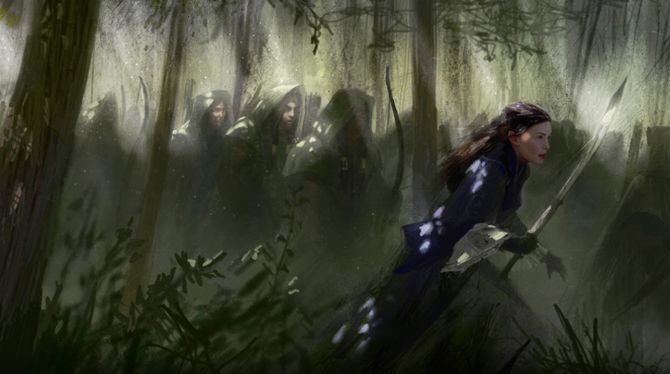
The cinematic atmosphere was certainly there, because EA once again bent over backwards to make us feel like we were inside Peter Jackson’s trilogy: little film snippets were sprinkled throughout the game, some of the missions were lifted straight from the movies, Gandalf was every bit as grey as Ian McKellen, and I had no complaints about Arwen’s charm or Aragorn’s gloriously messy hair either.
What bothered me far more was that Battle for Middle-Earth was an overly simplified, aggressively dumbed-down RTS, one tailored so that even casual players who only cared about the Lord of the Rings films could digest it without effort. Base-building was laughably primitive compared to what we were used to in other RTS titles – especially the Command & Conquer games, considering the overlap in developers – and the missions felt less like proper strategy design and more like another Lord of the Rings cash cow in licensed form.
So no, I was not expecting miracles from the sequel either… What do they usually add in a follow-up anyway? Better graphics? Eighty-five new unit types? Another half-dozen interviews with the film cast? To my pleasant surprise, someone at EA must have finally woken up, because this sequel is leagues richer, deeper, and better put together than the first game ever was.
Presentation With Style
Of course, presentation matters too. The first time I booted the game up, I was greeted by a gorgeous and tasteful menu screen wrapped in the films’ magical score – and, thank God, without the usual overused intro where Galadriel solemnly recites the history of the rings for the thousandth time. The mood clicked into place immediately, and the game managed it without lazily pelting us with film footage.
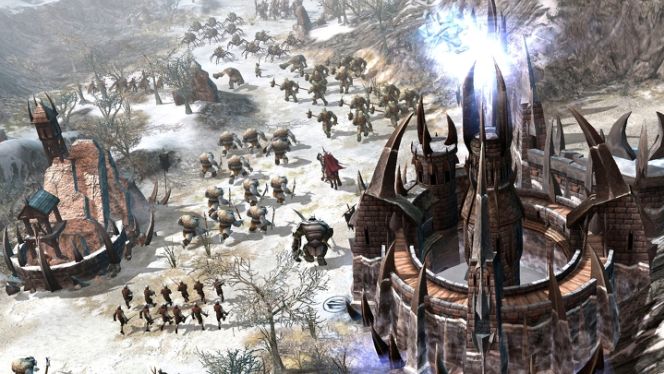
The menu layout is clear and easy to navigate, but the longer I stared at it, the more obvious it became just how much new stuff had been crammed into this installment. In single-player, for example, alongside the usual good and evil campaigns, where we can lead either the Free Peoples or Sauron’s forces to victory, there is also the War of the Ring mode right there in plain sight, while My Heroes gets its own separate menu entry. (You can read about those in the box.) Even the tutorial is split into three parts this time, and the game is finally complex enough to justify actually working through the whole thing.
Variety Works Wonders
But enough about tutorials – let us get to the real heart of the game, the campaigns. In the good and evil storylines, as expected, we either save Middle-earth from the armies of the evil Sauron through a chain of linked missions, or do the exact opposite and help drag it into ruin.
The genuinely interesting thing here is that the game finally loosens its death grip on the films, and thanks to the Tolkien license it can do so properly. Instead of having us replay the same familiar beats yet again with the Fellowship or on the orc side under Sauron and Saruman, this time we get to meet “new” peoples and heroes as well – meaning characters and factions known from the books rather than the movies. The good campaign, for instance, focuses on events the films barely touched on beyond a passing mention.
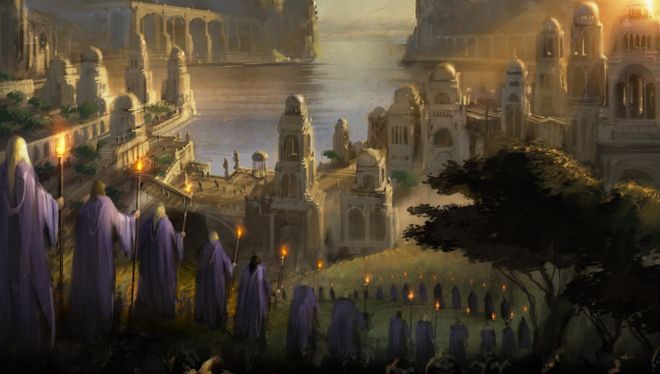
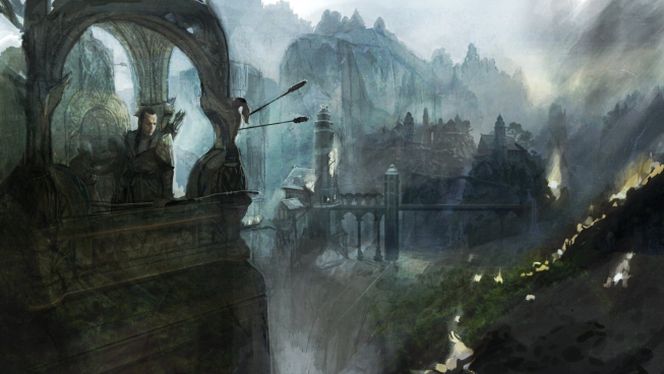
Dwarves and elves take centre stage, with men playing a smaller supporting role, and many of the heroes we control are figures who either never appeared on screen at all or barely registered beyond the rank of “third halberdier from the left.” You get the dwarf king Glóin, the elven warriors Haldir and Glorfindel, and of course Tom Bombadil, whose fame rests largely on singing his way through existence. He even shows up here as a summonable “skill” purchased with experience points, and it is a glorious joke to drop him into the middle of enemy troops and watch the old lunatic literally stroll across the battlefield singing while chopping everyone to ribbons.
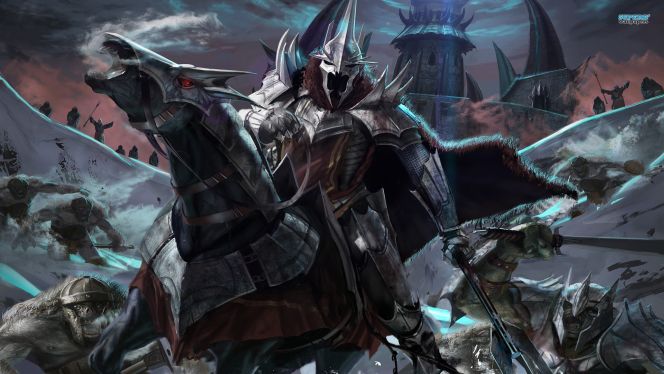
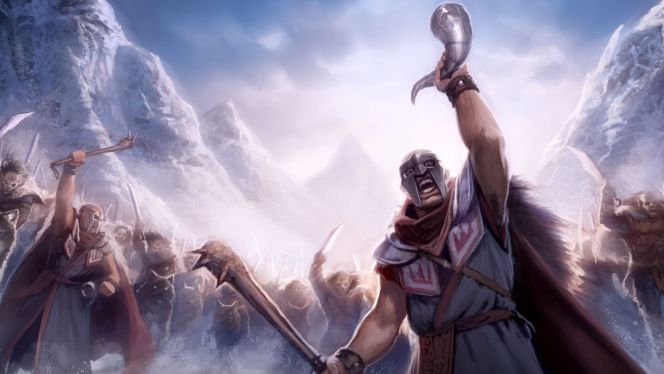
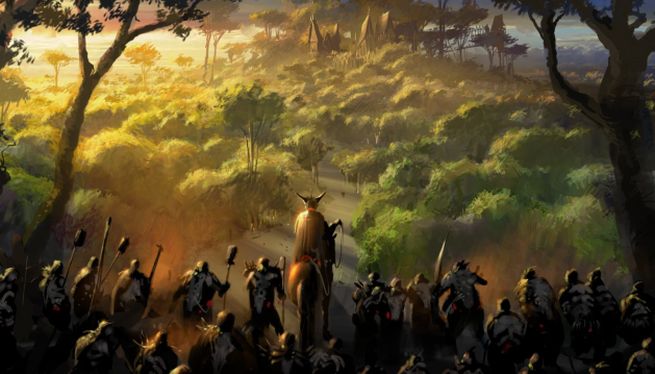
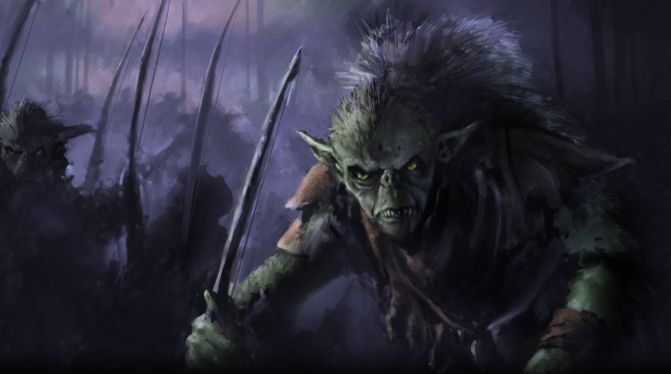
On the evil side, we get to control, among others, a completely new faction – the goblins, who were left out of Peter Jackson’s adaptation altogether – and there is a particularly wicked bit of fun in the fact that this brutal campaign does not stop at slaughtering elves, dwarves, and men. In one mission, you also get to settle things with their ancient enemies, the hobbits. So if you have always dreamed of cutting Frodo and company down, here is your moment at last… The maps themselves are refreshingly varied too, because we are no longer stuck revisiting only the film locations everybody already knows by heart. We also get taken to new or barely explored places. On the licensing front, EA really did its homework this time, doing everything it could to show Tolkien’s familiar world from a different angle.
My Castle, My Rules
That is all very nice, and it is good to finally get some real new material for our money, but the heroes and locations lifted from Tolkien would mean absolutely nothing if EA had simply shoved the same dumbed-down RTS framework down our throats again. To their credit, the developers clearly listened to players’ complaints and made a visible effort to fix nearly every crude design choice from the previous game. In the first BfME, for example, one of the dumbest ideas was that buildings could only be placed on fixed plots, as though figuring out where to build something would be too exhausting for the average well-fed American. Mercifully, that idiotic restriction is gone now: aside from rocky terrain and other obvious obstacles, you can build almost anything almost anywhere.
On top of that, there are vastly more building types than before, even if most of them still fit into familiar old-school RTS categories. Barracks, archery ranges, stables, blacksmiths, and their faction-specific equivalents remain the backbone of your economy and military machine.
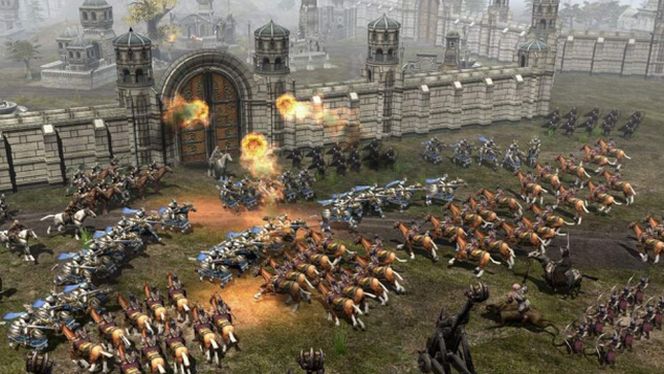
Placement now matters in a much more meaningful way too, especially for resource structures such as elven trees, human farms, and dwarven mines, because some pieces of land are simply more fertile or productive than others. As you move the placement marker around, the game shows you in percentage terms how rich that patch of ground is in terms of the resource it can generate. Naturally, your farms also need protection, and unlike in the previous game, you can now build walls almost anywhere the terrain allows, along with separate towers or towers embedded directly into those walls.
A well-designed defensive line gives you a much better chance of repelling enemy assaults, and in certain campaign missions you would not survive without one. The only catch is that the new goblin faction can climb walls, so against them even a clever fortification network can end up being about as useful as Arwen kissing a dead elf.
Finally, a Real War of the Ring
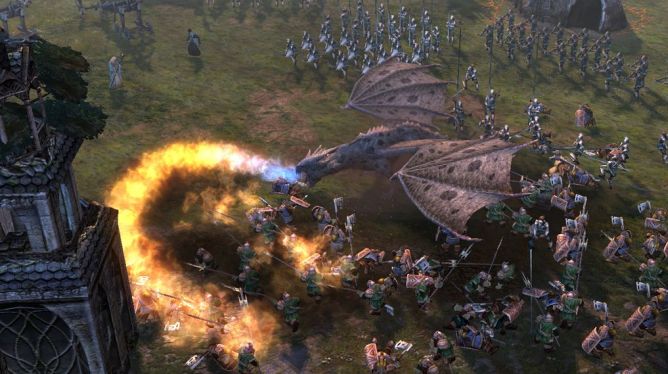
The battles themselves are also a little more tactical than before. One thing I absolutely loved is that you are not micromanaging individual soldiers, but whole battalions, while the soldiers inside those battalions still die one by one. Star Wars: Empire at War did the same thing in our previous issue, and it really feels like this could become a trend – and a very welcome one.
You can also assign different formations to your troops. The most classic setup has sword units taking the punishment up front while your archers quietly pepper the enemy from behind. To be fair, units do have a nasty habit of losing formation while moving, so I never found formations quite as crucial as the game perhaps wants me to, but they are still genuinely useful in the right situations.
The spell system also mixes brilliantly with the battlefield chaos. There is little more satisfying than dropping a huge earthquake onto enemy armies and tower-defended structures, then charging in to finish whatever is still twitching. In the campaigns, the spells may even be a little too powerful. In the final good-side mission, I was able to casually blast half the map apart with them, leaving my troops with very little work to do as they swept away Sauron’s forces, Balrog included.
The one thing that muddies the picture is the AI… Your own battalions and the enemy’s alike can be painfully slow and rather stupid about joining nearby fights, which means you constantly have to prod them along, and the enemy AI only becomes remotely threatening when it attacks with sheer overwhelming force. The computer is not much of an opponent in general, and that is especially true in the campaigns, where enemy behaviour feels heavily scripted. Things are different in skirmish mode and in War of the Ring, where the RTS sections function more like regular skirmishes – there the AI is noticeably more aggressive and more competent.
It remains one of my eternal gaming frustrations that developers so often fail to carry this stronger AI into the campaigns as well, the way Age of Kings once did… One genuinely good feature, though it already existed in several older RTS titles and was strangely absent from the first BfME, is that battalions surviving combat gain experience. The longer you keep them alive, the deadlier they become. Of course, once you have built up a truly large army, keeping track of one specific squad’s survival becomes its own little nightmare…
“I Need a Hero”
Heroes play a central role in battles as well. Familiar faces from the books and films level up much like they do in Warcraft 3, and on top of that they can unlock and use various special powers. Those powers improve as the heroes do, and even their animations evolve. Heroes are generally absurdly powerful units, and at higher levels they can tear through multiple battalions at once while taking forever to bring down. If one of them dies, the game warns you about it in a suitably dramatic voice, but thankfully that is not the end of the world, because you can revive them back at your stronghold. The campaigns only feature a limited number of heroes, unfortunately, but War of the Ring and skirmish mode give you access to a much broader roster of major and minor figures.
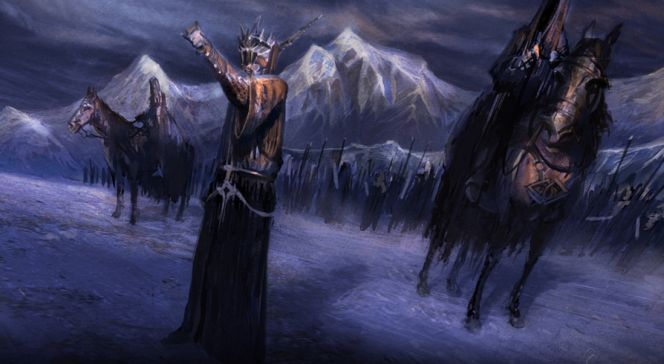
Alongside Haldir, Glorfindel, and Glóin, you can also command Aragorn, Gandalf, Arwen, Frodo, and the rest of the Fellowship, while the evil side naturally includes Saruman and also lesser but still memorable figures such as Lurtz, Boromir’s killer, and Gríma Wormtongue. The latter even has the charming special ability of assassinating good-aligned heroes. And if Tolkien’s cast somehow stops being enough for you, the game also lets you build your own heroes in a separate mode. (There is a dedicated box about that too.)
Like Watching the Films Again
I have held this back until now, but I really do need to talk about the graphics. The first game was hyped to the moon with heavily polished screenshots and grand promises that made it sound like the third wonder of the world, and then the final version turned out to be nowhere near the miracle we were led to expect. The marketing push behind BfME 2 was much more restrained, and it did not really lean on the visuals this time, which makes it all the more striking that the sequel looks vastly better.
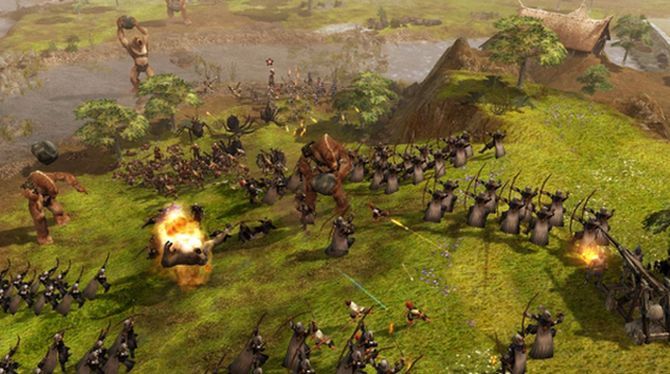
The water alone is astonishing. It was apparently built using digital techniques more commonly associated with Hollywood productions, and the result is stunningly lifelike. The surface shimmer, waves, foam, and delicate ripples utterly outclass what pixel shader tricks had managed before, while the reflections of ships and rocks, not to mention the surf pounding against the shoreline, are the sort of thing that will leave you physically having to push your jaw back into place.
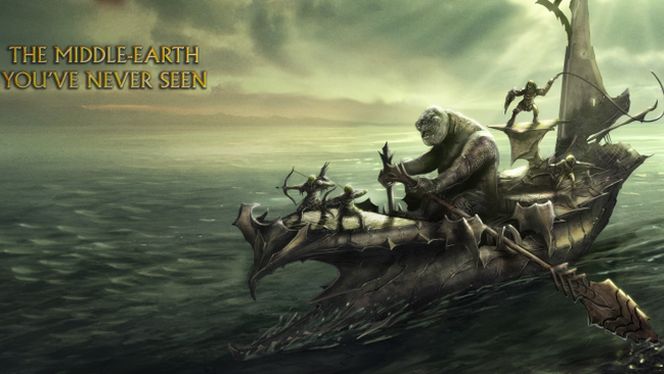
The developers even put effort into what lies beneath the surface. If you look closely, you can spot coral formations, swimming fish, and even the ruins of lost cities below the waterline. The architecture of the different factions is also beautifully done. The elves inhabit magnificent realms built around gigantic trees, men live in rougher farmsteads and stone fortresses, dwarven territory is dominated by mines and industry, while Sauron’s peoples dwell in dark strongholds and stinking caves soaked in decay and corruption.
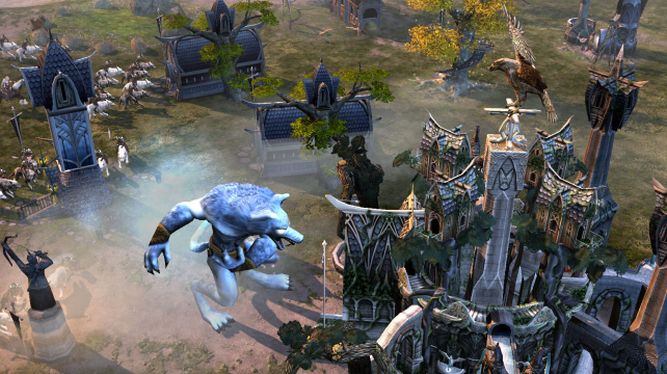
I genuinely cannot think of another EA game that has drawn this much from Peter Jackson’s visual world while also fleshing it out with elements that previously existed only in Tolkien’s prose. The units look excellent too: giant rock-throwing trolls, mûmakil, griffins, and other large beasts appear as if they have stepped straight off the screen, while even the smaller troop formations look lively and dramatic thanks to their strong animation work.
Naturally, the developers paid special attention to making the heroes resemble the film cast as closely as possible. My only real disappointment is that, apart from Ian McKellen as Gandalf and Christopher Lee as Saruman, they were unable to bring back most of the actors to voice them. That makes it slightly deflating when Arwen opens her mouth and, instead of Liv Tyler, you hear an older-sounding woman.
The Bitter Part
And yes, of course, the unpleasant bit does eventually arrive. As expected, Battle for Middle-Earth II is not flawless… What irritated me most is that the campaigns feel artificially stretched, despite the fact that there are only nine maps in total. With no film narrative there to prop them up, most missions fall back on variations of “build your base, then crush the enemy” or “build your base and hold the line,” and the developers try to disguise that repetition by making it take an awfully long time to amass the buildings and troops needed to steamroll everything.
There were definitely moments when I caught myself thinking that, no matter how gorgeous the graphics were, how impressive the animation looked, or how interesting the settings seemed, these overlong maps had become so drawn out that by the final stretch I was bored senseless.
In terms of raw gameplay and strategic challenge, I actually found the territory-grabbing map layer in War of the Ring, which has a definite Rome: Total War flavour to it, more engaging. Even there, though, I found it a bit dry that the mode simply dumps you into a map selection screen with no real campaign framework, no story, no cutscenes, and none of the nice extras that might have helped tie it together.
Honestly, they might have had a much stronger package on their hands if they had blended the traditional single-player RTS campaigns with War of the Ring more tightly… What annoyed me even more, however, was the engine’s poor optimisation on mid-range or slightly-above-mid-range hardware. In larger battles with lots of units, even medium settings could slow the game down so badly that it felt as if Aragorn had suddenly activated bullet time like he was in Max Payne… So if you want the full experience, you either need a beast of a machine or settings low enough that the graphics I just praised so enthusiastically lose a fair bit of their magic.
My Precious, With a Few Flaws
Even so, there really is not much reason to complain about BfME 2 overall. Electronic Arts clearly put its heart and soul into making sure this was not merely another atmospheric movie-flavoured tie-in, but a properly layered and impressively polished strategy game. Unlike the previous installment, you can genuinely feel the touch of the team made famous by the Command & Conquer series. After Generals, they have once again made something that, thanks to its multiplayer side, could easily remain “our precious” for a very long time.
-Gergely Herpai BadSector (2006)-
Pros:
+ Deep, yet easy to get into
+ Far more tactical and layered than the previous game
+ Attractive visuals
Cons:
– Building up your castle does not always feel meaningful
– The AI is pretty dim
– Some clumsy design choices
Publisher: Electronic Arts
Developer: EA Los Angeles
Genre: RTS
Release: 2006
The Lord of the Rings: Battle for Middle-Earth II
Gameplay - 9.2
Graphics (2006): - 9.5
Story - 8.9
Music/Audio - 9.2
Ambiance - 9.2
9.2
AWESOME
The Battle for Middle-Earth 2 is not only far more polished and fully realized than its predecessor, but also one of the best RTS games of recent years.



![Warhammer 40K: Dawn of War IV Will Be Delayed! [VIDEO]](https://thegeek.games/wp-content/uploads/2025/08/thegeek-Warhammer-40000-Dawn-of-War-IV-nagy-1-302x180.jpg)



Leave a Reply