
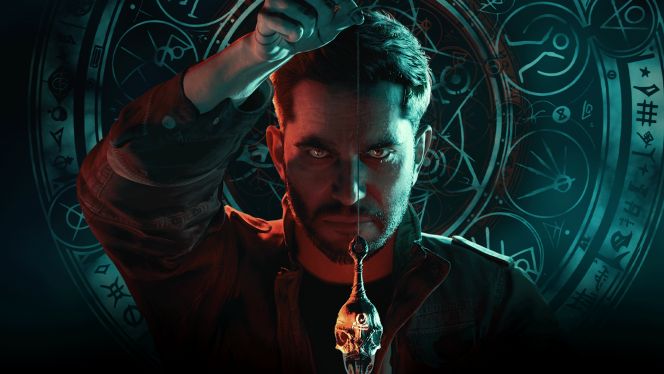
REVIEW – The Occultist has that low-budget supernatural thriller energy: not AAA, clearly, but occasionally it lands a shot that makes you look up. The catch is that those sparks rarely turn into real tension – they’re more like isolated “nice idea” moments taped together. By the time credits roll, odds are you’ll shrug, file it away, and forget most of it a few months later.
First-person view, a deserted island, leftover cult iconography – on paper, that’s the genre’s favorite playground. The mood often lands, and the foggy ruins and symbols genuinely do the heavy lifting. The problem is that the game leans on the same handful of tricks too often, so tension turns into routine. The question isn’t whether you’ll get scared, but how long you’ll care about what’s behind the set dressing.

Alan Rebels and Godstone Island
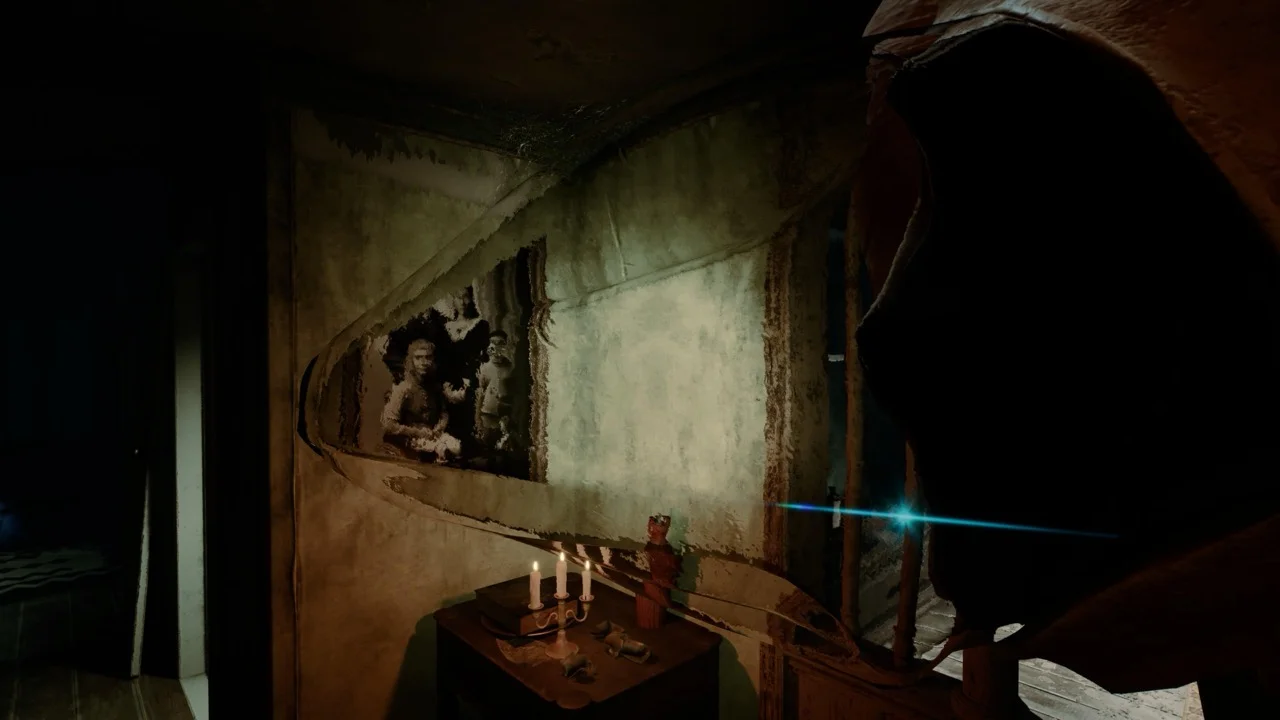
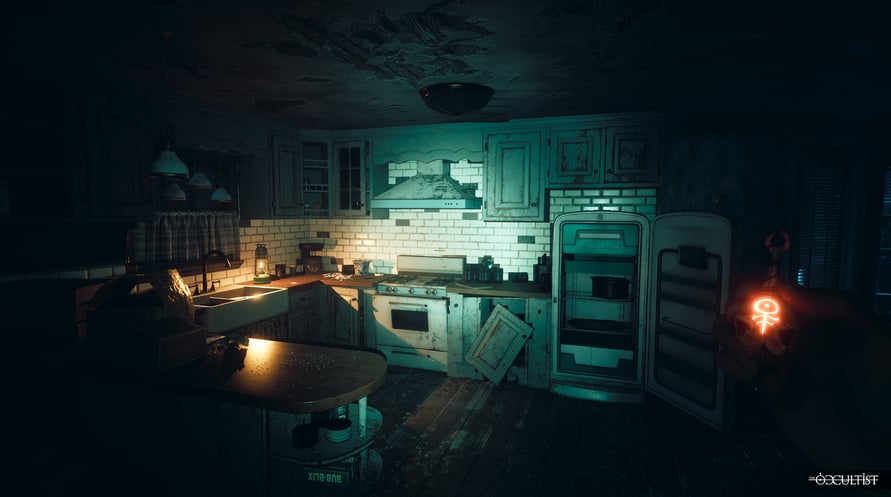
You play Alan Rebels, a paranormal investigator heading to the abandoned British island of Godstone to find his father, Gabriel. The place has cult history baked into its walls – the group was active until the 1950s, then the island “died.” Atmosphere is the game’s best argument: Unreal Engine 5 does heavy lifting for crumbling buildings, cult iconography, and those empty stretches of landscape that feel a little too quiet to be normal.
But a thriller needs to do more than look the part – it should make you uneasy, and that’s where The Occultist keeps slipping. Alan barely reacts to the supernatural, and if the lead treats weirdness like background noise, the player does too. There are spooky beats, sure, but they’re just beats: quick hits, mostly jump scares, and the kind that turn irritating once the novelty wears off. The sustained pressure – the thing horror runs on – is oddly missing.
Your main tool is a pendulum that reveals and “manifests” objects that used to be there, letting you interact with them. Later you pick up three more powers: a soul raven that reaches otherwise inaccessible spots, a pest-control trick that feels a little Dishonored-adjacent, and time manipulation for specific objects (think: a stuck elevator). The pendulum also lights up when something is nearby, so you rarely search – you follow a glow.
Puzzles exist, but they often demand a silly number of items just to open a door, or a long chain of fetch steps to get one key object. That might be fine if it stayed varied, but the game leans hard on the same three puzzle flavors: write a name, trace a pattern, enter a combination. None of it is difficult, and the clues live in Alan’s journal, so it’s more “check notes, do the thing” than “think your way out.”
Combat is the weakest link. You either avoid attacks or try to turn enemy moves against them, and it rarely feels clean or satisfying. The roster includes kamikaze threats, exploding dolls, and a wheelchair grandma. The last one is funny once – then the repetition turns it into annoyance. Boss fights do show up, but rarely, and they’re odd by design: Alan isn’t built as a fighter, yet the game still forces him into “use the pendulum or die” scenarios when it wants a climax.
Even Geralt’s Voice Can’t Save It
Yes, that Geralt: Alan is voiced by Doug Cockle, the same actor behind The Witcher’s lead. The voice itself is fine, the fit is not. Alan often sounds bored, and short lines land with a thud – which is brutal in a game that needs the protagonist to sell fear, curiosity, or at least urgency. Over roughly four (maybe four and a half) hours, that flat delivery keeps undercutting an otherwise decent setup.
Performance on PlayStation 5 is solid enough, and if something floats in mid-air, that feels more like a Daloar quirk than a busted port. Still, you’ll notice little rough edges: Alan’s hands can look weirdly off, and some text can get hard to read. Small problems, but they stack.
It’s also worth saying out loud: this is an AA game, and we don’t get many of those anymore. We probably should. Not everything needs a nine-figure budget, but not everything has to live in indie constraints either. The Occultist isn’t a Hellblade: Senua’s Sacrifice-level breakthrough, but it does have ideas – it just struggles to execute them with consistency.
A One-And-Done Kind of Game
The Occultist nails mood more often than it nails gameplay, and that mismatch is why it lands at a 6/10. You can finish it in a day – honestly, in an afternoon – and chances are you won’t feel any pull to replay it for years.
The loop gets repetitive, Alan is bland, the voice work doesn’t elevate him, and the game rarely commits hard enough to be memorable. If you enjoyed The Sinking City, this might be worth a cautious try, but otherwise it’s easy to forget. Daedalic Entertainment didn’t whiff anywhere near as badly as The Lord of the Rings: Gollum, but don’t be shocked if this shows up later as a “filler” PlayStation Plus pick.
-V-
Pros:
+ The setting and the atmosphere it builds
+ The core story hook has potential
+ The pendulum as a central tool is a neat concept
Cons:
– Repetitive loop with too little real tension
– Alan (and the voice work) doesn’t land, often sounding flat
– Short, one-and-done experience that’s easy to forget
Story: 75
Graphics: 70
Music/Audio: 50
Gameplay: 45
Atmosphere: 70
Details:
Developer: Daloar
Publisher: Daedalic Entertainment
Release Date: April 9, 2026
Genre: First-Person Supernatural Thriller
The Occultist
Gameplay - 4.5
Graphics - 7.2
Story - 7.4
Music/Audio - 4.8
Ambiance - 6.8
6.1
FAIR
Good ideas, shaky execution — it’s worth a try, but it won’t stay with you for long.















Leave a Reply