
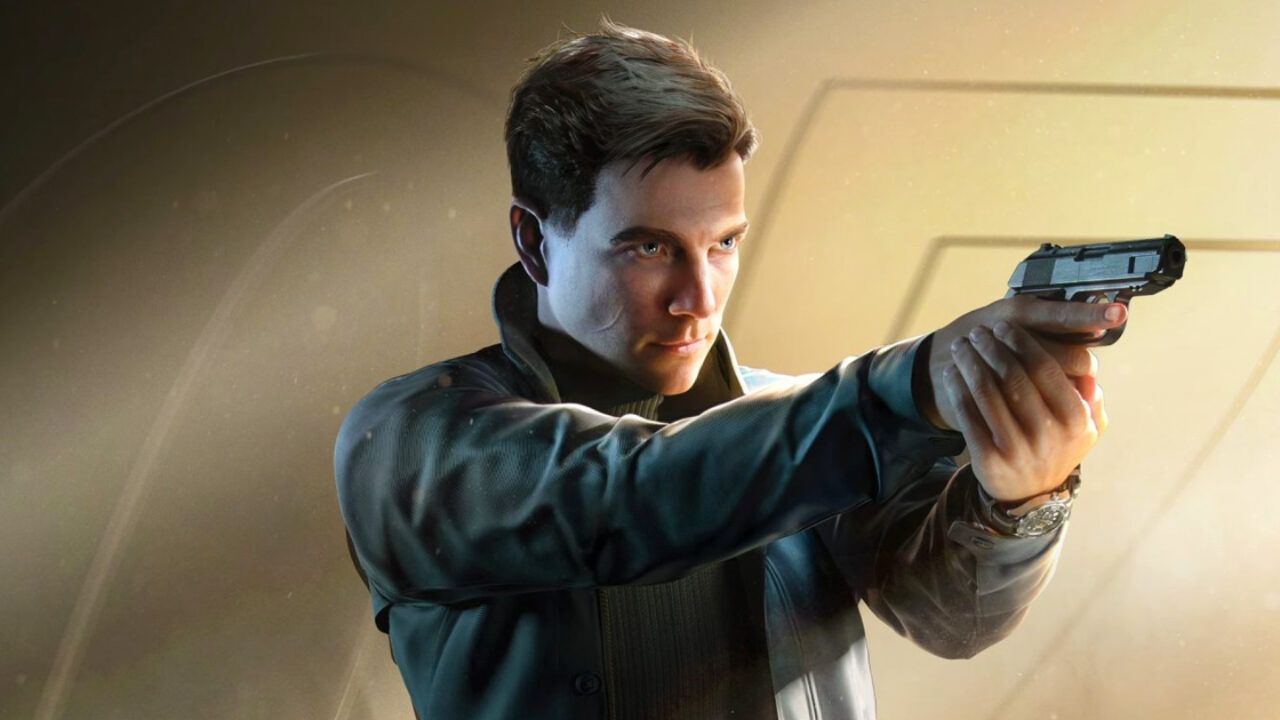
007 First Light has impressed players not only with its combat, stealth and James Bond atmosphere, but also with a surprisingly rare technical detail: working mirrors. IO Interactive’s game delivers convincing reflections without Path Tracing, which has led many players to ask why modern games do not use this kind of solution more often.
007 First Light is now on the market, and the first reactions have been very strong. IO Interactive’s James Bond game is sitting at around 90% positive user reviews on Steam, it has also been received well by critics, and players are not only praising the combat, stealth or Bond atmosphere. One of the community’s most unexpected talking points is a feature that used to feel more common, but is now often missing even from high-budget games: functional mirrors.
The new game from the creators of Hitman was developed in close collaboration with Nvidia, so the PC version supports several modern graphics features, especially those tied to RTX 50 series cards. That has also brought criticism, particularly from AMD users, because the game’s FSR scaling appears weaker than expected. The more interesting detail, however, is that 007 First Light does not include Path Tracing at launch. That technology can significantly improve lighting and reflections, but it will only arrive in the game in summer 2026.
That has not stopped IO Interactive from using working, detailed mirrors in the game right now. The studio did not rely on some mysterious graphics trick, but on an older and more controlled technical solution: planar reflections. The idea behind planar reflection is that the engine renders the scene a second time from the perspective of the reflective surface, almost as if there were an inverted camera behind the mirror. The result is a reflection that does not look like a blurred surface effect, but actually reproduces the details of the scene.
Mirrors Are Not New, but They Are an Expensive Trick
Functional mirrors were not invented by modern graphics technology. In the 1990s and early 2000s, several games used similar handcrafted or duplicated solutions, but they gradually became rarer. The reason is simple: if an engine has to render a scene twice, the performance cost can become significant. Developers therefore often dropped these mirrors, or replaced them with cheaper visual tricks that may look acceptable from a distance, but quickly fall apart up close.
Among older games, Silent Hill 2 remains a classic example of how striking reflections could be created without modern ray tracing. The trick there was not exactly the same as planar reflection, but the philosophy was similar: the developers essentially duplicated the whole room or environment in a parallel space the player could not enter, but could see in the mirror. It was an expensive, handcrafted solution, but that is precisely why it became memorable.
In recent years, Path Tracing and more advanced ray tracing have made higher-quality reflections possible again in many games. The problem is the cost: powerful hardware is required, and many players do not like it when an impressive graphics feature only works properly on high-end PCs. In that context, 007 First Light has attracted attention because it can show convincing indoor mirrors without Path Tracing, and it can do so on consoles as well.
The community interpretation quickly moved into a more ideological direction too. Some players have treated IO Interactive’s decision almost as a statement against the overuse of modern, hardware-heavy graphics techniques. The reality is probably simpler. The studio made a practical decision: it uses planar reflections where they make sense, while the game also relies on screen-space reflections in other situations. In other words, this is not a universal miracle solution, but a situational technique used with clear intent.
The result still looks impressive. 007 First Light players are not stopping in front of mirrors by accident, and they are not asking without reason why other developers do not try this more often in 2026. The answer is partly performance, partly development time and partly priorities. IO Interactive has shown, however, that an older technical idea, used in the right place and with the right control, can still make a stronger impression than many flashy graphics labels.
Source: GryOnline














Leave a Reply