
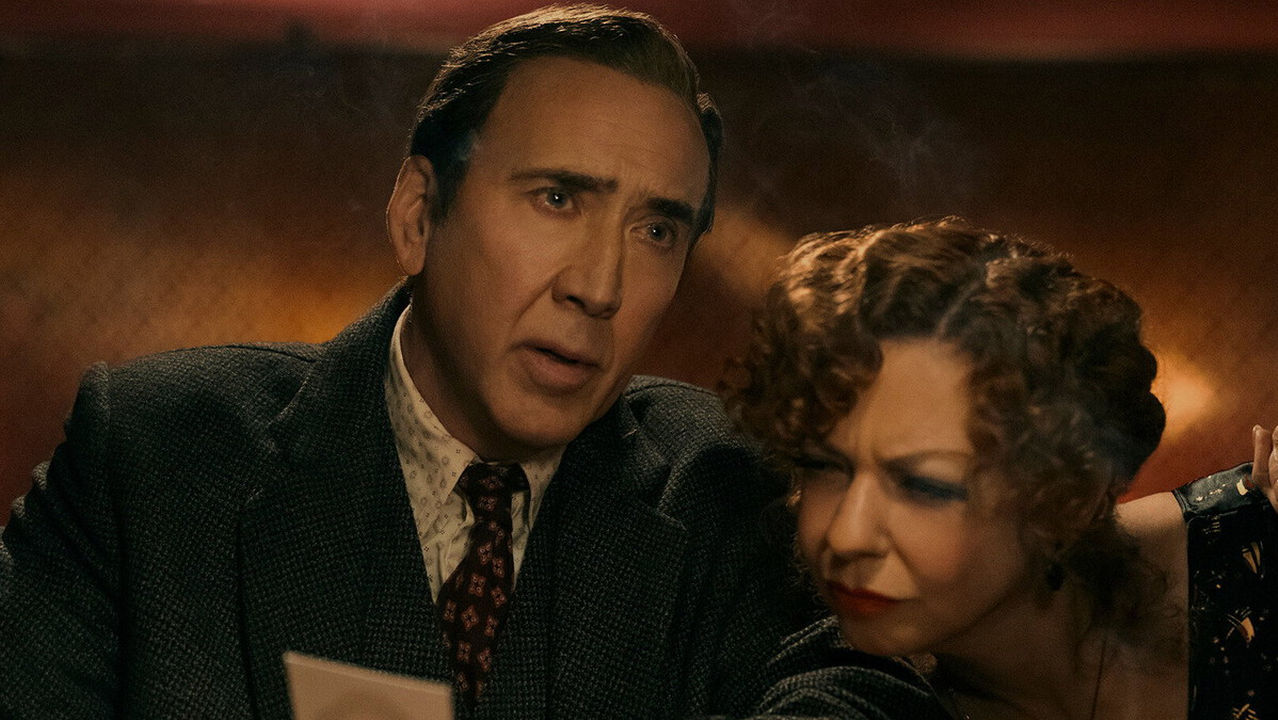
MOVIE NEWS – Nicolas Cage spent decades avoiding television because he saw himself as tied to cinema. During the pandemic, however, his son sat him down to watch Breaking Bad, and one quiet Bryan Cranston scene was enough to make Cage realize that serial storytelling can give an actor something a feature film often cannot: time.
Over the past 15 years, as streaming platforms have risen, countless film actors have moved into television. What was once seen by many as a sign of professional decline has become a smart creative decision: series now offer greater freedom, more complex characters and contracts that can rival Hollywood blockbusters. Nicolas Cage, however, resisted that shift for a long time. For four decades, he held to the idea that television was not his territory.
The change did not come from a studio executive, an agent or a major contract, but from his son. During the Covid period, he sat Cage down to watch Breaking Bad, a series still widely regarded as one of television’s highest achievements and one of the top-rated shows among IMDb users. Cage then understood why the modern series format could have such a strong impact on both actors and audiences. The decisive moment for him was not an explosion, a twist or an action scene, but Bryan Cranston’s quiet, sustained performance.
Cage explained how it changed his view: “I was adamant about not doing television. (…) But my son sat me down during Covid and showed me Breaking Bad. I started to see that the actors on that show had the luxury of time to tell their story. I saw Bryan Cranston staring at a suitcase for what seemed like minutes. I couldn’t take my eyes off him, and all he did was stare at a suitcase; it occurred to me that you can’t do that in a movie: you don’t have the time. I thought that, maybe with an eight-hour story, I could plant the seeds of a character that could blossom into something I don’t have that luxury for in a feature film. That was the main attraction.”
That realization did not mean Cage immediately accepted any television role. He waited for the right project, one that made sense for what he wanted to try. That project became Spider-Noir, the new Sony, Marvel and Prime Video series in which Cage leads a noir-inspired comic-book world. According to the actor, the project manifested exactly the vision he had in his imagination, and that made it the right moment for him to finally move into television.
“I Was Worried I Was Going to Get Fired”
Alongside the excitement, Cage carried serious uncertainty during production. He said he was constantly worried that he would be fired because he was channeling classic actors while clashing that style with Stan Lee’s Spider-Man world. His goal was to create a kind of Roy Lichtenstein-like pop art feel, but for a long time he did not know whether the mixture would work. He only felt reassured after seeing all eight episodes.
That anxiety led Cage to ask Charlie Sheen for advice, since Sheen had far more television experience. Cage recalled the story this way: “I was so nervous that I called my good friend Charlie Sheen, who’s done a lot of television, and asked him for advice. He said, ‘What’s making you nervous?’ And I said, ‘A producer told me not to mutter.’ He replied, ‘Excuse me… who told you not to mutter? Is his last name Sony?’ And I said, ‘No.’ And he said, ‘Well, tell him to fuck off!’ So I had a good laugh, went in, and did the reading.”
Spider-Noir has been received positively, so Cage’s television debut has worked out far better than the actor feared. The experience may open the door to more series work in the future, although Cage still has several notable film projects ahead. His upcoming slate includes a sequel to Longlegs, the horror thriller in which he delivered a deeply unsettling performance, as well as a new John Woo film, Gambino, focused on one of the mafia bosses. Cage has not left cinema behind, but after Breaking Bad, television no longer appears to be a closed door for him.
Source: 3DJuegos














Leave a Reply