
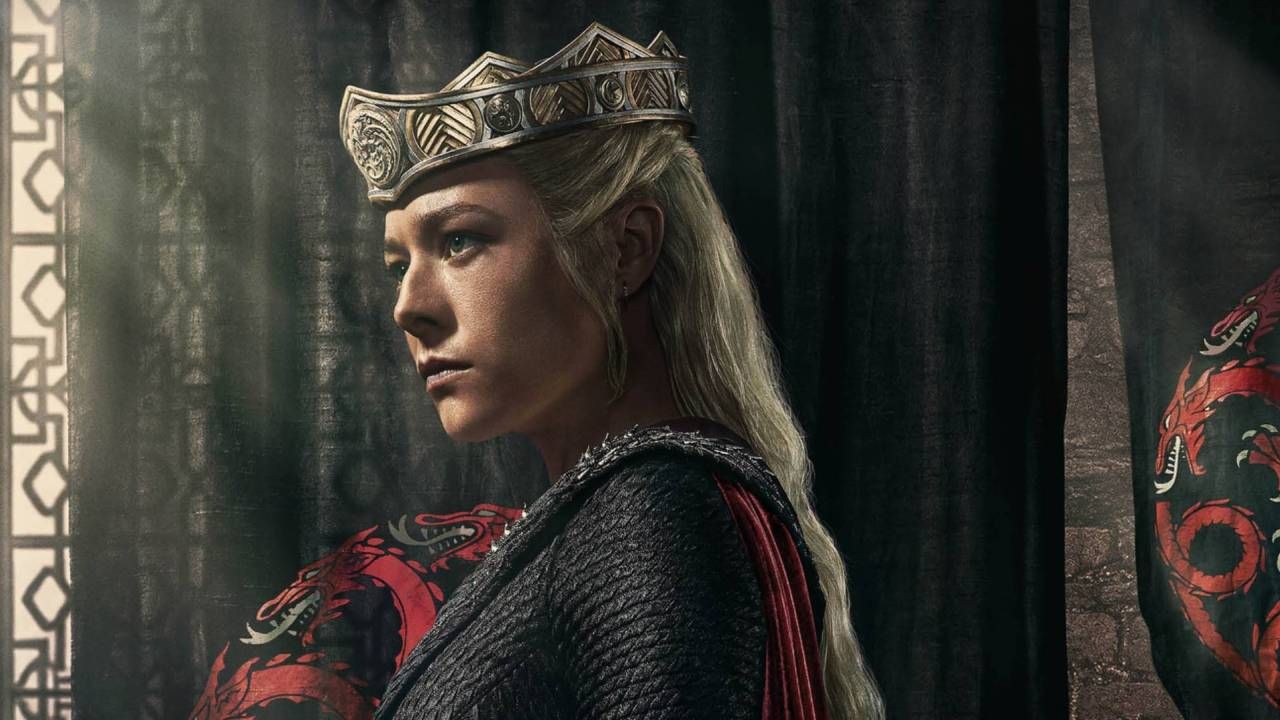
SERIES REVIEW – The first four episodes of House of the Dragon Season 3 return to Westeros with stronger pacing, higher stakes, and a war that finally feels real, yet the series still cannot fully escape its habit of staring too long at its own candlelit council rooms. The dragons, betrayals, naval warfare, and poisoned family politics are all here, Emma D’Arcy continues to carry a major part of the show, and the production remains technically superb. The question is whether there is enough story behind the spectacle to justify four full seasons of blood, fire, and very expensive hesitation.
House of the Dragon should have everything this world needs to work: palace intrigue, relatives betraying relatives, political cowardice, old family wounds, massive battles, and, of course, dragons, because in Westeros the simplest argument is still arriving with a flying weapon of mass destruction. And yet there has always been a strange fatigue around this show. It is not bad, not embarrassing, not the kind of sequel that makes you reach for the remote during the opening credits, but after the first two seasons, returning to this family slaughterhouse did not exactly feel irresistible. Thankfully, the first four episodes of Season 3 work much better than most of Season 2, but the show’s greatest enemy still is not Aegon, Aemond, or Daemon. It is its own carefully delayed storytelling.

Now the War Is More Than People Threatening Each Other Over a Map
The strongest push in Season 3 is that the war is finally shown, not merely discussed. The huge naval battle in the premiere delivers exactly the kind of energy the series spent two seasons promising: ships crash into each other, chaos finally becomes more than political, and the conflict suddenly has weight, body, and sound. These are the moments when you understand why this production costs what it costs, and why HBO can still deliver fantasy spectacle that makes many theatrical releases look as if they are nervously adjusting their wigs in the corner.
The problem is that one brutal battle cannot carry a whole season. It can carry one episode, maybe two, but then the story has to return to corridors, councils, wounded glances, and conversations in which everyone seems to be trying to win, sulk, and secure a future historical footnote at the same time. Season 3 improves a lot in this regard, but it still cannot entirely shake the feeling that it sometimes does not move forward so much as pace in place with noble posture.

Without Emma D’Arcy, This Throne Room Would Feel Much Emptier
Among the cast, Emma D’Arcy remains the performer who most often gives the series real weight. Their Rhaenyra Targaryen is not powerful because she gets a grand speech in every scene, but because D’Arcy can say so much with a clenched jaw, a held-back tear, or a cold look: the price of being a mother, a ruler, a survivor, and a historical necessity all at once. Whenever the camera stays with them, the series instantly feels more serious, more dangerous, and more human.
Matt Smith as Daemon still brings that unpredictable, dangerous elegance that keeps the character from ever becoming entirely trustworthy, while Ewan Mitchell’s Aemond continues to look as if every conversation begins with him privately deciding who should be burned later. The ensemble as a whole, however, remains uneven. There are strong supporting players and well-judged moments, but there are also scenes where the acting simply does not match the supposed historical weight of the material. In a series this dependent on dialogue, that is not a small issue. When the dragons are not on screen, the looks, pauses, and half-sentences have to do the work instead.

One Book, Four Seasons, and a Lot of Filled Corridors
The show’s basic problem remains that it has to turn a historical chronicle into several seasons of prestige drama. Fire & Blood is not a novel in the same sense as the books of A Song of Ice and Fire; it is a deliberately drier Targaryen chronicle built around uncertain narrators. As adaptation material, that is both a gift and a trap. It gives the writers room to fill gaps, deepen characters, and sharpen political motives, but it also makes it very easy to overextend what worked in print as historical summary.
That is why the first four episodes of Season 3 feel both encouraging and suspicious. Encouraging, because the show moves better than it did in Season 2, and the conflict finally feels like open war rather than beautifully costumed threat. Suspicious, because once the big events end and we return to throne rooms, taverns, and meeting chambers, that uneasy sense of narrative stretching comes back. A slow show can be brilliant if every step takes us closer to something that matters. House of the Dragon is sometimes slow like a nobleman who has already left the room, then turns back three times for his cloak.
A Stronger Start, but the Old Problems Did Not Burn Away
The best news is that these four episodes are genuinely stronger than much of the second season. The conflict moves with more force, the visuals breathe more freely, the battle scenes finally exist as more than a promise, and there are several moments that make returning to Westeros worthwhile. Still, the season is not seamless. The rhythm shifts oddly at times, some episodes work better than others, and the tonal turn in the third episode is genuinely disorienting. It is not a disaster, but it is not elegant either.
House of the Dragon Season 3 pulls us back toward the fire, but it does not fully prove that the series is in complete control of its own story. The spectacle is gorgeous, the war has finally started, Emma D’Arcy is excellent, and the show can still summon that cold, cruel Westerosi magic when everything clicks. But the suspicion remains that this story may not need four seasons of blood, fire, and council meetings so much as a sharper, harsher cut. The dragons can still breathe fire. Now the show has to prove it is not just making smoke.
-Gergely Herpai “BadSector”-
House of the Dragon Season 3
Direction - 8.2
Actors - 8.4
Story - 7.5
Visuals/Music/Sounds/ - 9.1
Ambience - 8
8.2
EXCELLENT
The first four episodes of House of the Dragon Season 3 deliver a much stronger start than Season 2 made easy to expect. The war is finally more than a promise, the naval battle is spectacular, Emma D’Arcy remains outstanding, and the production value still carries HBO’s fantasy prestige with confidence. The problem is that the show still stretches its own material at times, and once the grand battles end, the old feeling returns that the throne rooms do not always contain enough movement to keep this fire burning for four full seasons.






![MobLand Season 2 Returns with Blood, Chaos and a New Trailer [VIDEO]](https://thegeek.games/wp-content/uploads/2026/08/SKYSHOWTIME_MobLand_S2_1-302x180.jpg)





Leave a Reply