
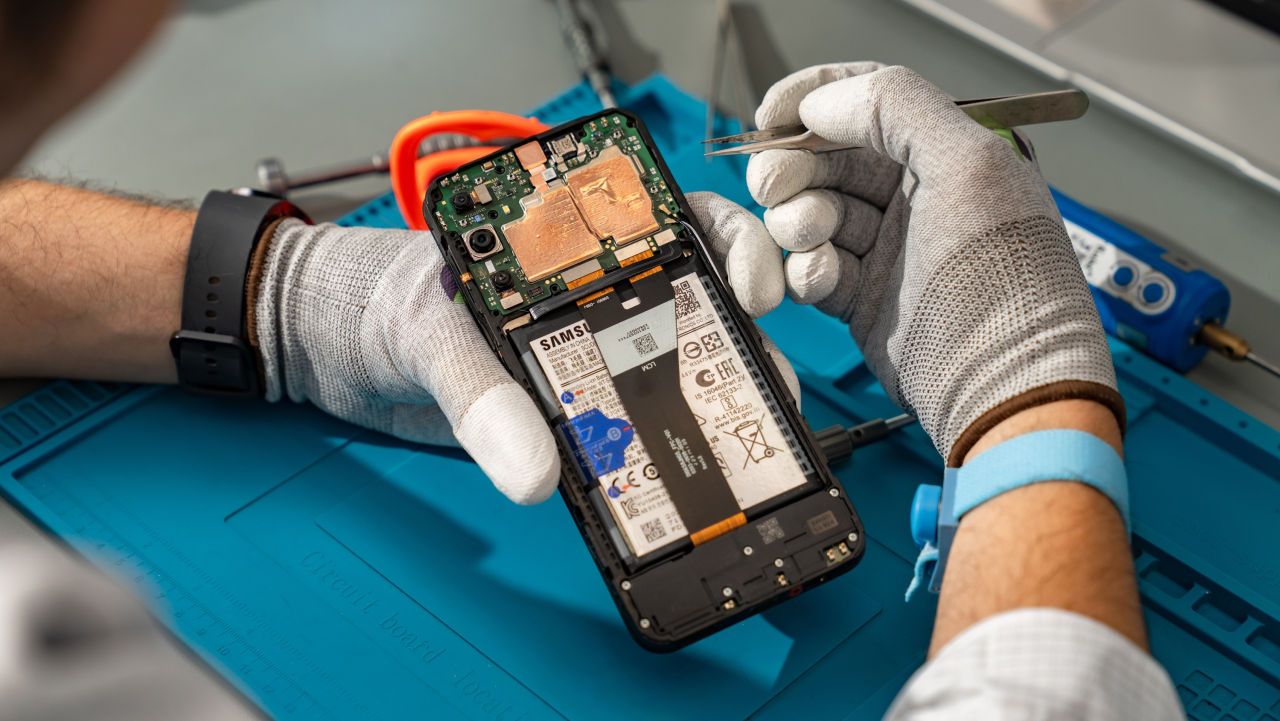
TECH NEWS – New rules taking effect on July 31 will make phones easier to repair, while more easily replaceable batteries will become mandatory from 2027, although an exemption clause could allow many flagship devices to avoid the requirement. According to Rejoy.hu, the regulations promoting longer lifespans and improved repairability, combined with increasingly lengthy software support, will make refurbished phones an even more attractive, sustainable, and cost-effective alternative to new premium devices.
The European Union’s right-to-repair rules could also bring noticeable changes to Hungary’s mobile phone market when they become applicable in the country on July 31, 2026. The government announced the introduction of the measures during a briefing on July 9, and a public consultation has begun on the detailed regulations.
What Will the July 31 Rule Mean in Practice?
Under the directive commonly known as the “right to repair,” manufacturers and retailers will be required to ensure that certain products, including smartphones, remain repairable for a defined period after the warranty expires, at a reasonable price and within a reasonable timeframe. Manufacturers will also have to publish indicative prices for common repairs online and may not use contractual, hardware, or software measures that obstruct repairs without a legitimate and objective justification, such as protecting intellectual property. Independent repair shops therefore cannot be unreasonably prevented from using original, compatible, or even 3D-printed components.
Another important change is that when a consumer chooses a repair instead of a replacement under the statutory warranty, the warranty will be extended once by an additional 12 months. When a manufacturer has no official representative within the European Union, responsibility will pass to the importer and ultimately to the retailer, preventing brands sold through direct imports from avoiding their obligations.
“The new regulation is an important step towards a circular economy, which we naturally welcome. At the same time, rules intended to extend product lifespans and simplify repairs, combined with increasingly long software-support periods, point in the same direction that the refurbished market already represents today. This will make refurbished phones an even more attractive, sustainable, and cost-effective alternative to new flagship devices, since they offer the same long and value-retaining lifecycle after inspection, with a warranty and, when requested, a professionally replaced battery at 100% capacity,” said Bence Blaumann, managing director of Rejoy.hu.
Will the iPhone Battery Become Replaceable?
Rejoy expects manufacturers to move gradually away from planned obsolescence and towards more modular designs that are easier to dismantle, as another major requirement will take effect in February 2027. From that point, portable devices will have to be designed so that end users can replace their batteries easily with ordinary tools.
The rule nevertheless contains a significant exemption. Devices that retain more than 83% of their battery capacity after 500 charging cycles and more than 80% after 1,000 cycles, while also offering at least IP67-rated water and dust resistance, will not have to provide batteries that can be replaced at home. For those products, replacement by a professional repair service will be sufficient. Since current flagship iPhones and most premium Android phones already meet these conditions, experts expect that their batteries will still not be user-replaceable after 2027. In practice, the requirement is therefore expected to affect entry-level devices most directly.
There Will Be Exemptions
The list of exemptions is also expanding. On July 14, 2026, the European Commission exempted another six product categories from end-user battery replacement requirements, including wearable devices. Smartphones remain covered by the previously mentioned exemption linked to water and dust resistance, although manufacturers will probably still have to ensure that batteries in rugged devices can be replaced by independent repair services. The emphasis is therefore on long service life and professional repair rather than on batteries that can simply be snapped out of the device.
In approximately half of the phones sent to Rejoy for repairs, replacing the battery is the primary intervention required. It is by far the most common operation carried out during refurbishment, with a typical battery replacement costing an average of nearly HUF 15,000.
Even a Six- or Seven-Year-Old Phone Is Not Necessarily Old
Another encouraging development is Apple’s announcement that the forthcoming iOS 27 update will remain available even for iPhones that are six or seven years old. Thanks to software optimisations, the new version is also expected to run faster than the current iOS 26 release. Android devices are likewise arriving with increasingly long support periods that can extend to as much as seven years. Better-than-expected software support could allow models older than five years to remain near the top of Rejoy’s sales rankings for longer than before.
Together, these regulatory and market changes could open a new era for Hungary’s secondary mobile market and improve the long-term value of refurbished devices. As the prices of new flagship phones continue to rise, refurbished mobiles are becoming an increasingly compelling alternative not only for environmentally conscious buyers but also for consumers making decisions based on careful financial calculations.


![Dexter Returns in the First Look at Dexter: Resurrection Season 2 [VIDEO]](https://thegeek.games/wp-content/uploads/2026/07/theGeek-Dexter-Season-2-302x180.jpg)








![Dexter Returns in the First Look at Dexter: Resurrection Season 2 [VIDEO]](https://thegeek.games/wp-content/uploads/2026/07/theGeek-Dexter-Season-2-300x365.jpg)

Leave a Reply