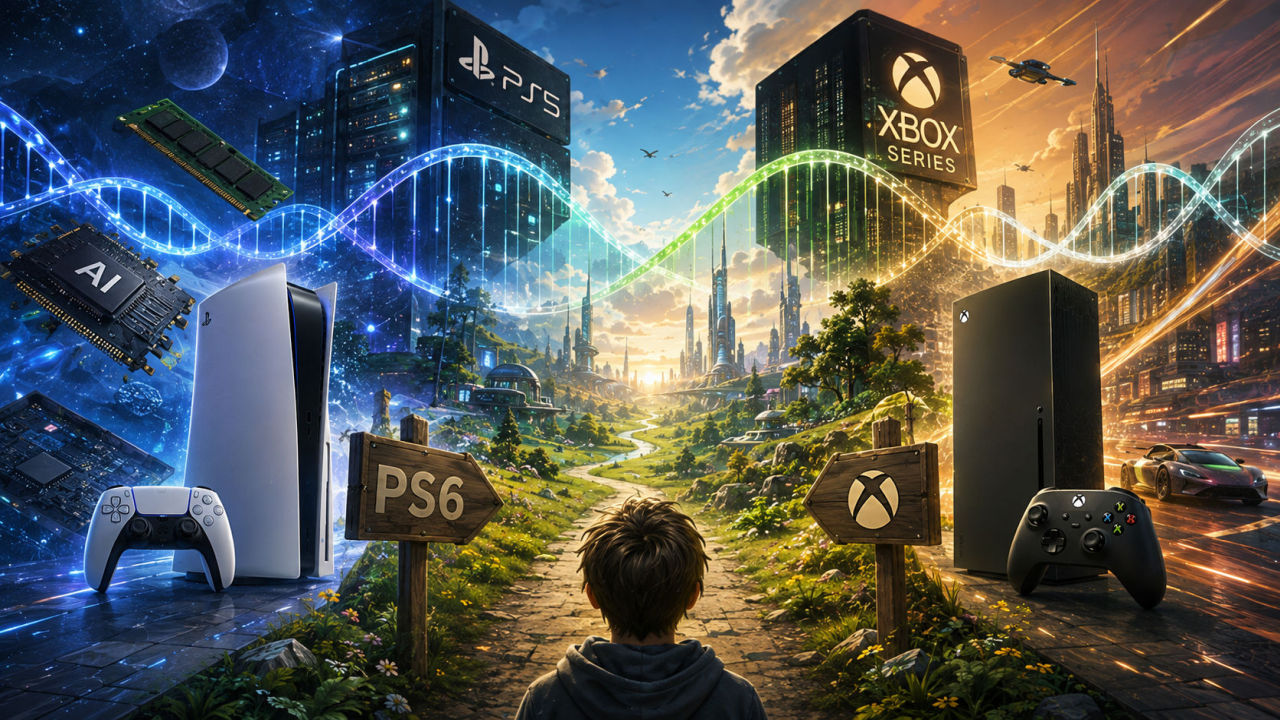
OPINION – Sony and Microsoft are already deep into work on their next console generation, while many players are still waiting for the current machines to demonstrate why replacing the PS4 and Xbox One was so urgent in the first place. The PS6 and the next Xbox will almost certainly be faster, smarter and technically more impressive, but rising memory prices, escalating development costs and increasingly modest visual leaps could leave us paying far more for far less meaningful progress. The real question is therefore not whether Sony and Microsoft can build new consoles, but whether they can produce games that give us a genuine reason to need them.
Only a little more than five years have passed since the PlayStation 5 and Xbox Series X|S arrived, yet console manufacturers are already discussing their successors as though the current machines were preparing to apply for historic vehicle status. The situation feels particularly strange because the early years of this generation were consumed by the pandemic, chip shortages, limited stock and a painfully long transition during which many major releases still appeared on PS4 and Xbox One. Anyone who bought a new console at the end of 2020 spent a considerable amount of time playing familiar kinds of games with shorter loading screens, sharper shadows and steadier performance. Those improvements were welcome, but they were hardly the revolutionary leap that once persuaded people to queue outside electronics shops before sunrise.
The current generation has only recently reached the point where a vast and stable audience is finally available to developers. According to Sony’s official figures, more than 95 million PlayStation 5 consoles had shipped by June 30, 2026, giving studios a user base large enough to justify games designed exclusively for modern hardware. Yet just as that audience becomes truly attractive, discussion of the PS6 is growing louder and Microsoft is openly developing its new Xbox under the Project Helix name. It feels rather like finally moving into a new home after years of delays, only for the owner to arrive the following morning with an estimate for the next renovation.
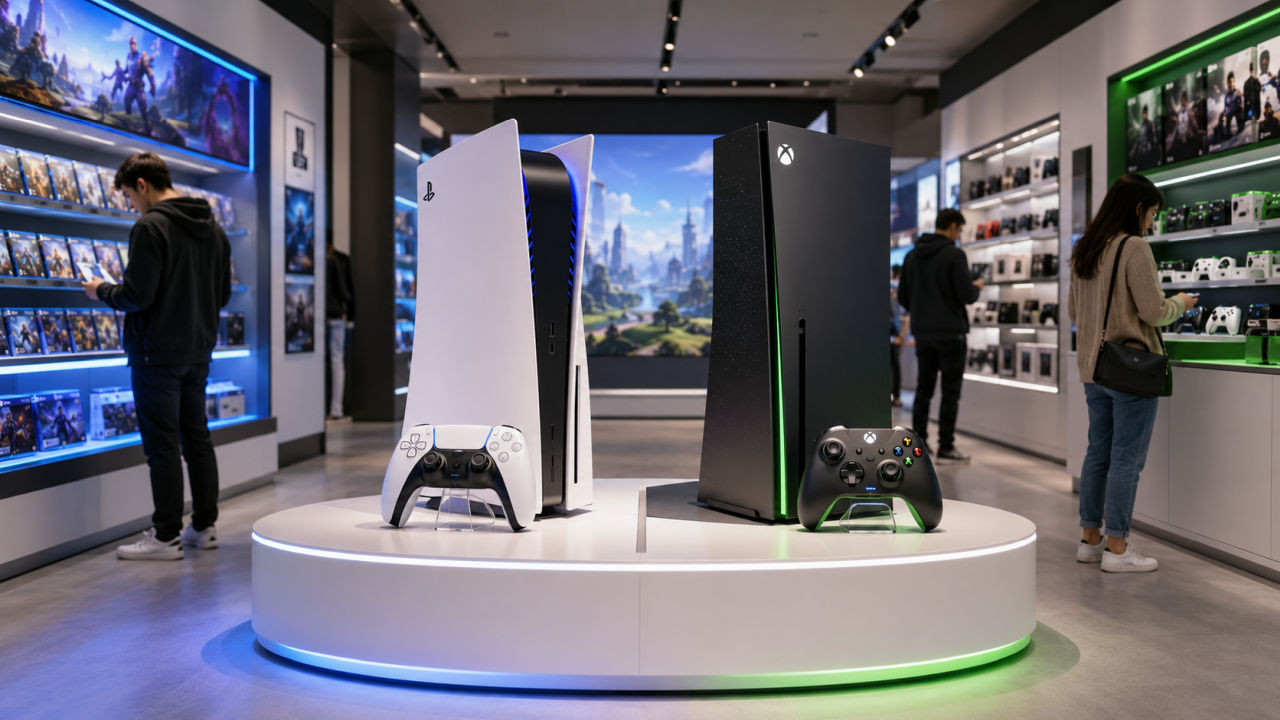
We Have Not Fully Used This Generation Yet
The PS5 and Xbox Series X promised an enormous technological jump over their predecessors. Fast SSD storage, hardware ray tracing, stronger processors, 4K resolution, frame rates of up to 120 FPS, advanced audio and previously impossible worlds were all prominently displayed in the shop window. Yet in most major games, players are still asked to choose between attractive graphics and sensible performance. We can enable impressive reflections at thirty frames per second or surrender a few sparkling puddles so that controlling the character does not feel like swinging a sword through syrup.
This does not mean that the current consoles are weak. It means that developer ambitions and player expectations grew faster than the hardware itself. Higher resolutions, more detailed characters, denser environments and advanced lighting immediately consumed the additional power offered by the new machines. The PS5 Pro, released in 2024, was essentially Sony’s attempt to combine quality and performance modes, yet compromises did not disappear even on that system. Its current US price is now $899.99, a figure high enough to make customers reasonably expect it to clean the living room between gaming sessions.
Sony is already investing in its next-generation platform, as the company acknowledged in its 2026 financial outlook. That is perfectly normal, since designing a new console requires years of preparation and nobody waits until the old machine is coughing its final breath before sketching a new motherboard. The uncomfortable part is the sense of timing. For many players, the current generation does not feel like an era approaching its conclusion; it feels like one that has only just completed its prolonged warm-up.
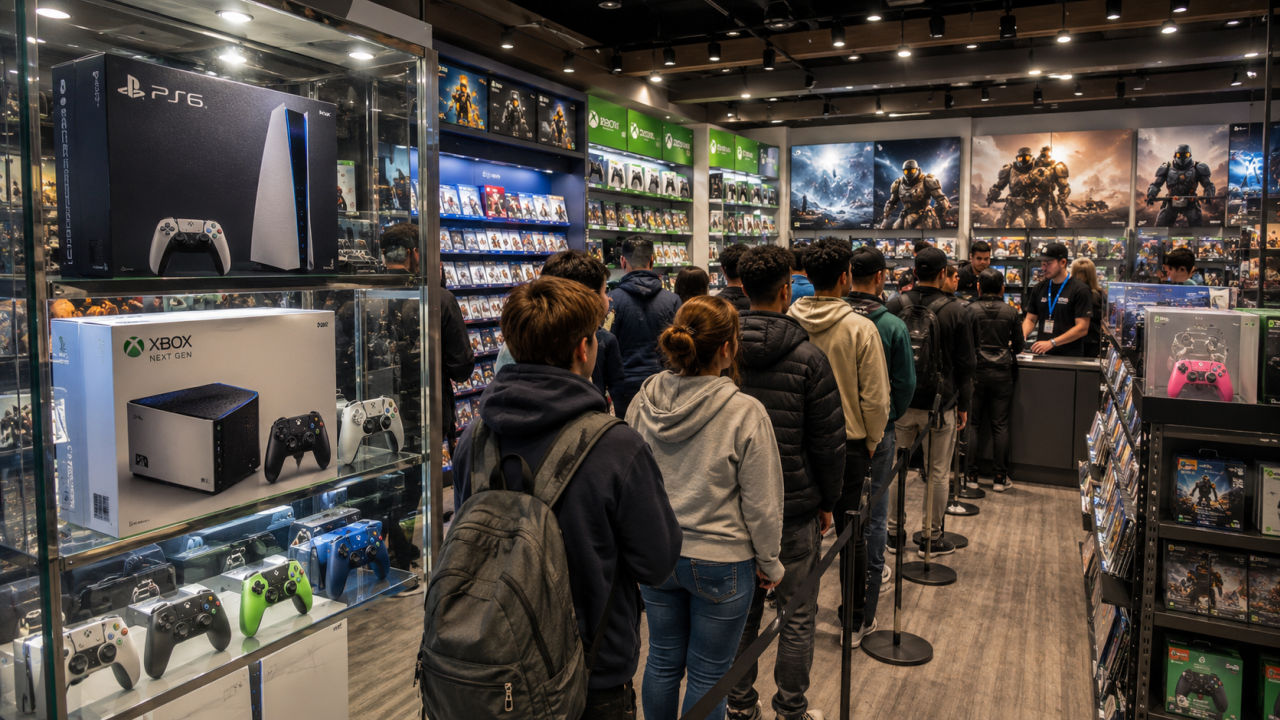
The Side Dish May Cost More Than the Main Course
The greatest problem facing the next generation may not be technology, but the number printed on the price tag. In April 2026, Sony raised the standard PS5 to $649.99 in the United States, the Digital Edition to $599.99 and the PS5 Pro to $899.99. Microsoft then increased prices by another $100 for 512 GB Xbox models and $150 for 1 TB systems from August, explaining that memory and storage costs had risen by more than two and a half times. When six-year-old machines become more expensive instead of cheaper, it is not difficult to imagine what manufacturers may charge for substantially more powerful successors.
The appetite of the AI industry is a major reason for the problem. High-performance memory for data centers generates better margins for chip manufacturers, so an increasing share of production capacity is moving toward the server market. Joost van Dreunen, a professor at New York University, told Reuters that console prices could rise by another 10 to 15 percent over the next year or two, while PC prices could increase by as much as 30 percent. This is no longer the traditional console cycle in which smaller, cheaper and more appealing models arrive during the second half of a generation. At this point, consumers may be fortunate if manufacturers do not begin pricing the same machine as a luxury item.
The next PlayStation and Xbox will therefore enter a market in which their creators must provide substantially more performance, additional memory, faster storage and acceptable power consumption while the cost of every important component continues moving upward. If Sony and Microsoft do not want to absorb major losses on each console sold, they must either limit the specification or pass those costs directly to customers. Neither option sounds particularly suitable for a joyful generational launch.
Emarketer analyst Jacob Bourne also told Reuters: “Instead of risking poor sales, we might see console makers delay releases.” That is an entirely plausible outcome. There is little commercial sense in launching an $800 or $1,000 machine when many customers already consider current console prices excessive. The most optimistic rumors may therefore be getting ahead of reality, and the next generation could arrive later than expected.
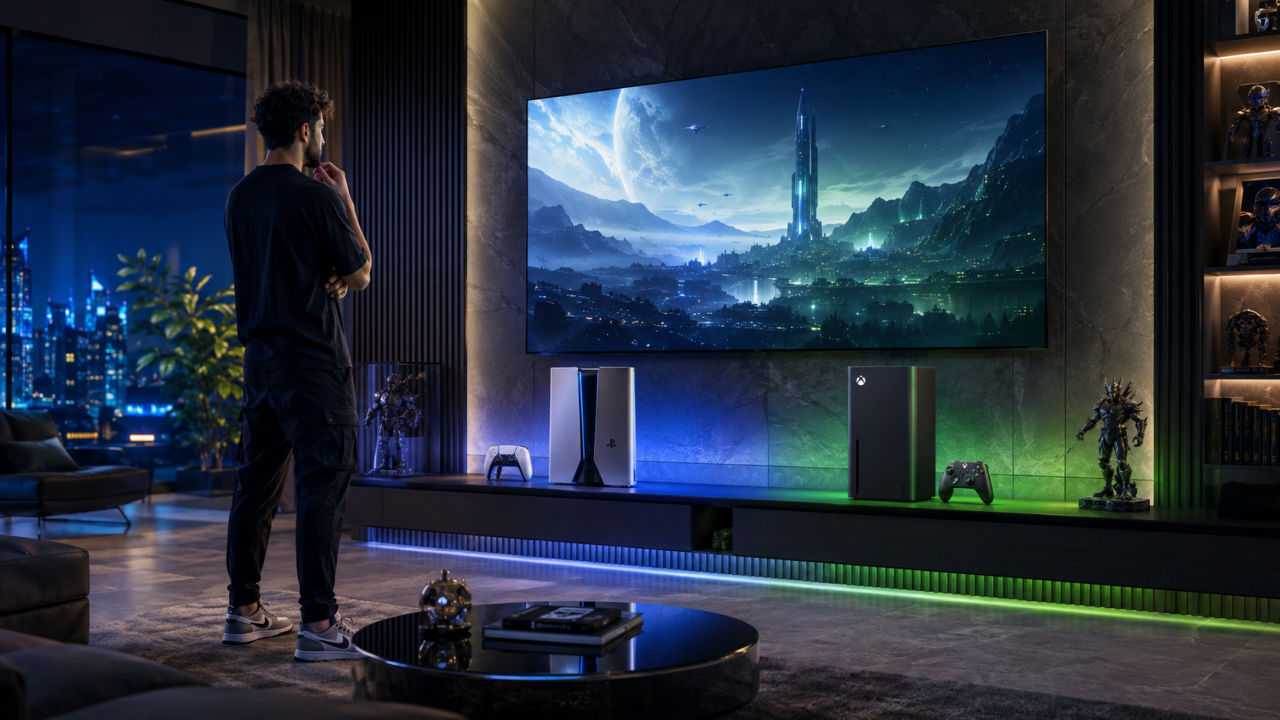
Raw Power Will Give Way to Smarter Tricks
Hardware manufacturers understand that they cannot continue placing more transistors, greater power consumption and increasingly expensive memory inside a box forever. The defining concept of the next generation is therefore unlikely to be 8K resolution or 240 frames per second, but machine learning. Sony and AMD’s Project Amethyst partnership is developing upscaling, ray-tracing and frame-generation technologies designed to create better results from less native computation. In practical terms, the console will no longer calculate every pixel through brute force; it will become increasingly skilled at predicting what should appear on the screen.
Mark Cerny, lead system architect of the PS5 and PS5 Pro, wrote on the PlayStation Blog that the new PSSR uses “a very different approach to not only the neural network but also the overall algorithm.” The upgraded system already helps PS5 Pro games maintain both image quality and frame rate, meaning that some of the technology intended to shape the future is already entering the current generation. That is encouraging because machine-learning-based upscaling can free a significant amount of performance. It becomes less convincing if manufacturers later advertise “4K at 120 FPS” while a substantial proportion of the pixels and frames are being reconstructed after the fact.
There is nothing inherently wrong with reconstructed images as long as the result is sharp, stable and responsive. Modern players do not care whether every pixel was carved individually by the graphics processor; they care whether the final image looks good and the game runs properly. The difficulty begins when technological progress produces little more than a more expensive console and a slightly sharper zipper on the protagonist’s jacket. That is not enough to justify a new generation.
The PS6 may therefore be defined less by its raw teraflop figure than by the quality of its upscaling, frame generation, ray tracing and processor-driven simulation at an acceptable power level. If Sony succeeds, developers may no longer need to make such severe choices between resolution and frame rate. If it fails, players may receive another graphics menu containing five different modes and spend twenty minutes determining which one makes character hair flicker least aggressively.
Project Helix: A New Xbox or a PC in the Living Room?
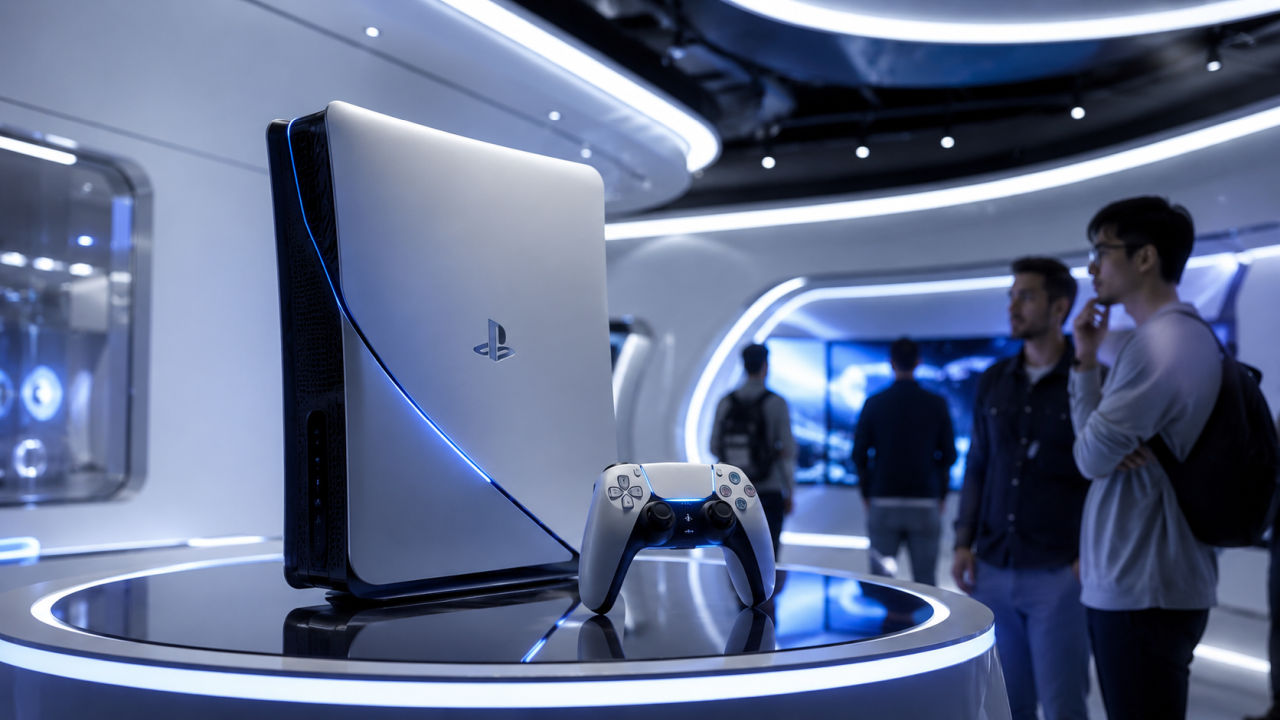
Microsoft’s next machine may be even more interesting because the company does not appear to be building a simple, more powerful Xbox Series X. According to Microsoft’s official Project Helix presentation, the system is designed to run both Xbox console and PC games, uses a custom AMD system-on-chip and will be more closely connected to Windows. Jason Ronald, Xbox vice president of next-generation technology, promised “an order of magnitude leap” in ray-tracing performance and capability. That is exactly the kind of statement people expect to hear when a new console is being prepared.
Microsoft plans to begin shipping alpha hardware to developers in 2027. That suggests a retail launch around 2028 may be more realistic, although no official date has been announced. AMD CEO Lisa Su offered a slightly more optimistic comment during an earnings call, saying: “Development of Microsoft’s next-gen Xbox is progressing well to support a launch in 2027.” Her statement does not confirm that the console will appear in 2027; it only indicates that AMD may be ready to support such a launch if Microsoft chooses that schedule.
The greatest advantage of Project Helix could be its ability to combine console convenience with PC freedom. If it genuinely supports Xbox titles, Windows-based PC games and perhaps multiple digital storefronts, one machine could replace both a traditional console and a gaming PC intended for the living room. That would be tangible progress rather than a routine graphical upgrade. The risk is that hybrid products can lose the strengths of both sides: too much openness may compromise console simplicity, while too many restrictions would leave customers with little more than an unusually expensive Xbox.
Microsoft has already described its next machine as a premium, high-end experience, language that rarely suggests a pleasantly modest price. A powerful hybrid with extensive PC capabilities and large amounts of memory could cost considerably more than traditional consoles. Project Helix may prove technically remarkable while serving an audience small enough to afford an enthusiast gaming PC already. In that case, the next Xbox would not become the new mainstream console, but a luxury system for players who want a single device capable of doing almost everything.
A New Generation Needs New Game Experiences
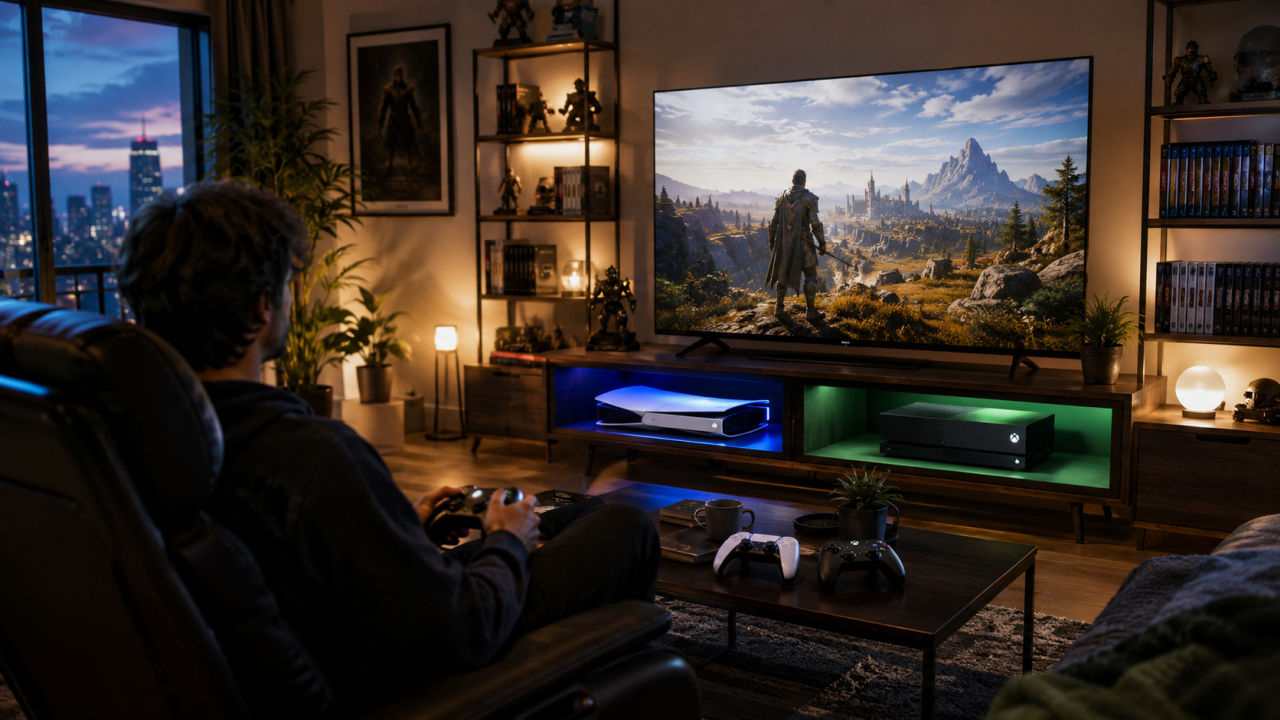
The value of the next consoles will ultimately be determined by games, not specification tables. People did not buy the PlayStation 2 because they could recite its graphics processor bandwidth from memory; they bought it because they wanted to play Grand Theft Auto III, Metal Gear Solid 2 and God of War. The Xbox 360 did not define an era through its three-core processor alone, but through Gears of War, Mass Effect, BioShock and the spread of online console gaming. A new generation matters when it enables new possibilities, not when it sells the same open world with additional reflective puddles.
The PS6 and the next Xbox therefore need to offer advantages that cannot be reduced to a resolution number or an impressive technology demonstration. Far more advanced physics, genuinely dynamic worlds, smarter characters, larger crowds, detailed destruction, faster animation systems and stable 60 FPS performance would represent meaningful change. Improvements to CPU-driven simulation may prove more important than the number of light rays reflected from a shop window. When new hardware merely produces a prettier version of the same game design, players are entitled to ask why another Pro model would not have been sufficient.
Development costs are already so high that publishers are becoming increasingly reluctant to take risks. More powerful consoles could begin another visual arms race requiring larger teams, longer schedules and even more expensive productions. The result may be fewer sequels taking five or six years to create while their prices continue to rise. Technical possibility is not automatically beneficial when developers are expected to produce content so expensive that the entire industry becomes safer, slower and less inventive.
Do we need a PS6 and a new Xbox? In the long term, of course we do, because technology will not stop and current hardware cannot satisfy every demand forever. In 2026, however, these machines do not feel ready for urgent replacement. The PS5 and Xbox Series X could comfortably support several more years of excellent games, especially if developers finally stop carrying the previous generation with them. A console does not become obsolete merely because its successor appears; it becomes obsolete when it can no longer support meaningful new ideas.
The next generation should arrive when it has a convincing answer to why anyone needs it. It should not appear simply because seven years have passed, the marketing department wants a new number on the box or executives need something capable of moving the share price. If the PS6 and Project Helix are faster, quieter, more practical and capable of enabling genuinely new kinds of games, they will be welcome. If they merely offer a more expensive choice between “Quality Ultra Plus” and “Performance Enhanced Pro,” we would be better off using the machines already in our homes for a few more years and demanding better games for them.
-Gergely Herpai „BadSector”-