
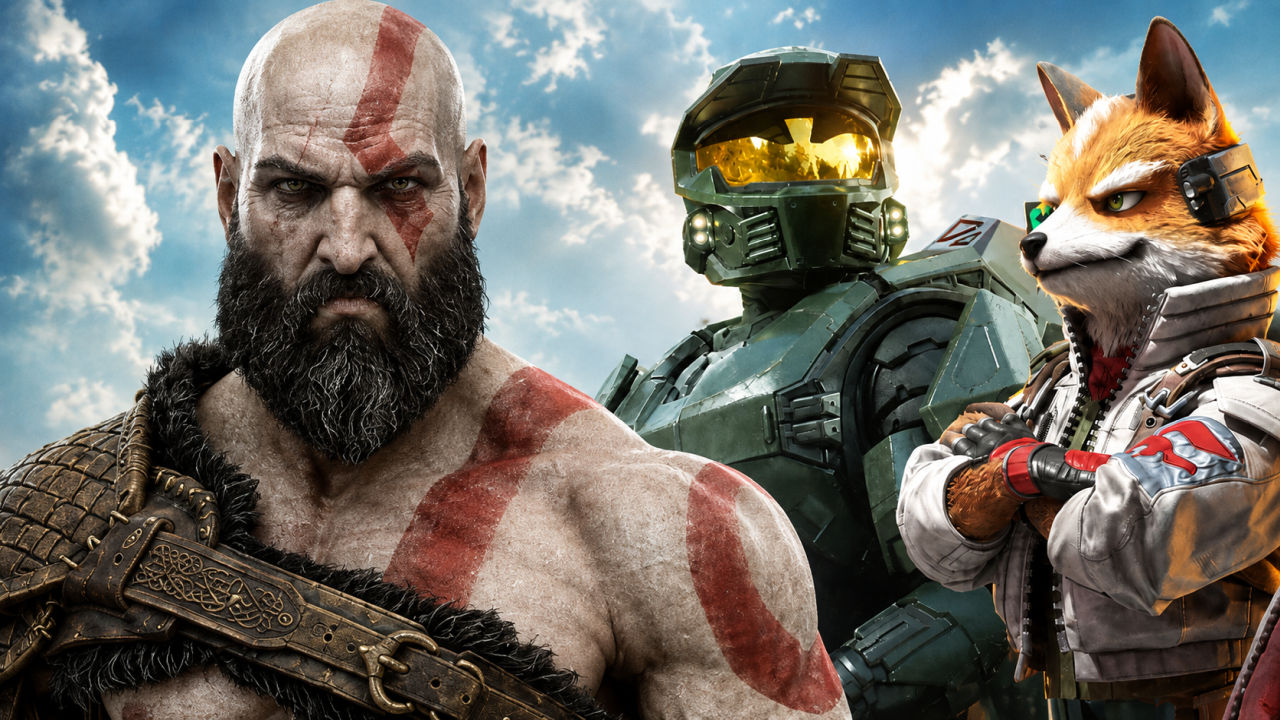
OPINION – There was a time when the identity of a console was virtually defined by the exclusive games running on it: Nintendo without Mario, Xbox without Halo, and PlayStation without Uncharted or God of War were almost impossible to imagine. Today, however, Master Chief is shooting things on PlayStation, Sony’s games have migrated to PC, and live-service titles increasingly depend on reaching as many players as possible across as many platforms as possible. That means greater freedom for players and more revenue for publishers, but if every game eventually appears everywhere, an uncomfortable question remains: why should anyone buy this particular console?
For decades, one of the most entertaining and irritating parts of the console wars was the simple fact that no single machine gave us everything. If you wanted Super Mario, you bought Nintendo hardware; Halo meant Xbox, while Gran Turismo, God of War or Uncharted gave people a reason to choose PlayStation. From a consumer perspective, that was obviously inconvenient, but the business logic was perfectly clear: an exclusive game was not merely a product, but a reason to spend hundreds of dollars entering an entire ecosystem.
The situation has become considerably more complicated. A modern AAA game can easily consume hundreds of millions of dollars, publishers increasingly want revenue from PC, subscriptions and competing platforms, and players understandably do not want three separate boxes beneath the television simply to access every major release. On paper, a multiplatform world therefore appears to benefit everyone. The question is whether a platform still gives customers any compelling reason to enter its garden once everything valuable is eventually available outside the fence as well.
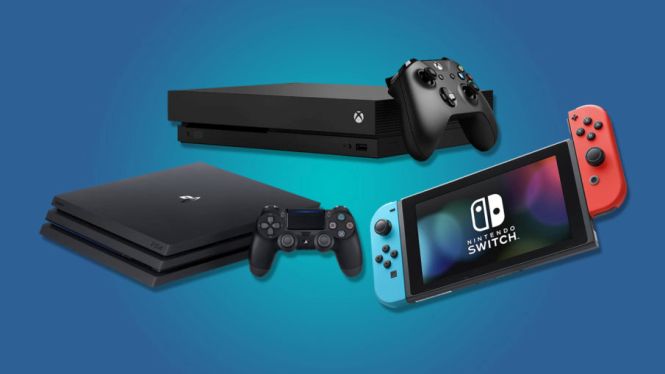
Exclusive Games Used to Be a Console’s Identity Card
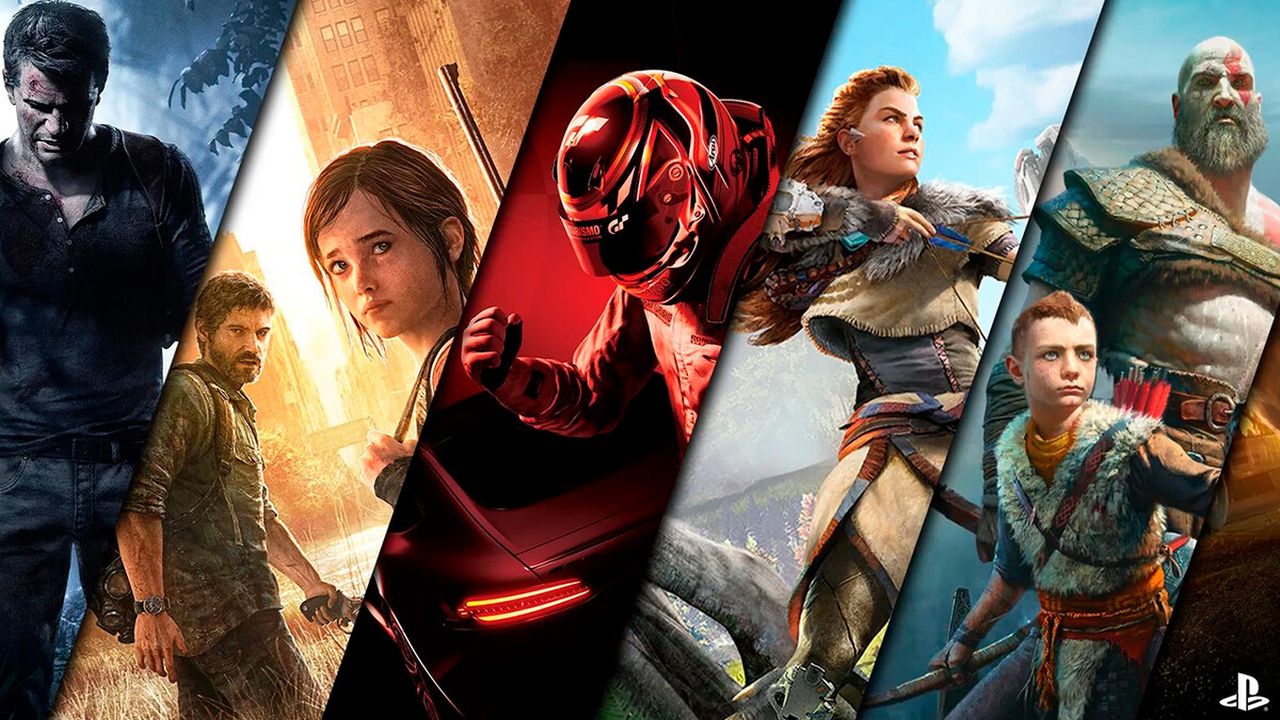
The strongest exclusives never merely generated software sales; they gave platforms character. Halo mattered on the original Xbox not simply because several million copies were sold, but because one game could explain what kind of audience Microsoft wanted and what ambitions the machine represented. PlayStation achieved something similar through Gran Turismo, Metal Gear Solid, later Uncharted and The Last of Us, while Nintendo has built almost its entire history around the same principle. A great exclusive communicated one extremely powerful message: you cannot get this anywhere else.
That strategy was created when development costs were a fraction of what they are today. Former PlayStation executive Shawn Layden therefore put the modern problem rather neatly in a GamesBeat interview: “When your costs for a game exceed $200 million, exclusivity is your Achilles’ heel.” When a production requires that kind of investment, deliberately excluding tens of millions of potential PC or rival-console customers becomes increasingly difficult to justify. Mathematics can be considerably more ruthless than any argument on a fan forum.
The value of exclusivity, however, cannot be measured solely through the revenue of the individual game. For a platform holder, a strong first-party title can sell hardware, subscriptions, controllers, digital software and years of platform fees from subsequent purchases. The game itself may therefore generate less money while creating enormous value for the wider ecosystem. Someone who buys a PlayStation because of one God of War is unlikely to purchase nothing but God of War on that machine for the next five years.
Calling exclusivity inherently “anti-consumer” is therefore as simplistic as claiming that every exclusive is good. Players would obviously enjoy the convenience of running anything on any machine, yet exclusive content and meaningful platform differences also force hardware companies to compete. If every console offers precisely the same software library, purchasing decisions eventually become little more than a question of price, services and where our friends happen to play. That may create a more convenient world, but potentially a much grayer one as well.

Xbox Opened the Door, Then Realized Something Had to Stay Inside
Microsoft went further than anyone else in dismantling traditional exclusivity. Speaking on the official Xbox podcast in 2024, Phil Spencer said: “Over the next five or ten years, exclusive games, games that are exclusive to one piece of hardware, are going to be a smaller and smaller part of the game industry.” At the time, Microsoft was discussing just four existing Xbox games moving to rival consoles and emphasized that nobody should interpret the decision as evidence that everything would eventually appear everywhere. As history demonstrated rather quickly, those four games were only the beginning.
Xbox releases gradually became increasingly common on PlayStation, until even the brand’s most sacred franchise crossed the line. Halo: Campaign Evolved launched on July 28, 2026 for Xbox Series X|S, PC, cloud and PlayStation 5. Only a few years ago, Master Chief appearing on PlayStation would have sounded roughly as plausible as Mario moving into the next Xbox. Today we mostly shrug and check whether cross-save is supported.
Commercially, the logic was understandable. Porting a completed game to PlayStation creates another audience and another stream of revenue after much of the original development cost has already been spent. Microsoft earns money when its software sells on competing hardware, so the short-term temptation is obvious. Meanwhile, however, Xbox hardware weakened and the brand’s identity became sufficiently blurred that the company’s new leadership began explicitly talking in 2026 about returning to its foundations.
When Asha Sharma was appointed in February, she promised that Microsoft would “recommit to our core Xbox fans and players.” By June, that promise had become concrete strategy: Microsoft announced that Gears of War: E-Day and Clockwork Revolution would remain Xbox console exclusives, while the company stated that players could expect signature exclusives every year. In only a few years, Xbox had moved from predicting the gradual decline of hardware exclusivity to treating exclusive software as strategically important again.
This does not necessarily represent a complete reversal. It looks more like a sensible attempt to separate different types of games. Minecraft, Call of Duty, service-driven releases and certain established titles benefit enormously from the widest possible audience, while several major prestige projects can remain behind to ensure that an Xbox console does not become merely an expensive Game Pass player. There is room to feed the goat without allowing it to eat the entire cabbage patch.
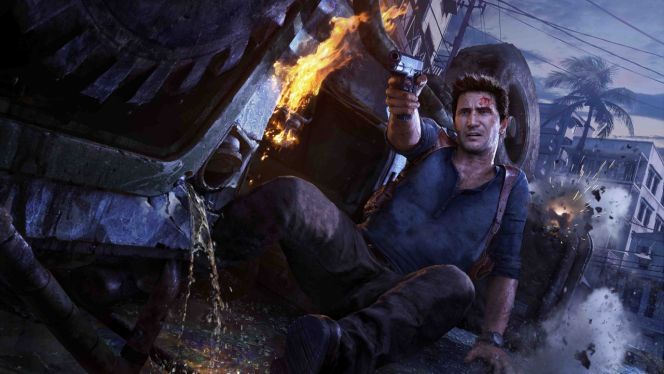
Sony Lets Its Games Out, but Does Not Want to Throw Away the House Key
Sony began testing the boundaries of exclusivity much more cautiously. Former PlayStation titles including God of War, Horizon, Spider-Man, Ghost of Tsushima and The Last of Us eventually reached PC, while the company deliberately pursued broader audiences for live-service games. Sony’s official business presentation explicitly identifies day-and-date PlayStation and PC launches as part of its live-service strategy. The reason is straightforward: for a multiplayer game, a large population is not merely convenient, it is oxygen.
Narrative single-player games are a different matter. Sony’s 2025 corporate report describes PlayStation’s IP as remaining “best in class for single-player games” while the company simultaneously expands into live services and grows franchises beyond the console. That sentence captures Sony’s dilemma remarkably well: the company wants revenue from outside PlayStation, but it does not want to destroy the perception that major PlayStation games belong primarily to PlayStation.
Hermen Hulst therefore previously described the company’s expansion onto other platforms as a “very measured, very deliberate approach.” The point of his comments was not that games should never appear on PC, but that timing itself forms part of PlayStation’s business value. A PC version arriving well after the original launch can create fresh revenue without removing the initial period in which the title helps sell and define Sony’s console. It is not a permanent concrete wall anymore, but a door with a timer on the lock.
In May 2026, The Verge, citing Bloomberg, reported that Sony had tightened that approach internally even further, treating its major narrative single-player first-party titles as PlayStation exclusives while continuing to pursue broader distribution for online games. Sony’s official messaging continues to emphasize strengthening the PlayStation ecosystem, which its 2026 corporate strategy says now serves more than 125 million active users worldwide. With an audience that large, there is still little need to carry all of the family silver straight to Steam on launch day.
Sony’s model may consequently be the most interesting compromise. Multiplayer games can go where the players are, older single-player releases can generate a second wave of revenue on PC, while major new narrative productions preserve some of PlayStation’s distinct identity. It is less dramatic than declaring every screen a PlayStation, but commercially it currently appears considerably more balanced. The game is not locked away forever; Sony simply hosts the premiere in its own house first.
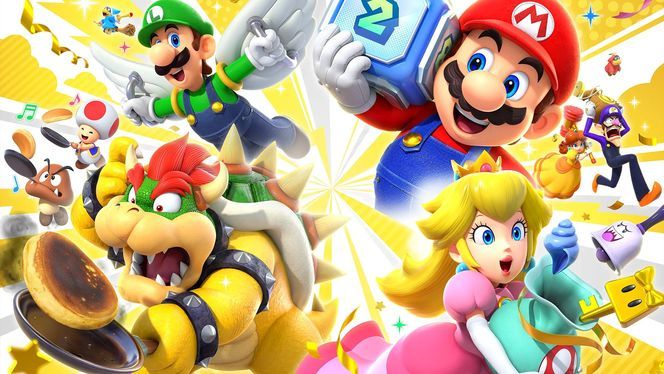
Nintendo Apparently Never Received the Multiplatform Memo
Nintendo remains almost comically consistent in this entire debate. While Microsoft and Sony calculate how many months should pass before software reaches another platform, Nintendo calmly continues telling customers that if they want a new Mario Kart, Zelda or another major first-party Nintendo game, they need Nintendo hardware. The official Switch 2 presentation even states explicitly: “Experience new, exclusive games only on Nintendo Switch 2.” It is difficult to communicate more clearly that a PlayStation 5 version of Mario Kart World is not currently on the agenda.
Nintendo can sustain this strategy because its hardware and software are unusually tightly connected. Mario Kart, Zelda, Animal Crossing, Pokémon and Super Smash Bros. are not merely products in a catalog; they are products that define the machine itself. Customers often do not buy a Switch and then decide to purchase Nintendo games. They buy a Switch because that is where Nintendo’s games exist. It is a small linguistic difference with enormous commercial consequences.
So far, it is difficult to argue that the model is obsolete. Nintendo’s August 2026 results showed operating profit for the April-June quarter rising 150.5 percent to 142.6 billion yen, while the company maintained full-year targets of 16.5 million Switch 2 systems and 60 million Switch 2 software units. Many factors contributed to those results, so it would be absurd to attribute every yen directly to exclusive software. The figures nevertheless provide plenty of evidence that a hardware business built around proprietary content is not automatically a museum exhibit in 2026.
Nintendo’s greatest advantage may be that it does not attempt to appeal to every audience simultaneously. It does not tell PC users that Switch 2 is basically a PC, nor does it reassure PlayStation owners that everything will eventually arrive on their hardware anyway. Nintendo says: here is the machine, here are the games, and if you want them, you know what to buy. It may sound old-fashioned, but it is surprisingly difficult to mock while the business continues working.
Exclusive Games Are Not Dying, Blind Exclusivity Is
The real question is therefore not whether exclusive games should continue to exist, but which games actually benefit from being confined to one ecosystem. Platform barriers can actively hurt a live-service title by fragmenting its community, reducing matchmaking populations and making long-term support more difficult. A major narrative first-party release, however, can use exclusivity or timed exclusivity to create precisely the distinctive value that turns a platform into something more than a logo. One rule cannot sensibly govern every genre and business model.
Publishers should probably stop treating multiplatform strategy as a religious question. Not every game needs to remain locked away, and not every game needs to launch everywhere on the same morning either. Older catalog titles, smaller projects and community-driven games can comfortably seek new audiences elsewhere, while several powerful first-party releases preserve the identity of the platform that funded them. Exclusivity is a tool, not a moral position.
From the player’s perspective, total freedom would obviously be the most convenient outcome. I would also enjoy a world in which the same machine offered every Mario, Halo, God of War, Zelda and Forza, and nobody ever needed to think about which console to switch on. Yet when every machine offers the same library, the platforms themselves inevitably lose much of their personality. If every restaurant serves exactly the same menu, eventually we are simply checking which one sells the cheaper beer.
Xbox’s last few years demonstrate the danger especially clearly. Microsoft had perfectly reasonable motives for expanding the audience for its games, but once its own customers began asking why they should buy Xbox hardware when many of the same releases were available on PlayStation, commercial freedom started becoming a branding problem. The return of Xbox exclusives in 2026 effectively acknowledges that a platform must not merely be accessible; it must also be desirable. Those are very different things.
Sony is currently balancing the problem more cautiously, while Nintendo continues to use a considerably older recipe, and all three strategies contain ideas that work. The future is therefore unlikely to involve the complete death of exclusive games. More likely, online titles will travel freely, older software will eventually reach additional platforms, and several strategically important franchises will continue planting flags on their own hardware. That may be slightly more annoying for our wallets, but it also preserves meaningful differences between the machines competing for them.
Freedom or brand suicide? It depends entirely on how far the door is opened. Removing artificial barriers and finding sensible new audiences for games can be healthy progress. Forgetting why anyone chose your platform in the first place is something else entirely; at that point, the company has not created freedom so much as politely removed its own sign from the building. Exclusive games are not dead. The industry simply needs to remember when they are actually worth having.
-Gergely Herpai „BadSector”-







![Tom Hardy’s MobLand Is Heading to Blu-ray Before Season 2 Arrives [VIDEO]](https://thegeek.games/wp-content/uploads/2025/05/theGeek-MobLand-1-300x365.jpg)
Leave a Reply